A verifiable announcement, but not a new one today
The available documentation does not substantiate a technology announcement published on October 18, 2026. It does, however, identify a recent, specific event: on October 7, Google said it was expanding access to SynthID Detector, a tool for looking for AI watermarks in images, videos, and audio. The date matters: presenting this as news of the day would recycle an announcement made eleven days earlier.
Google describes the tool as available globally in English. Its function is to check whether a file contains SynthID watermarks associated with content generated using Google tools or those of certain partners; it is not a universal AI detector or general proof of authorship. The useful approach, therefore, is not to claim that it can resolve every question about synthetic content, but to specify which signal it searches for and what its limits are.
This article focuses on what the announcement supports and on the cautions needed to use the tool. The statement comes from the company responsible for the product: it is a primary source for its launch and for the capabilities Google says it has, but it is not an independent assessment of accuracy or coverage.
What SynthID Detector does
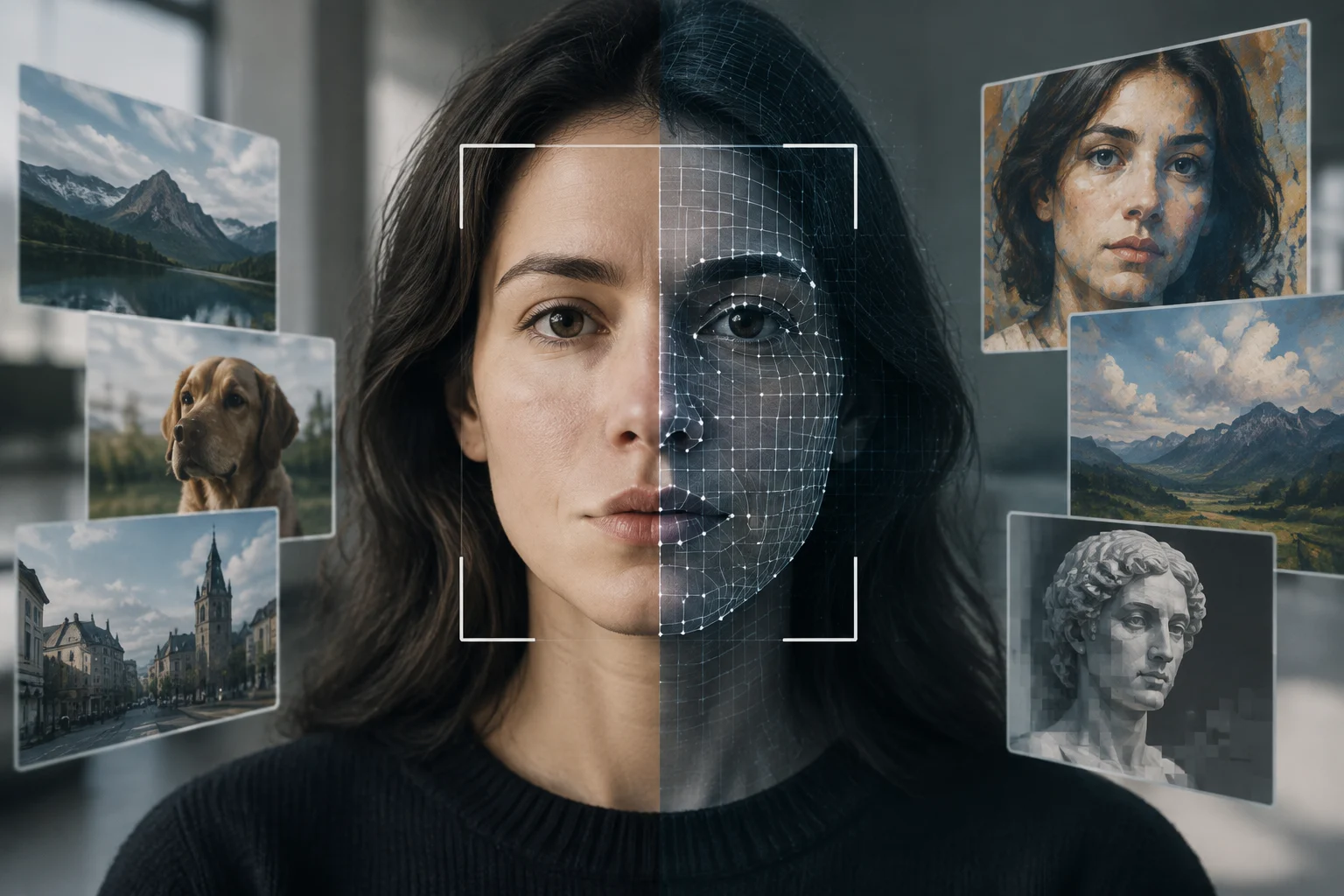
SynthID is a watermarking technique that Google says it incorporates into certain content generated by its systems. According to the company, the marks are designed to be imperceptible to people and to persist through some modifications. Detector lets users upload content and look for evidence of that mark; the result can provide context about origin, not certify absolutely how every element of a file was produced.
The practical difference from a reverse-image search or metadata check is that Detector looks for a specific signal; it does not compare the file with the entire web or reconstruct its history. If the tool finds SynthID, that supports the presence of the mark it identifies. If it does not find it, that does not prove the content is authentic, that it was not generated with AI, or that it was not edited using other tools.
The announcement expands access beyond the preview Google had offered to media professionals. The company says the service is available globally in English. Global access does not mean universal coverage: the Detector’s availability does not mean it can recognize watermarks from every provider, language, format, or generative system.
How to interpret a result without overstating it
A responsible reading separates three questions: whether a SynthID watermark appears, which part of the file seems to carry it, and what conclusions that signal allows. A watermark associated with a participating system can help verify provenance; by itself, it does not establish intent, publication context, or that the content has not been altered later.
It is also worth distinguishing an absent signal from a signal of absence. A search with no match may mean the material was not generated by a compatible system, that the watermark was not added, or that transformations made it harder to detect. A negative result does not authenticate the file; for editorial or security verification, it should be combined with other checks and, when available, the original source.
Google says it has watermarked more than 180 billion images and videos with SynthID, as well as 240,000 years of audio content. Those figures are company statements describing the volume it says it has processed, not an accuracy rate, a measure of the Detector’s current coverage, or a guarantee that every marked item can be identified in all cases.
Who may find it useful, and what decision can it support
The tool may be useful to journalists, fact-checkers, researchers, and users who need an additional signal when reviewing suspicious material. If Detector finds a watermark, it can guide further inquiry into the originating tool or publication chain. It does not replace contextual review, source verification, or assessment of the image or recording as a whole.
For a newsroom, the reasonable decision is to treat the result as one piece of evidence, not an automatic verdict. It is useful to record which file was examined, what the tool returned, and what other sources support the identification. If the result does not match a public claim, it is more accurate to say that no compatible watermark was detected than to assert that the material was not AI-generated.
The language limitation also affects its usefulness: Google announced availability in English. The tool may have global reach and still have an interface or user experience that is not localized for every audience. Before incorporating it into a workflow, each organization should check whether it can use the tool under its operational and privacy requirements; the announcement alone does not settle those questions.
What the announcement does not allow us to conclude
SynthID Detector does not necessarily identify the use of models that do not participate in the watermarking system, nor does it determine by itself who created or published a file. It also does not establish whether content is true or false. Origin and truthfulness are different questions: an item may be watermarked and factual, or lack a watermark while still being synthetic or misleading.
The announcement mentions Google and partner tools, including OpenAI, NVIDIA, and Kakao, and says Apple would join soon. That reference describes the scope Google announced in October; it is not an exhaustive list of covered providers and does not demonstrate compatibility with every model or file type from those companies. A partner’s participation also does not mean all of its content carries SynthID.
The cited public information does not provide independent validation of performance by format, false-positive or false-negative rates, or resilience to every possible edit. This evaluation limitation should remain clear. Without comparative data, it would be inappropriate to assign a specific accuracy level or recommend Detector as the sole tool for high-impact decisions.
Conclusion: use it as a complementary check
The confirmed fact is limited: on October 7, Google expanded global access in English to SynthID Detector, which looks for watermarks in images, videos, and audio. It can offer a useful clue when content comes from systems that apply that watermark, but it cannot answer by itself the general question of whether something was created with AI.
For readers and editorial teams, the practical guidance is straightforward: interpret a match as a signal of compatible provenance; treat no match cautiously; and always cross-check context, origin, and other evidence. The tool adds another way to check, not a universal certificate of authenticity.
The sources examined provide no basis for presenting the launch as news from October 18. They do support an explanation, with a date and clear attribution, of what Google announced and of the tool’s limits.