A regulatory change with a specific start date
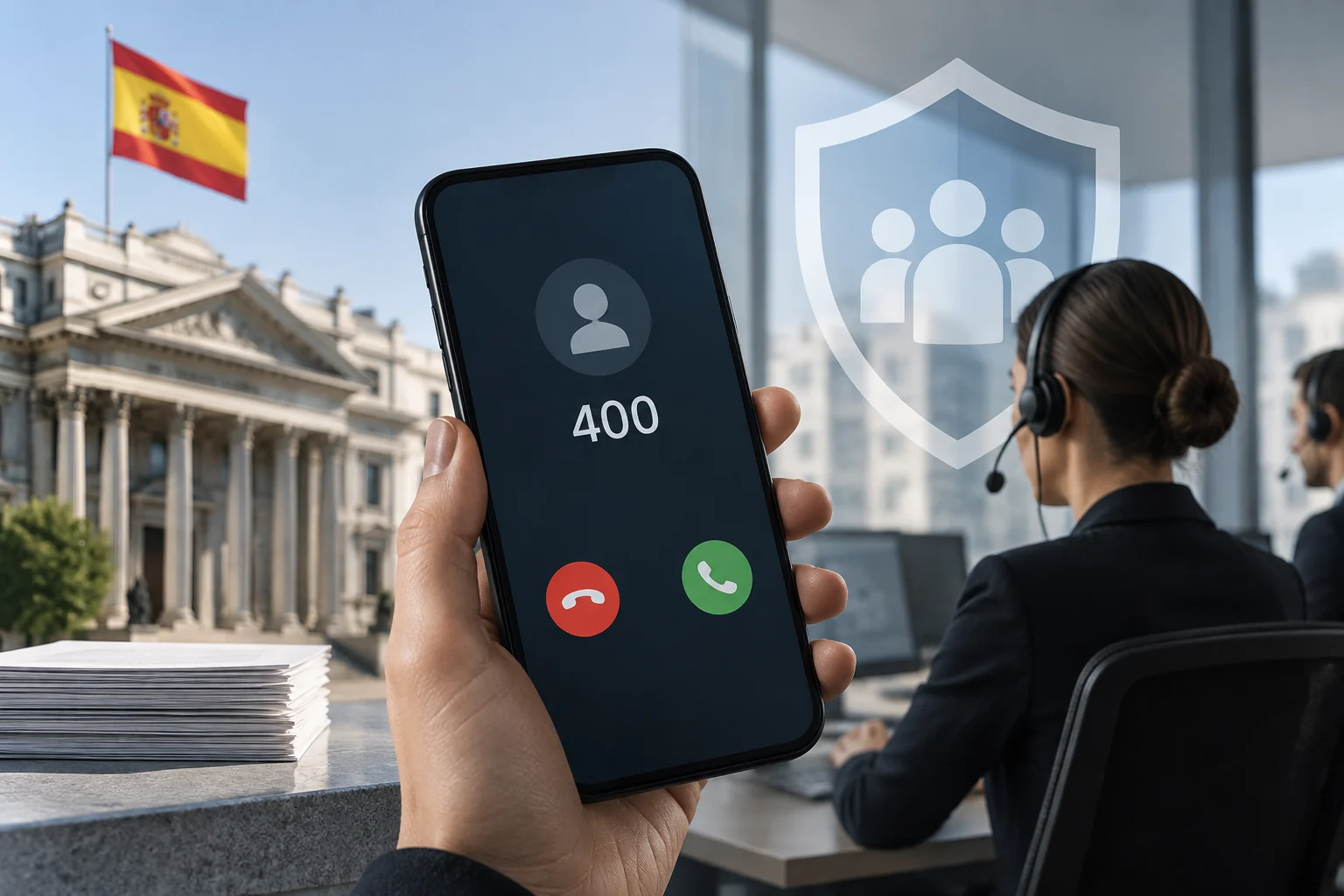
Spain’s Ministry for Digital Transformation and the Civil Service has approved a ministerial order establishing a new framework for telephone marketing communications. The measure takes effect in October 2026, requiring all businesses to make sales calls exclusively from numbers that begin with the 400 prefix. The decision is part of the government’s Anti-Scam Plan, which seeks to combat telephone fraud and the flood of unsolicited calls.
Published in April 2026, the regulation implements the Customer Service Act (SAC), passed in December 2025. Its main aim is to let users immediately identify a call as commercial before answering, limiting opportunities for identity theft and fraud. Telecommunications operators will have six months to systematically block any sales call that does not use this new identification.
How the new numbering system will work
The new number range for sales calls will have nine digits and begin with the 400 prefix. This structure will allow users to clearly distinguish a sales call from a personal call or a customer-service call. The numbers will also be one-way: customers will be able to receive calls but not make them, strengthening protection against potential fraud when calling a number back.
Separately, the resolution states that customer-service calls may only be made from short numbers specifically assigned for that purpose, freephone ranges (800 and 900), or geographic numbers. Once the new numbering is fully operational, operators will block calls identified as commercial or customer-service calls if they do not use the designated numbering. This technical mechanism is essential to ensuring compliance.
Impact on user protection
The telephone and SMS Anti-Scam Plan, which includes this measure, has enabled the blocking of more than 192 million calls and 17 million SMS messages with fraudulent intent since it began in March 2025. The 400 prefix is intended to curb the flood of unsolicited communications and reduce opportunities for telephone fraud through identity theft. Óscar López, Minister for Digital Transformation, has said the measure protects the public from scams and unwanted sales calls.
For end users, the change means greater transparency and control over the calls they receive. Clear identification of sales calls makes it possible to decide in advance whether to answer, reducing exposure to social-engineering techniques and increasing users’ sense of security. This is particularly relevant when telephone fraud remains one of Spain’s main digital-security problems.
Obligations for businesses and operators
Businesses that make sales calls will have to adapt to the new regulation before October 2026. This means requesting numbers with the 400 prefix from their telecommunications operators and updating their dialling and call-management systems. Failure to comply may lead to penalties, as operators will be required to block calls that do not use the new numbering.
For telecommunications operators, the measure presents a technical and operational challenge. They will need to implement call-identification and blocking mechanisms for calls that do not use the numbering assigned to commercial or customer-service purposes. The process requires close coordination with businesses and upgrades to network infrastructure to ensure compliance by the established deadline.
Background to the measure
The Customer Service Act (SAC), passed in December 2025, established that sales calls should have a specific numerical code. The April 2026 ministerial order implements the act and defines the specific number ranges for sales and customer-service calls. The measure joins other government initiatives to improve user protection in the telecommunications sector.
The closure of Telefónica’s copper exchanges, a process that began nearly a decade ago, is also part of the broader modernisation of Spain’s telecommunications networks. The shift to digital networks and the introduction of new technologies, such as 5G and artificial intelligence in network management, are shaping the sector in 2026. In this context, rules for commercial communications are intended to adapt to new technological realities and protect users in an increasingly digital environment.
What to do if you receive a sales call
From October 2026, users will be able to identify sales calls easily by the 400 prefix. If you receive a call with this prefix, you will know it is a commercial communication and can decide whether to answer. If you are not interested, you can hang up without fear of reprisals, as the law protects users from unsolicited calls.
If you receive a sales call that does not use the 400 prefix, you can report it to the CNMC or the relevant authorities. Operators will be required to block these calls, but users’ cooperation is crucial to detecting and reporting possible breaches. The measure not only protects users but also encourages transparency and responsibility in commercial communications.