Google’s announcement: a new layer of security
On October 7, 2026, Google announced the launch of Android on-device AI seal, known as AISeal, on its official security blog. This is not a new user-facing feature, but an operating-system architecture designed to protect data processed directly on a phone by artificial intelligence models. The distinction matters: AISeal is a system-level security foundation, rather than an app or setting that users switch on.
The goal is straightforward: allow proactive assistants to access sensitive information—such as email, calendars, and messages—without that information leaving the device or being exposed to the main operating system. AISeal acts as a centrally managed secure vault that decouples AI workloads from the rest of the system. In practical terms, the architecture is intended to give these workloads a protected space of their own while the phone continues to run its normal software and services.
How the enclave architecture works
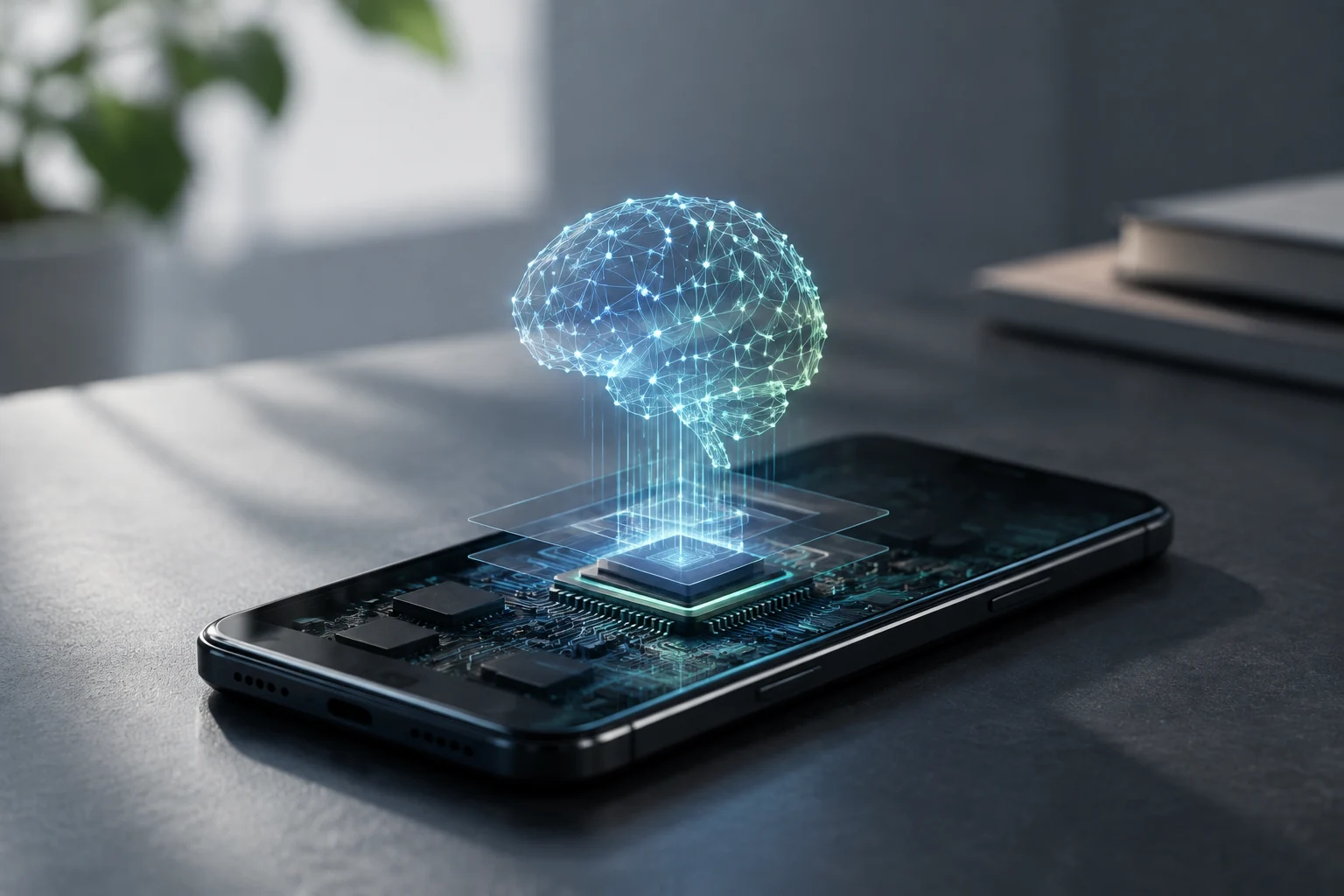
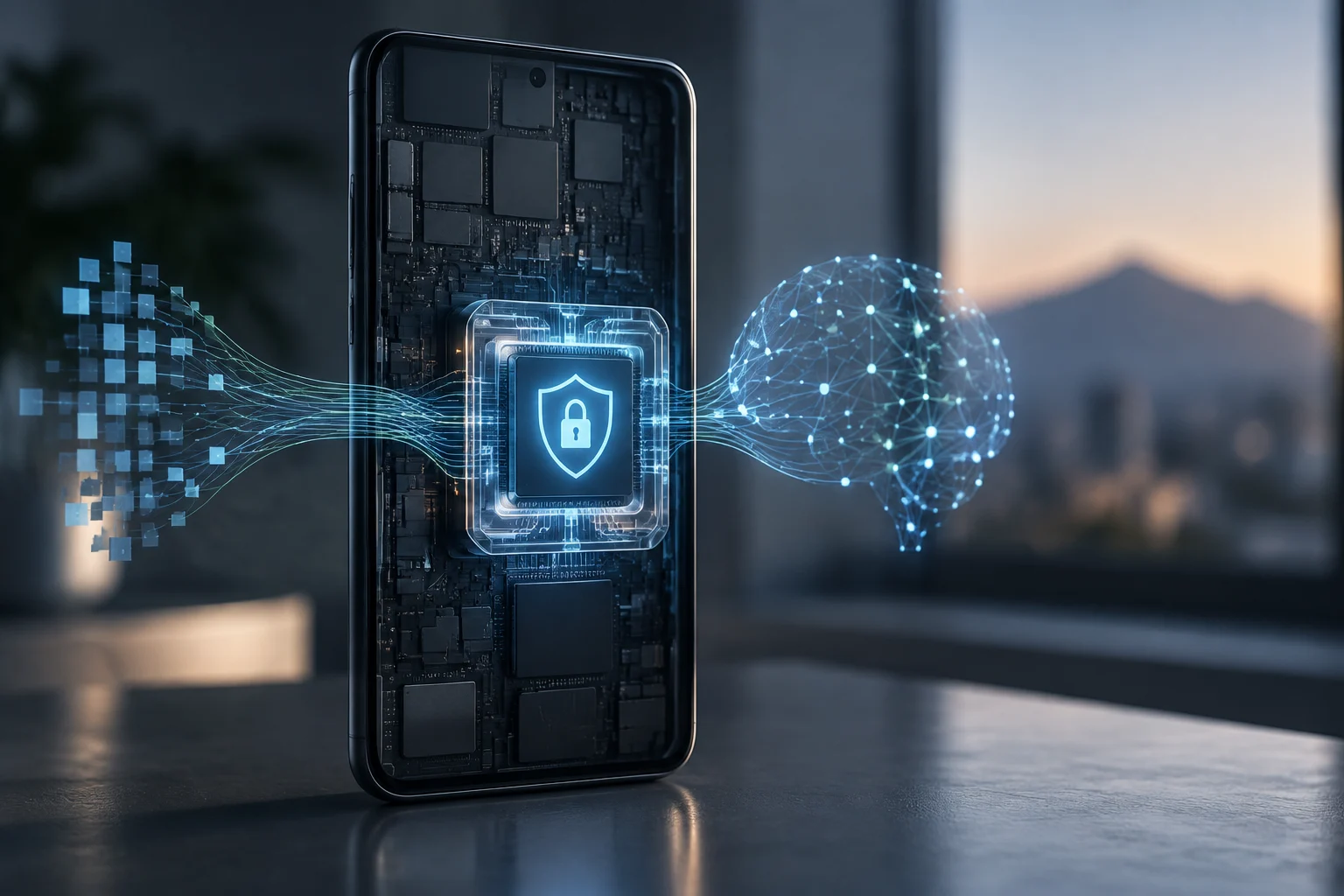
AISeal is built on the Android Virtualization Framework (AVF) and the protected Kernel Virtual Machine (pKVM) hypervisor. Together, these technologies make it possible to create a protected virtual machine that functions as a hardware-isolated enclave. In technical terms, the host operating system cannot access the enclave’s memory, providing confidentiality for the data handled inside it. The approach establishes a boundary between the ordinary Android environment and the protected processing area.
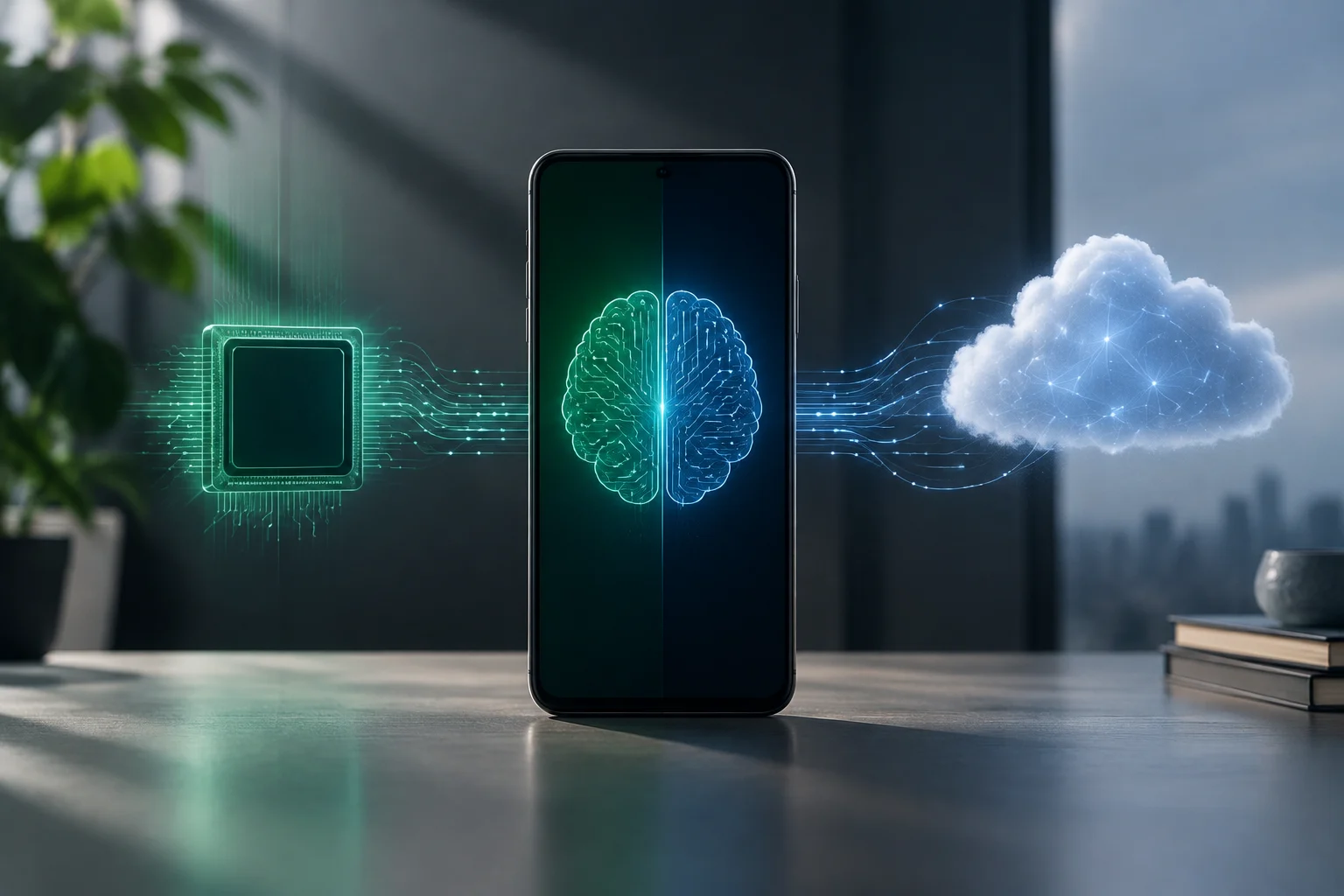
That separation is especially important for local AI. Cloud inference requires data to be sent to external servers, whereas on-device processing keeps information on the user’s hardware. AISeal is designed to preserve that boundary even if the main operating system suffers a serious vulnerability: personal data used by AI remains cryptographically isolated and protected. This does not change where the model runs; it adds a protected architecture around sensitive workloads running on the device itself.
The design therefore addresses two related concerns: where information is processed and which software components can access it. The enclave is intended to keep sensitive AI workloads apart from the host system, rather than relying solely on the operating system to protect its own data. Hardware isolation is the key distinction described for AISeal, while AVF and pKVM provide the underlying framework for that separation.
Local AI versus cloud inference
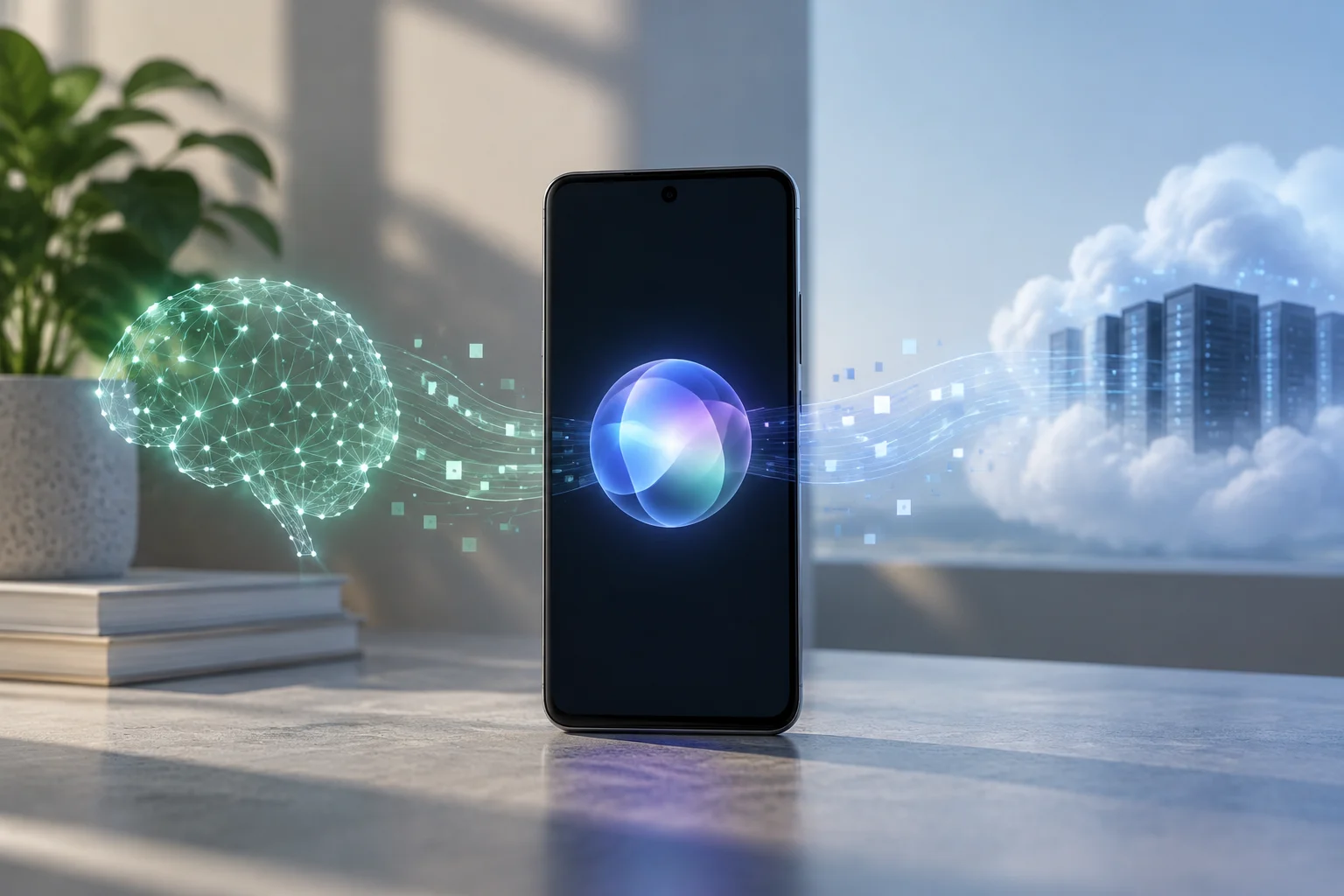
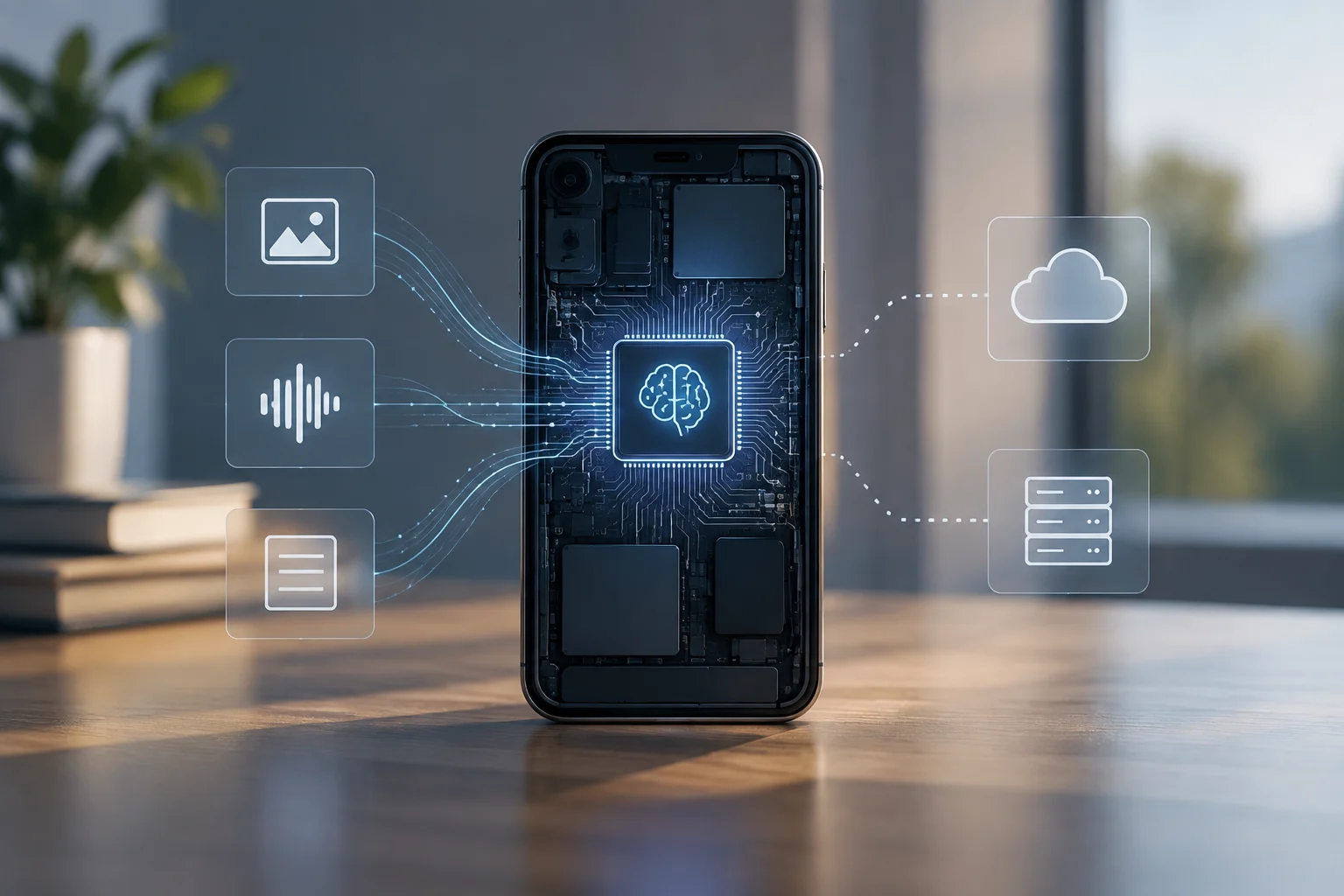
The distinction between local and cloud AI is fundamental to privacy. Cloud inference offers effectively unlimited computing power, but it requires sensitive data to be transmitted to third parties. On-device AI, by contrast, prioritizes low latency and privacy, although its capabilities are constrained by the processing power available in a phone. The two approaches therefore make different trade-offs between computational resources and keeping information close to the user.
With AISeal, Google aims to address the main obstacle to local AI: trust. By ensuring that data is not exposed to the operating system or other applications, the architecture could make it easier to adopt assistants that need a deep understanding of a user’s context to be useful. The intended balance is utility without compromising security: assistants can draw on sensitive context while the underlying information remains protected within the device.
This contrast does not mean that all AI tasks will necessarily be handled locally, or that cloud services will disappear. Rather, the announcement concerns a secure architecture for workloads that run on the device and need access to personal context. Local processing changes the privacy equation by avoiding the need to send that information to external servers for those tasks, while hardware limitations remain part of the trade-off.
Market context: the rise of edge AI
The announcement fits into a broader shift toward edge AI, or AI processed on nearby devices. Several 2026 reports point to growing use of small, efficient models that can perform complex tasks directly on phones and laptops. This strategy reduces reliance on connectivity and the infrastructure costs associated with cloud services. It also makes the device itself a more significant part of the AI computing environment.
Although CES 2026 showcased a proliferation of devices with integrated AI, many relied on cloud services. Google’s investment in a security enclave marks a step toward data sovereignty on the device, distinguishing its Android ecosystem from platforms that prioritize integration with cloud services. The key point is not simply that AI features are appearing in more products; it is that the location and protection of the data used by those features are becoming part of the product’s design.
The edge-AI trend also helps explain why a security architecture for local processing matters. As models become more efficient, more tasks can be handled on phones and laptops, but those tasks may use personal information to provide context. Keeping processing on the device is only one part of the question; the system must also limit access to the information being processed. AISeal is presented as an architecture intended to address that additional layer.
Implications for user privacy
For end users, AISeal will not change the phone’s interface, but it is intended to improve security in the background. Data used to personalize the experience—such as browsing history or interactions between apps—would be protected through hardware isolation. This is particularly relevant as AI models gain access to increasing amounts of personal information and use context from different parts of a person’s digital life.
The technology requires mobile-device manufacturers to integrate support for AVF and pKVM into their hardware. Not every current Android device is compatible, so AISeal’s availability will depend on adoption by OEMs in upcoming releases. Support from manufacturers is therefore essential: the architecture cannot reach users simply through a software update if the necessary hardware and virtualization support are absent.
This means availability may vary across Android devices, even as the architecture becomes part of the wider platform discussion. Users should not assume that every existing phone will receive AISeal, because the article’s stated requirement is manufacturer integration of the underlying support. The privacy benefit depends on compatible hardware as well as the use of workloads that take advantage of the enclave.
What to expect in the near future
Although Google has described the architecture, it has not yet specified which third-party apps or services will be able to use AISeal initially. The first use cases are expected to focus on voice assistants and Android’s local search features. Developers will need to wait for the complete technical documentation before integrating their own apps with this new enclave. The initial application scope remains unspecified, so broader availability to third parties should not be treated as confirmed.
The introduction of AISeal strengthens Android’s position as a leading platform for on-device AI security. As more manufacturers adopt the architecture, privacy on the device could move from a theoretical promise toward a standard feature in mid-range and high-end smartphones. That outcome depends on adoption and implementation, rather than on the announcement alone.
For now, the central development is the proposed security architecture and the separation it is designed to provide. The next steps will depend on device makers’ support and on the technical documentation that enables developers to build compatible services. AISeal’s potential will become clearer as those pieces arrive, including which early Android features use the enclave and how broadly compatible devices become.