The Landscape of Gaming in Spain
The Spanish industry continues to grow sustainably: in 2025, the market reached 2.293 billion euros and counts 22.8 million regular players, representing 54% of the population between 6 and 75 years old. This demographic and economic boom translates into a constant demand for updated hardware, as users seek to maintain a smooth gaming experience against increasingly demanding titles in terms of graphical and processing resources.
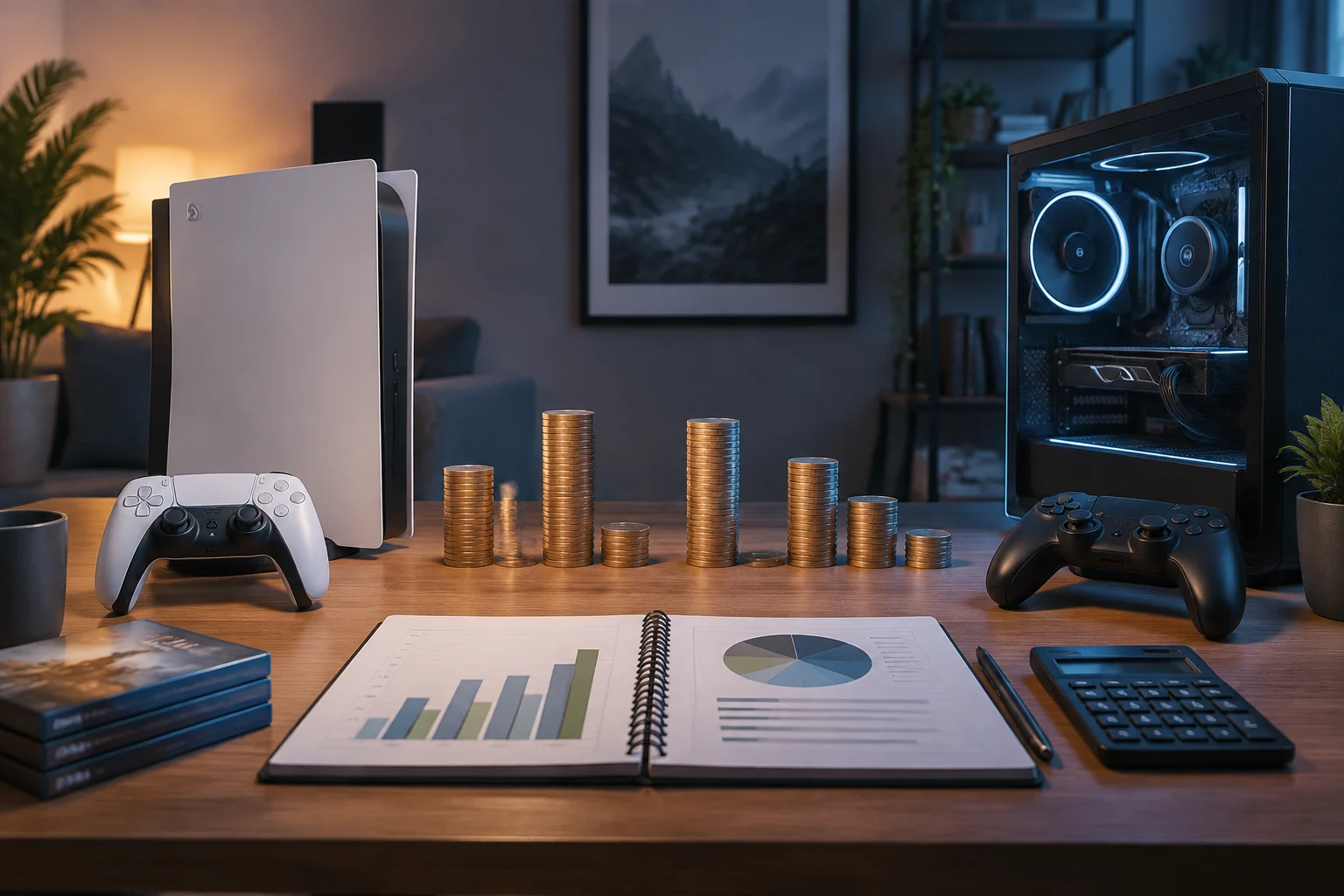
The PC remains the dominant device in the high-performance segment: according to a PcComponentes study, 38.4% of players use their computer as their primary gaming medium. Although the console remains popular for its simplicity, the flexibility and raw power of the PC attract those seeking sustained long-term performance, allowing configuration adjustments according to the specific needs of each title or application.
The buying dynamic is significantly affected by component shortages: in 2026, the availability of GPU and RAM has been intermittent, driving higher prices and accelerating the renewal cycle. This supply instability forces consumers to plan their purchases further in advance, evaluating not only the current price but also the forecast of future availability to avoid unnecessary overcosts.
Frequency of GPU and RAM Updates
The PcComponentes study indicates that graphics cards are renewed every 3-4 years, while RAM memory is usually changed in a similar range, although with greater variability depending on intensive or light use. This pattern reflects the rapid evolution of graphics engines and the growing demand for higher refresh rates, making components from a decade ago quickly obsolete in the face of the new technical demands of modern video games.
Users who play AAA titles or use video editing software tend to update earlier: between 3 and 5 years for the GPU and 2-4 years for the RAM, especially when performance drops below 70% of the required FPS for a smooth experience. In contrast, casual players can wait longer without noticing perceptible differences, as their performance requirements are more modest and do not depend on maximum graphical fidelity.
Component shortages have caused the availability of mid-range GPUs to decrease by 15% compared to the previous year, increasing the average price of new cards by 12% and accelerating the purchase decision. This market pressure leads many users to renew earlier than planned, not only due to technical necessity but also due to uncertainty about the future availability of the models they desire.
Total Cost of Ownership: PC vs. Console
The initial cost of a mid-range gaming PC is around 1,200 €, while a new console costs between 500 and 700 €. However, the PC requires periodic updates that add an extra cost of 300-600 € per renewal cycle, which must be considered when calculating the long-term total budget. This initial difference is offset by the PC's ability to remain relevant for longer through selective upgrades.
When comparing the total cost over five years, the console is usually more economical: 1,200 € versus 2,400-3,000 € for the PC, considering two GPU updates and one RAM update. This differential is reduced if the user opts for low-consumption components or keeps their equipment in good condition, as proper temperature management and cleaning can extend the useful life of components without the need for premature replacements.
The key factor is flexibility: a PC allows updating only the part that needs performance, while a console requires a complete replacement to access new technologies. For players seeking maximum power and customization, the PC remains the best option despite the higher total cost, as the investment is distributed over time and adapts to the user's changing needs.
Impact of Shortages on Prices and Obsolescence
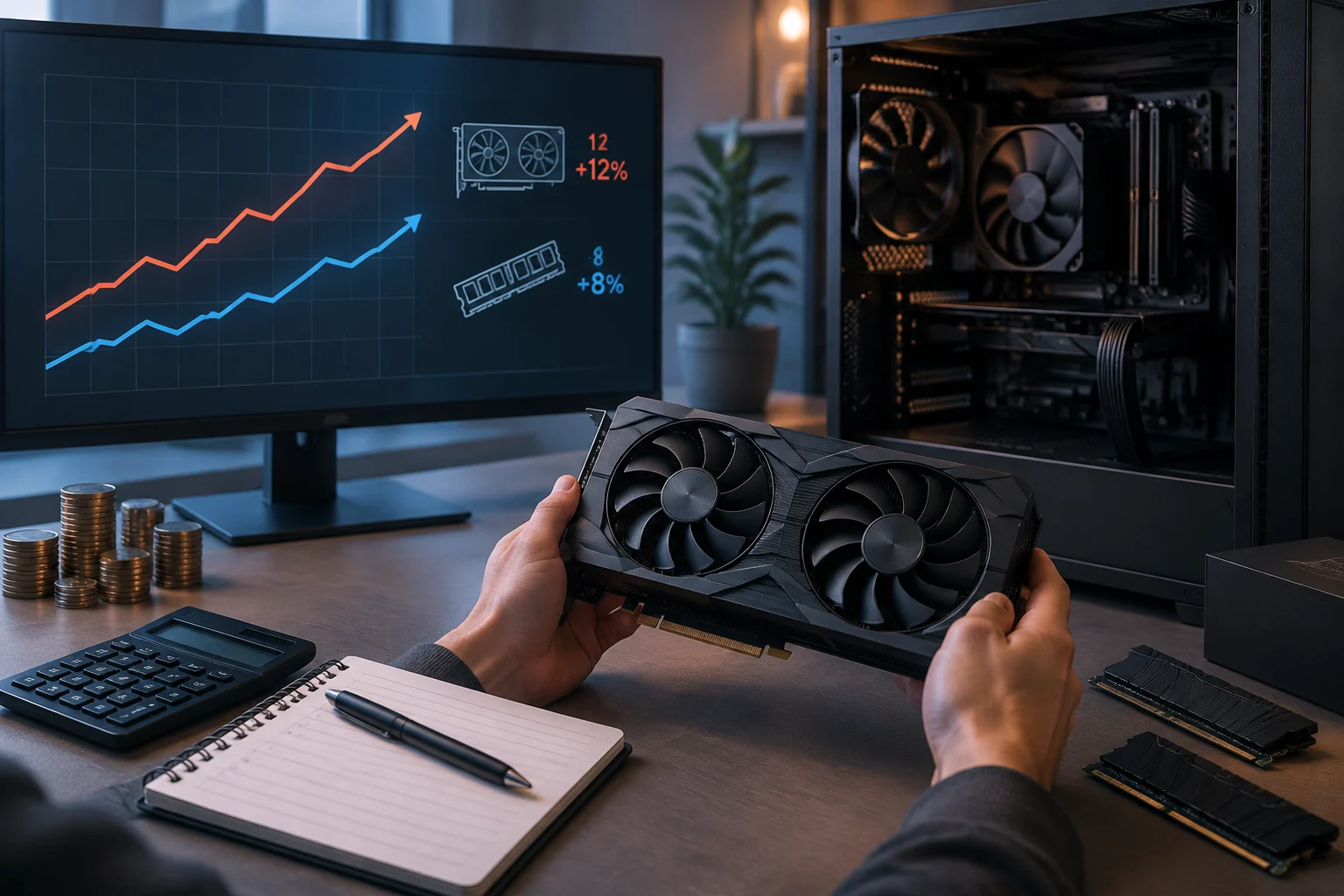
The lack of supply has raised the prices of mid-range GPUs by 12% and DDR5 RAM by 8% compared to 2025, according to PcComponentes data. This increase translates into a wider gap between the initial cost and the update, making financial planning a crucial aspect for any gamer who wishes to keep their equipment up to date without exceeding their available budget.
Manufacturers have adopted planned obsolescence strategies: RTX 40 series GPUs are designed with 4-year lifecycles before new game drivers require additional support. This forces users to consider early updates to avoid performance drops, as compatibility with the latest titles may be compromised if the hardware does not receive the necessary optimizations.
Shortages have also boosted the secondary market, where used GPUs reach prices exceeding 70% of the new value in some cases, making it difficult to buy components at a fair price and favoring early renewal. This dynamic creates an environment where patience and market research are essential to find the balance between price and performance.
Practical Guide to Deciding When to Upgrade
To determine the optimal renewal time, first evaluate the minimum requirements of the titles you play frequently. If your GPU no longer reaches 70% of the expected performance at 1080p or 1440p, it is a sign that an update is necessary to guarantee a smooth gaming experience without interruptions that may affect competitiveness or general enjoyment.
Also review the physical integrity and operating temperature of your components. A noisy fan or constant overheating indicates wear that can affect future performance and the equipment's useful life, so it is advisable to consider replacing those components before they fail completely.
Consider profitability: if the cost of a new GPU exceeds 50% of the value of your current equipment, it may be wiser to wait for prices to drop or look for second-hand options with a warranty. This strategy allows maximizing the return on investment and avoiding unnecessary expenses during periods of high demand.
Future Perspectives and Emerging Trends
The development of AI in games is driving even higher GPU requirements, which could shorten the lifespan of graphics cards to 2-3 years for the most demanding users. This trend towards AI integrated into game engines requires greater processing capacity, making updates more frequent in the near future.
The adoption of DDR6 RAM and the expansion of GDDR7 memory in next-generation GPUs could change the update dynamic, making RAM a less critical component in the short term. These technological advances promise to improve efficiency and performance, reducing the need for constant updates and offering a better price-quality ratio.
New-generation consoles, with dedicated architectures and native ray tracing support, will continue to compete with PCs in terms of price-performance, but the PC will maintain its advantage when it comes to customization and overclocking. The ability to adjust each component to its maximum potential remains a key differentiator for hardware enthusiasts.