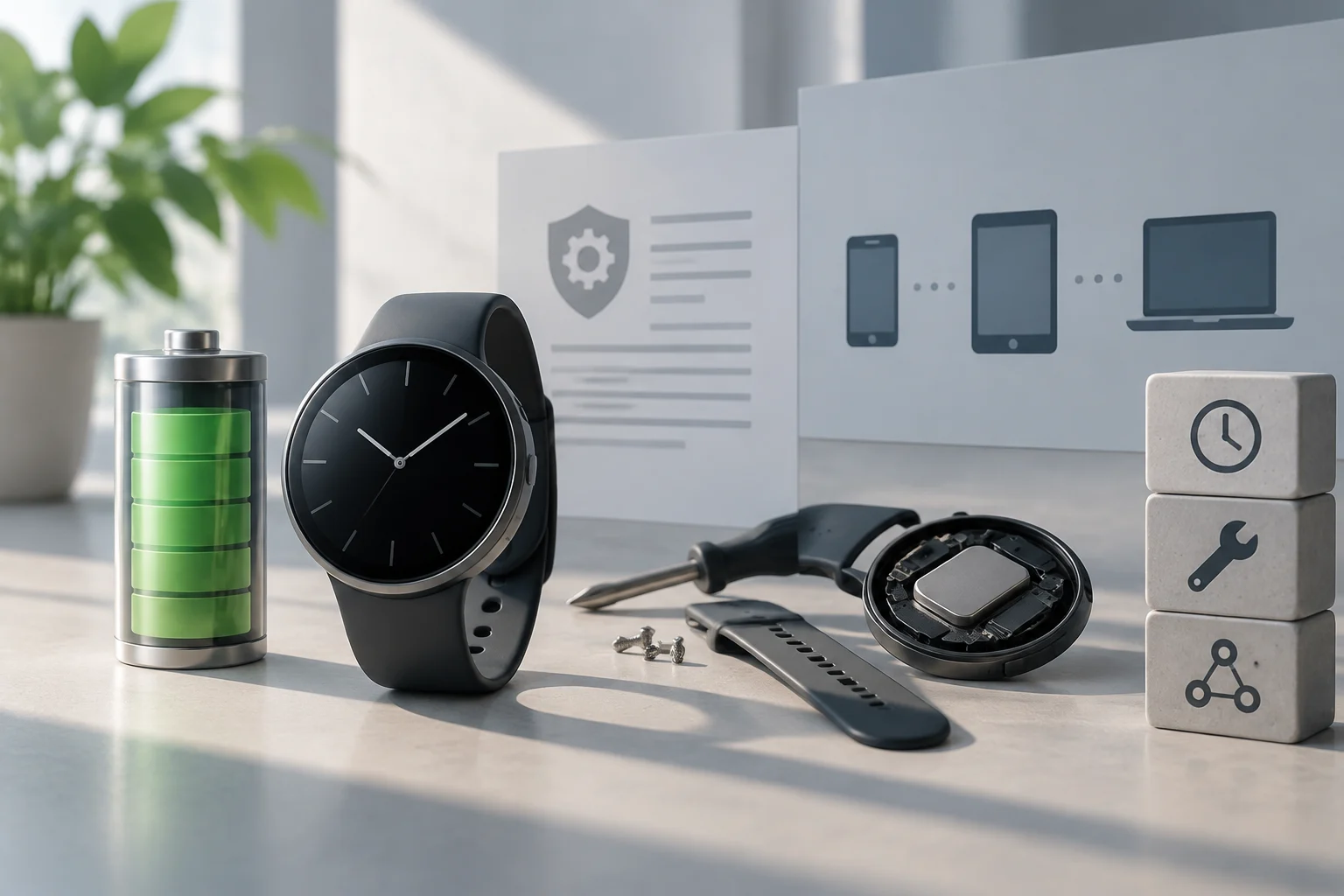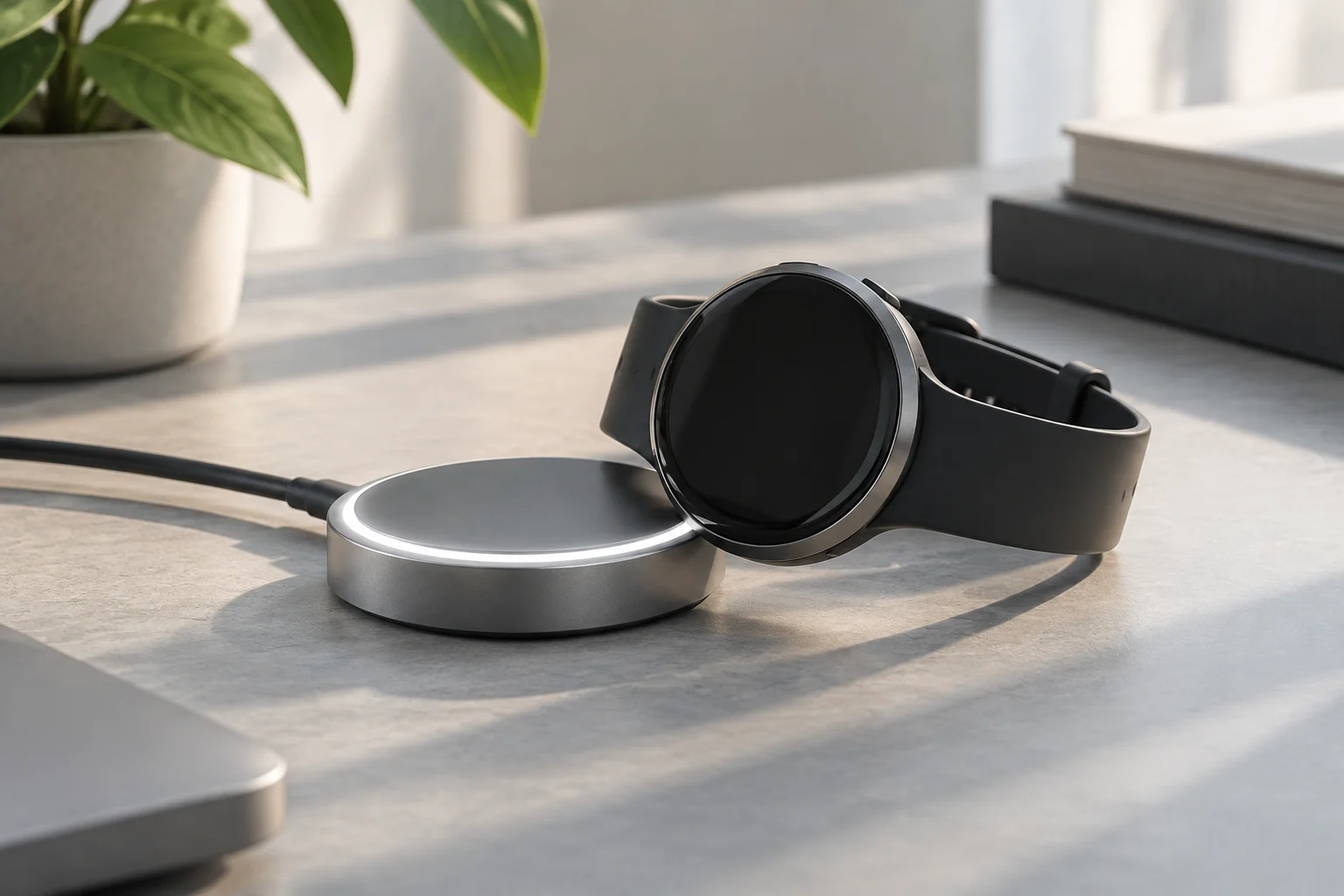
From Qi1 to Qi2 25W: More Power Does Not Mean the Same Thing for Everyone
Qi2 25W is an evolution of wireless charging that enables up to 25 W on compatible equipment. In practical terms, the difference from 15 W Qi2 is the available power ceiling, not a guarantee that every connected device will receive that amount. Both the charger and the receiving device must support compatible modes for the higher capacity to be used.
Magnetic alignment is part of the Qi2 proposition and helps position the coil correctly in devices designed for that system. But a charger having magnets or being marketed as “25 W” is not enough: compatibility is a relationship between charger and receiver. A watch with its own charging dock does not thereby become a Qi2 device, and the maximum power printed on the charger does not describe what that watch will receive.
It is also worth separating the standard’s name from commercial claims about efficiency. An accessories manufacturer’s guide compares efficiency figures for Qi1 and Qi2, but the materials provided do not give a shared methodology, test conditions or independent measurement that would justify presenting those percentages as a universal improvement. It is therefore not sound to claim that Qi2 25W necessarily reduces heat or extends battery life in every wearable.
Compatibility in Watches and Bands: What Can Actually Be Verified
The key question is not whether a Qi2 25W charger can power a wearable in the abstract, but which charging method the specific model supports. The available sources do not confirm native Qi2 25W support for Apple Watch, Fitbit or the Galaxy Watch range; accordingly, this material does not support publishing a list of compatible watches or recommending that they be charged directly on a Qi2 surface.
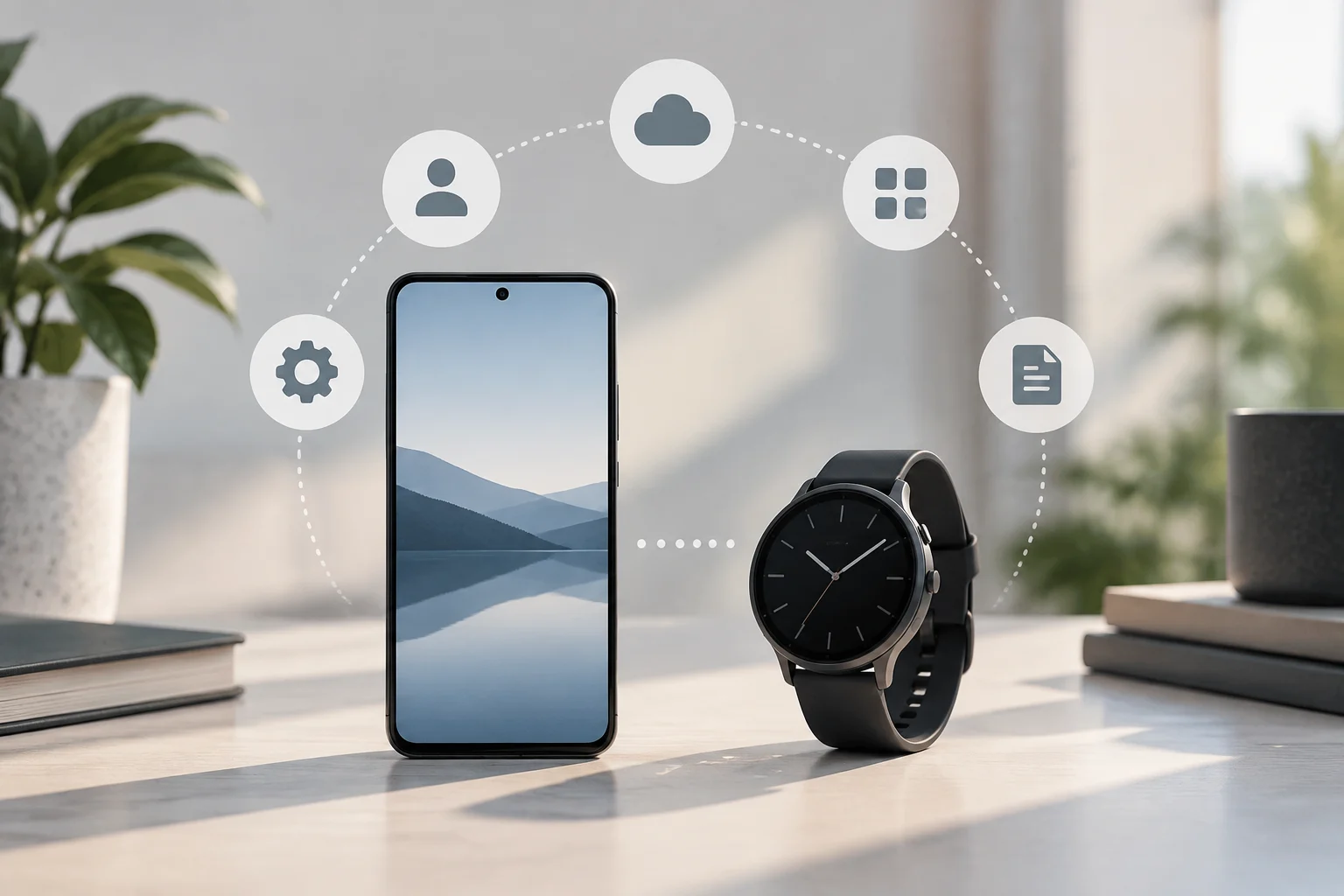
Samsung does document one specific limitation: Galaxy Watch7 and Galaxy Watch Ultra do not support Wireless PowerShare from a Galaxy phone. Samsung attributes the restriction to internal design changes that increase the distance between the charging coil and the outer surface, and points users to chargers designed for those watches. This describes phone-to-watch power sharing; by itself, it does not prove that a watch is compatible or incompatible with every third-party wireless charger.
The same support page mentions previous generations that do support the sharing feature, but that compatibility is not equivalent to Qi2 25W either. Wireless PowerShare and Qi2 are separate matters: the fact that a phone can transfer power to a watch does not certify that the watch receives 25 W or can charge on any magnetic dock. To make a decision, check the specific model’s product information or official support page and confirm which charger its manufacturer recommends.
Charging Speed: Why Phone Figures Do Not Apply to a Watch
Promotional references to Qi2 25W usually discuss smartphones, not watches. A secondary buying guide repeats the claim that a phone can reach approximately 50% in half an hour, but that figure is not evidence about wearables. Battery capacity, supported power, thermal management and charging profiles vary between devices; extrapolating a phone’s charging time to a band or watch would create a misleading comparison.
Nor can actual charging time be inferred from peak power alone. A device may limit incoming power, and charging can change as the battery level rises. Without comparable tests for a specific model—with the same battery, charger, temperature and starting state—there is no basis for saying how much time Qi2 25W would save compared with the charger supplied or recommended for that wearable.
The practical consequence is straightforward: if the manufacturer specifies a particular charger, using an accessory with a higher wattage rating does not guarantee faster charging. A charger’s power rating is a maximum, not a speed promise. Before buying a dock, check the watch’s exact model, its coupling method and official instructions; speed comparisons require device-specific data, not just information about the standard or accessory.
Battery and Heat: Distinguishing a Reasonable Hypothesis from a Proven Result
Wireless charging transfers energy between coils and can generate heat, but the supplied sources include no long-term studies comparing battery ageing in watches or bands using Qi2 25W, Qi2 15W or Qi1. Consequently, it is not possible to say that adopting the standard slows battery degradation in a wearable or to quantify any difference in service life.
It is reasonable to treat temperature as a factor to monitor during charging; that does not justify concluding that a particular certification or power level will always produce less heat in every charger-and-device combination. Temperature also depends on design, alignment, surroundings and the receiver’s charging controls. The important distinction here is between a general technical consideration and a demonstrated advantage for a specific product.
For users, practical guidance does not require home experiments or taking risks: follow the manufacturer’s instructions, use a compatible charger and avoid accessories whose descriptions do not clearly identify supported devices. If an accessory or brand promises better battery health, look for specific, comparable data for that model; the available sources here do not support a general claim of longer battery life from switching to Qi2 25W.
3-in-1 Charging Stations and Adapters: Check Each Platform Separately
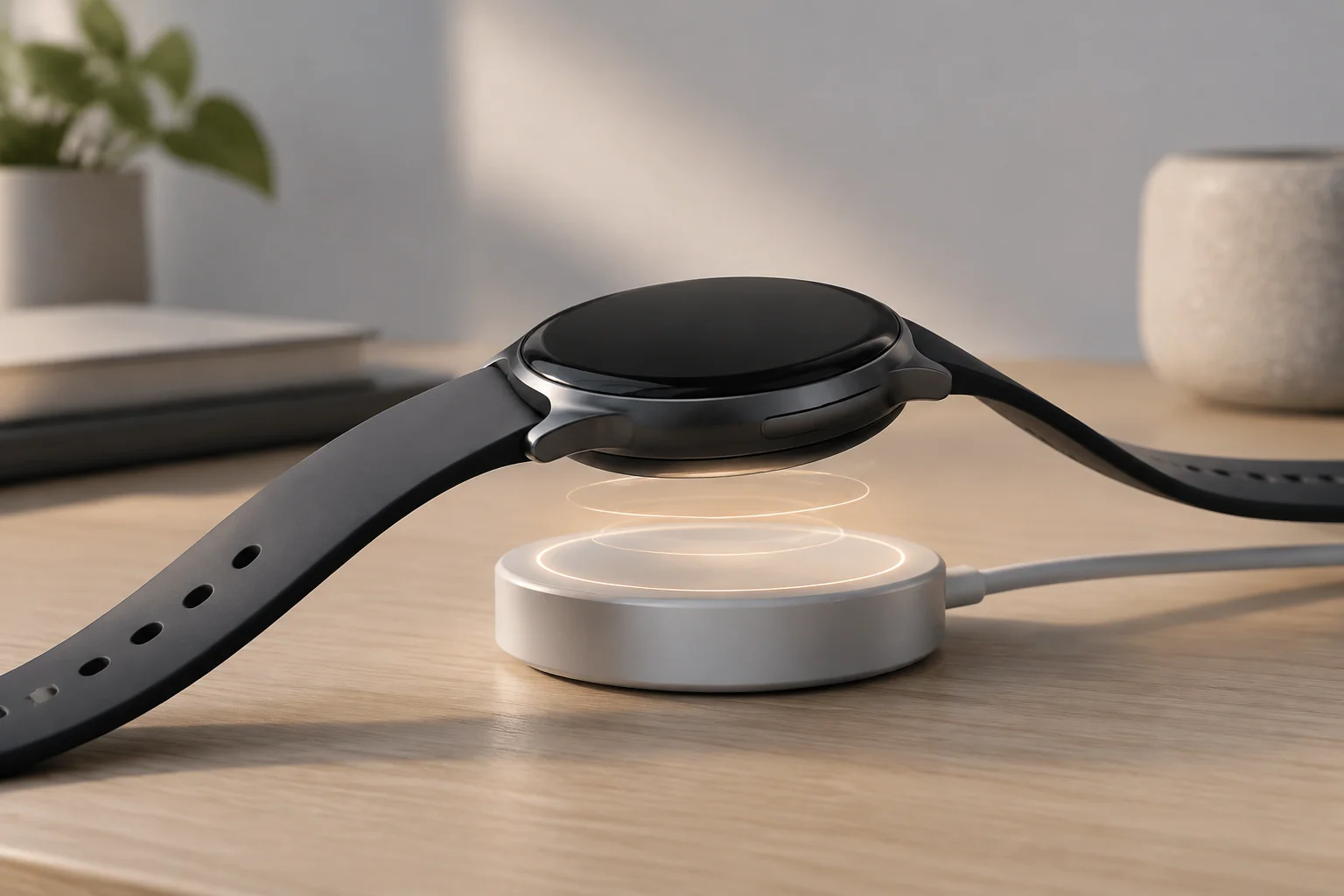
A 3-in-1 station can combine charging areas for a phone, a watch and headphones, but that does not mean all three positions use Qi2 25W. Hipporizz’s guide describes products in this format, while a MacRumors post about an ESR announcement at CES 2026 mentions a station that charges a phone, Apple Watch and AirPods. These are examples of accessories combining functions; they do not prove that the watch charges via Qi2 or that all outputs have the same power.
In a multi-device dock, each area may rely on a different system or module. The phone section may advertise Qi2 capability, while the watch position needs a solution compatible with its ecosystem. That is why the name “3-in-1” describes how many devices the product is intended to hold, not a uniform certification or a fast-charging guarantee for all of them. Check the accessory’s specifications to see which models each module supports.
The same applies to generic magnetic adapters. The available sources provide no tests that would justify saying all such adapters are inefficient, necessarily overheat a watch or reduce its charging speed. The useful check is more specific: look for explicit compatibility with the model, safety information and the certification stated by the manufacturer. Do not mistake a magnetic shape for Qi2 compatibility.
How to Choose Without Paying for an Irrelevant Specification
For a wearable buyer, the priority should not be that a charger advertises 25 W, but that it explicitly lists the watch or band model. The available documentation does not support recommending a Qi2 25W charger as a universal upgrade for Apple Watch, Galaxy Watch or Fitbit. It does, however, support a specific warning: Galaxy Watch7 and Watch Ultra have an official limitation concerning power sharing from Galaxy phones.
Before buying, check these points in the device and accessory specifications:
- The wearable’s exact model and the charger recommended by its manufacturer.
- Whether the charger explicitly supports that model, rather than merely a category such as “smartwatch”.
- Which technology is used for each area of a 3-in-1 station and what power is specified for it.
- Whether fast-charging or battery-care claims are supported by model-specific data, rather than just the charger’s maximum rating.
Qi2 25W may be relevant when choosing a charger for a compatible phone, but the sources reviewed do not establish that the standard is a direct upgrade for wearable charging. The practical conclusion is to verify device by device: do not buy based on the 25 W figure expecting a watch to improve, and do not attribute efficiency or longevity benefits to the standard unless they have been demonstrated for that model.