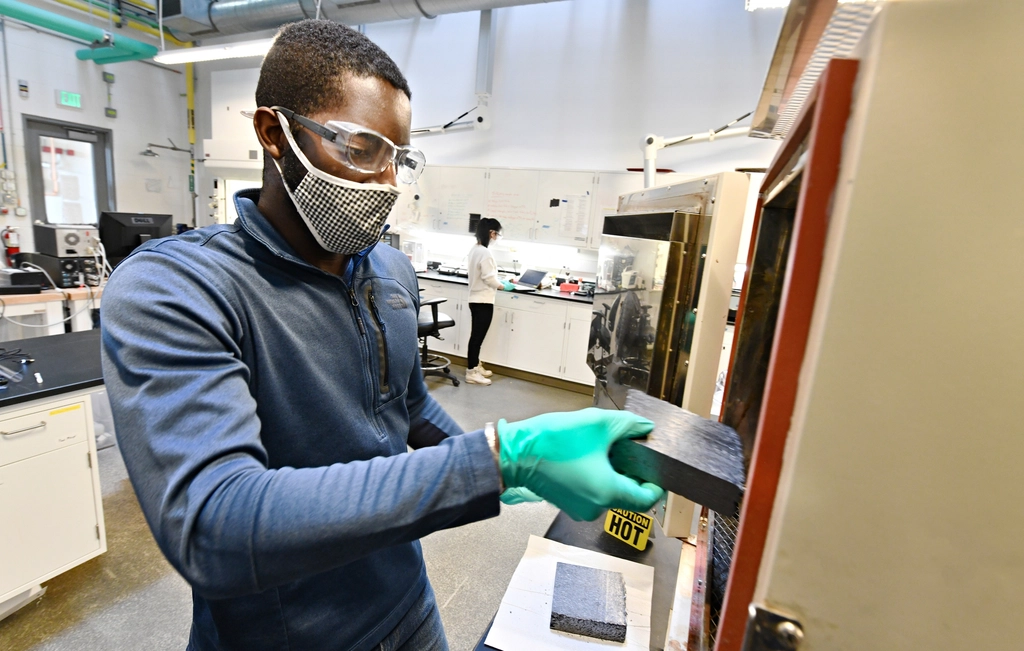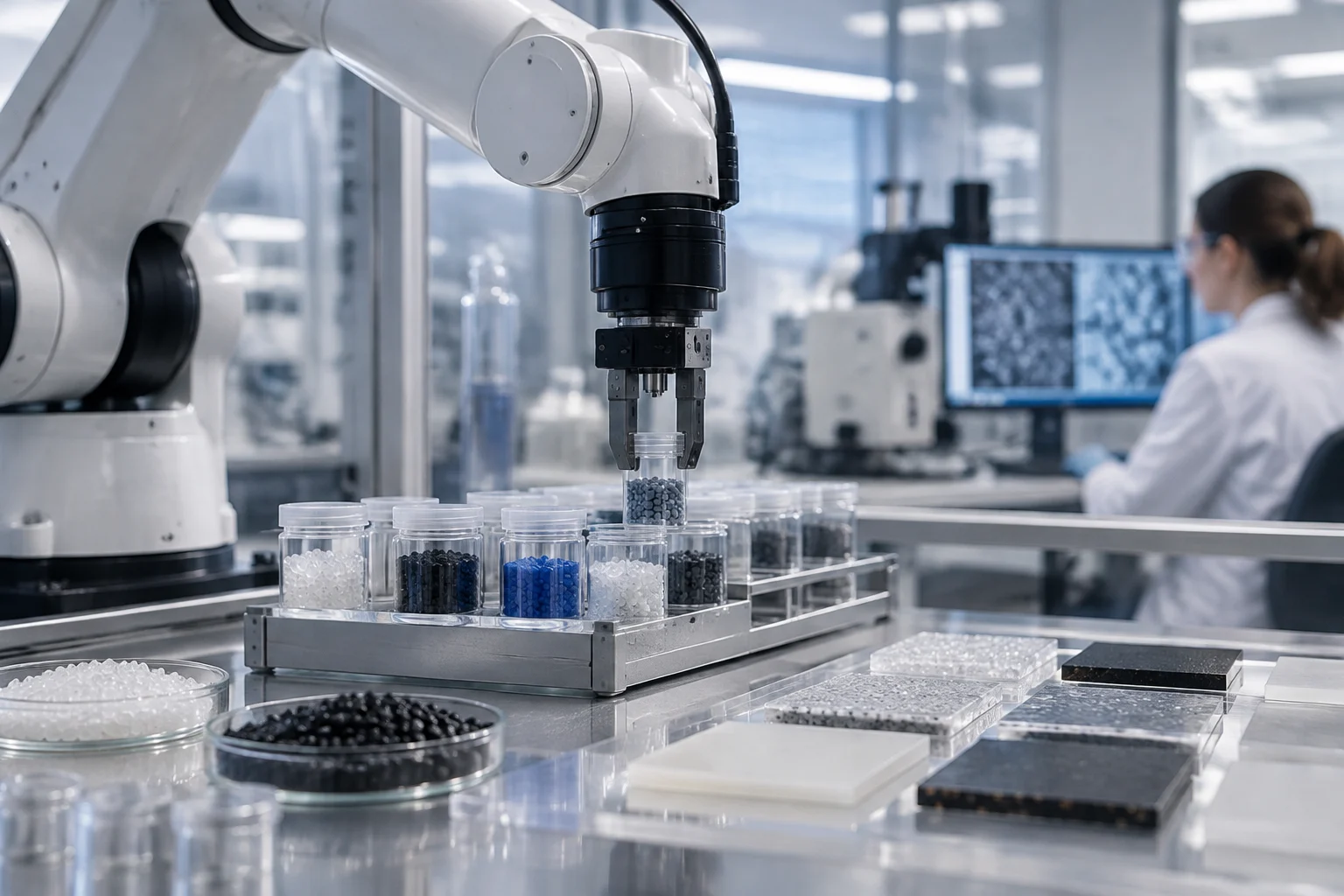
A laboratory designed to accelerate research
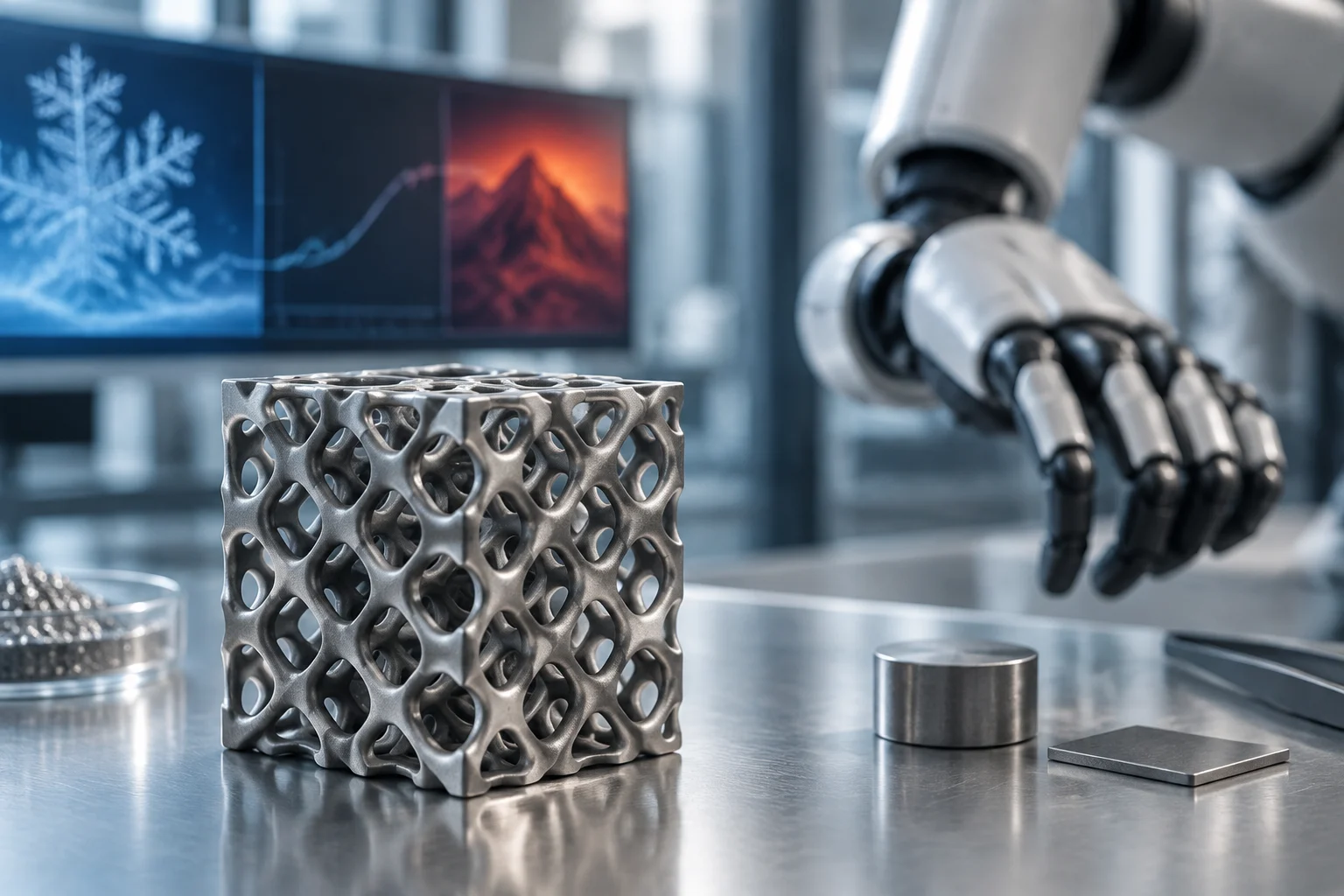
Robotlab is an automated laboratory platform that IMDEA Materiales is developing to investigate polymer materials and nanocomposites. Its purpose is to support materials discovery through automated experiments and data that can guide further testing. The platform is dedicated to research and materials discovery. Automating tasks can reorganize experimental work, but it does not remove the need to frame questions, select samples and evaluate results.
The scientific challenge is to connect a material’s ingredients with how it is manufactured and with the properties it exhibits. In nanocomposites, for example, particles are incorporated into a polymer matrix; the institute says that their dispersion and the processing of solids pose technical difficulties. It also mentions operations such as injection moulding and lamination, as well as work at elevated temperatures. Automating experiments means addressing complex material processes, not simply bringing a handling system into a laboratory. The manufacturing sequence matters because it influences the sample that is later tested and characterized.
IMDEA presented DIGIMATER-CM as the framework for developing this capability, with funding from the Community of Madrid and participation by several institutions. In February 2025, the institute described a prototype already in operation and a complete configuration planned around five modular robots. The prototype and the planned platform are separate stages: the project description distinguishes the initial experimental capacity from the fully developed installation it envisaged building. The five robots therefore referred to the planned design, not to a claim that the entire installation was already operating at that date.
Robotlab: prototype and planned configuration
The project description distinguishes the prototype already demonstrated from the larger modular installation proposed for DIGIMATER-CM.
-
Prototype
Working prototype demonstrated
-
Planned full facility
Five modular robots
The five-robot configuration was planned; the announcement does not establish that the complete installation was operational.
Sources and references1
The tasks and materials covered by the project
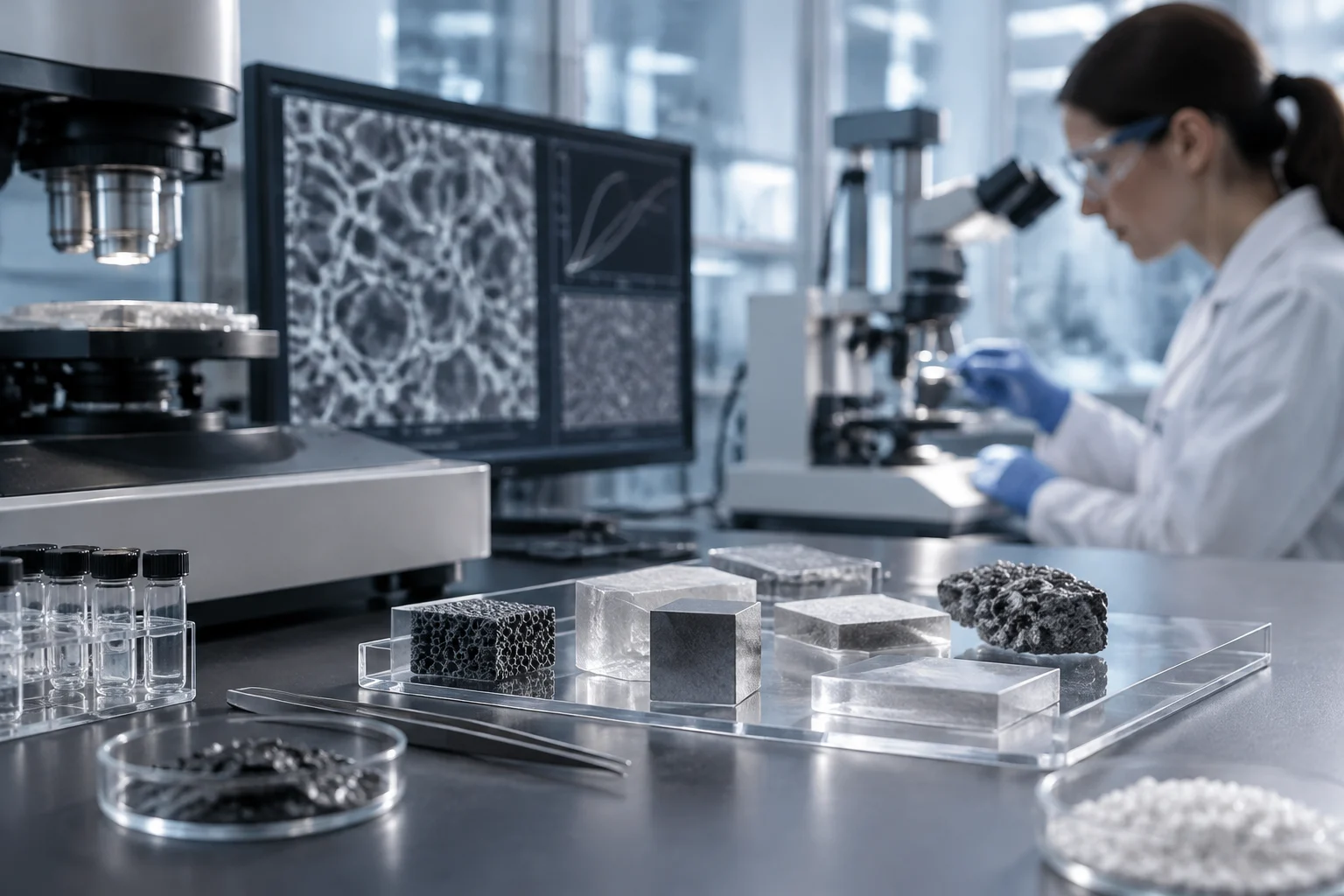
The institutional description focuses on polymer-based materials and the automation of processing and testing operations. IMDEA lists structural and degradation characterization, together with automated tests, among the planned functions. The institute emphasizes that producing solid engineering materials involves more than combining ingredients: processing techniques and the incorporation of nanoparticles are part of the experimental challenge. The work therefore covers both preparing materials and observing relevant properties in the resulting samples.
The platform is being designed modularly to accommodate several material types and experiments. The project includes research lines on biomaterials for sustainable plastics, piezoelectric and smart materials, and biomaterials for tissue engineering, assigned to different participating groups. The range of applications describes the collaboration’s scope; it does not show that all these lines are being carried out at a single station or have already produced materials ready for sale. Modularity makes it possible to plan infrastructure that can adapt to different experimental aims, without implying that one protocol applies to every case.
Laboratory automation is part of interdisciplinary work that also covers collaborative robotics, artificial intelligence and advanced experimental methods. An IMDEA recruitment notice for the AMD group describes work on automated platforms, including programming microcontroller systems, collaborative robots and computer-vision solutions. The AMD group develops automated experimental platforms. Bringing equipment, controls and testing methods together is part of this materials-research effort.
How experiments connect with data
The value of automating tests is tied to the ability to produce data in a structured way. IMDEA explains that automated laboratories can accelerate the collection and analysis of data needed for materials research. To compare formulations meaningfully, those data need to be linked to the material and process under study; this is precisely the kind of experimental challenge the project seeks to address through automation and characterization. Measurements are therefore not considered in isolation: interpreting them depends on knowing what was processed and under which experimental conditions.
The institute presents artificial intelligence as a tool for analyzing experimental data and supporting materials discovery. In this approach, models can help identify patterns or guide exploration, while experiments provide observations about real materials. Laboratories and algorithms have complementary roles: automation expands experimental capacity, and AI can help analyze the results. The announcement describes data collection so that AI tools can identify patterns and predict material properties. Hypotheses and patterns suggested by analysis belong within a research cycle connecting experimentation, data and further tests.
IMDEA also stresses that the type of data and the degree to which the platform is optimized affect how much data collection can be accelerated. The aim is therefore not simply to accumulate measurements: the materials studied and the characterizations performed matter. In a popular-science article by José Manuel Torralba, who is associated with IMDEA Materiales, RobotLab is described as a space where polymer nanocomposites are made and their mechanical properties and possible degradation are tested. Data become more valuable when linked to each sample’s formulation and processing, as well as to the behavior observed during testing.
The complexity of processing solid materials
One important technical distinction made by IMDEA is the difference between processing liquids and manufacturing solid materials with a microstructure. The institute explains that the latter may involve operations such as injection moulding and lamination, elevated temperatures and the need to disperse nanoparticles. Automation must adapt to the material process: repeating a mixture is not enough, because manufacturing helps determine the material that is later characterized. Test design therefore needs to account for how each sample is prepared as well as how it is measured.
This complexity helps explain why the initiative focuses on engineering techniques and a modular platform. IMDEA describes the planned installation as a system of five robots that could perform different testing and characterization tasks in parallel. The announcement presents modularity as a design feature of the project, not as a guarantee that every operation or material can be handled by a universal configuration. Organizing tasks in parallel is part of the planned capacity, while its application depends on the procedures and equipment required for each experiment.
The platform can help organize experiments and increase data-generation capacity, but the details of each protocol remain tied to the material and research question. Robotlab is best understood as experimental infrastructure under development, with its scope depending on the processes and equipment it incorporates. A characterization technique, for example, must be selected to address the property being studied; not every sample necessarily requires the same operations. This relationship between question, process and test defines what an automated platform can contribute in each case.
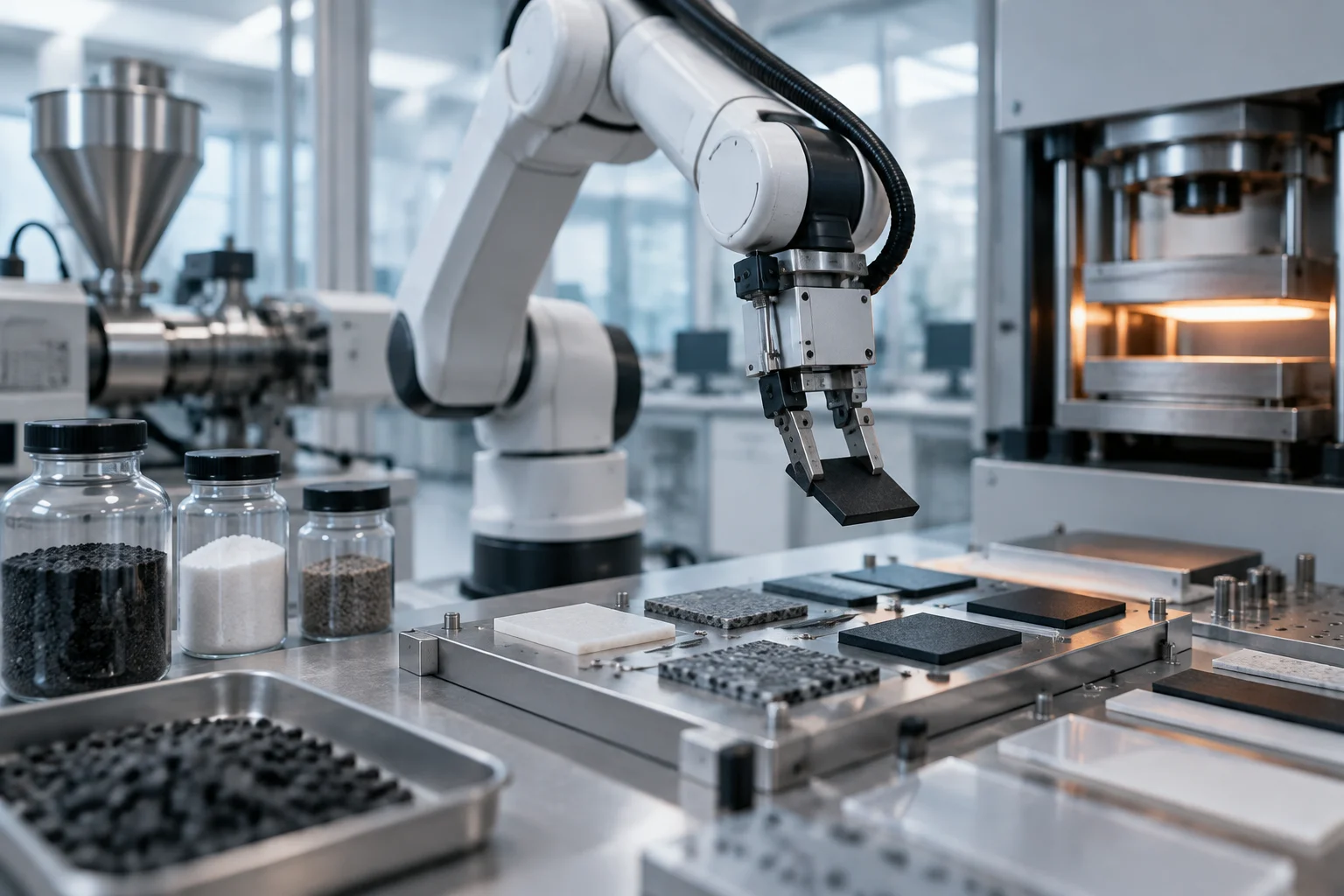
From a characterized sample to an application
Making a sample and measuring some of its properties allows researchers to study a formulation under specific experimental conditions. By itself, however, that does not establish that the material is ready for industrial use: the project is presented as a platform for research and discovery. Characterization answers questions about samples and test conditions, whereas assessment for an end use requires checking the requirements of that particular application. Laboratory data and a decision about whether a material can be incorporated into a process or product are distinct steps.
IMDEA’s announcement presents the infrastructure as a tool that could accelerate data collection and analysis, and describes its capacity in terms of a prototype and a complete configuration still planned as of February 2025. The specific scope of each research line depends on the materials, tests and scientific aims being pursued. Experimental speed is not industrial validation: automating data collection can facilitate exploration, but a sample’s suitability for a particular use must be established through tests relevant to that use.
Caution also applies to comparisons of speed. IMDEA cites an estimate from its researcher Maciej Haranczyk that, in the best-case scenario, a four-year experimental doctoral project could be reduced to half a week. This is a possibility conditional on laboratory optimization and the type of data obtained, not a general acceleration rate already measured for every experiment. The extreme case is not a guaranteed performance level: the estimate concerns the best-case scenario and does not establish that every project can be compressed to the same degree.
Research lines around Robotlab
According to the institutional description, DIGIMATER-CM brings together IMDEA Materiales, the Technical University of Madrid, the Carlos III University of Madrid, the University of Alcalá, the CSIC Institute of Polymer Science and Technology, and the CSIC Institute of Materials Science of Madrid. The project also mentions technology-focused partner companies. The collaboration combines expertise in materials, robotics and experimental methods to develop the platform and address different research challenges.
Within DIGIMATER-CM, different participating groups investigate biomaterials for sustainable plastics, piezoelectric and smart materials, and biomaterials for tissue engineering. IMDEA’s information assigns these research lines to different collaborating groups. These are research areas, not commercial products; their inclusion indicates the fields the project aims to serve, without claiming that all the lines have produced materials ready for use beyond the laboratory.
Robotlab is of interest as a way to expand experimental capacity in a field where manufacturing and characterizing materials involves complex processes. The project combines automation, robotics and data analysis to support discovery, and its scope depends on how its capabilities are developed and on the tests associated with each material. A robotic laboratory can expand the scale and reorganize research, but this experimental capacity does not replace the assessment required for a specific application. The key distinction is between facilitating experiments and demonstrating that a material meets the requirements of a particular use.