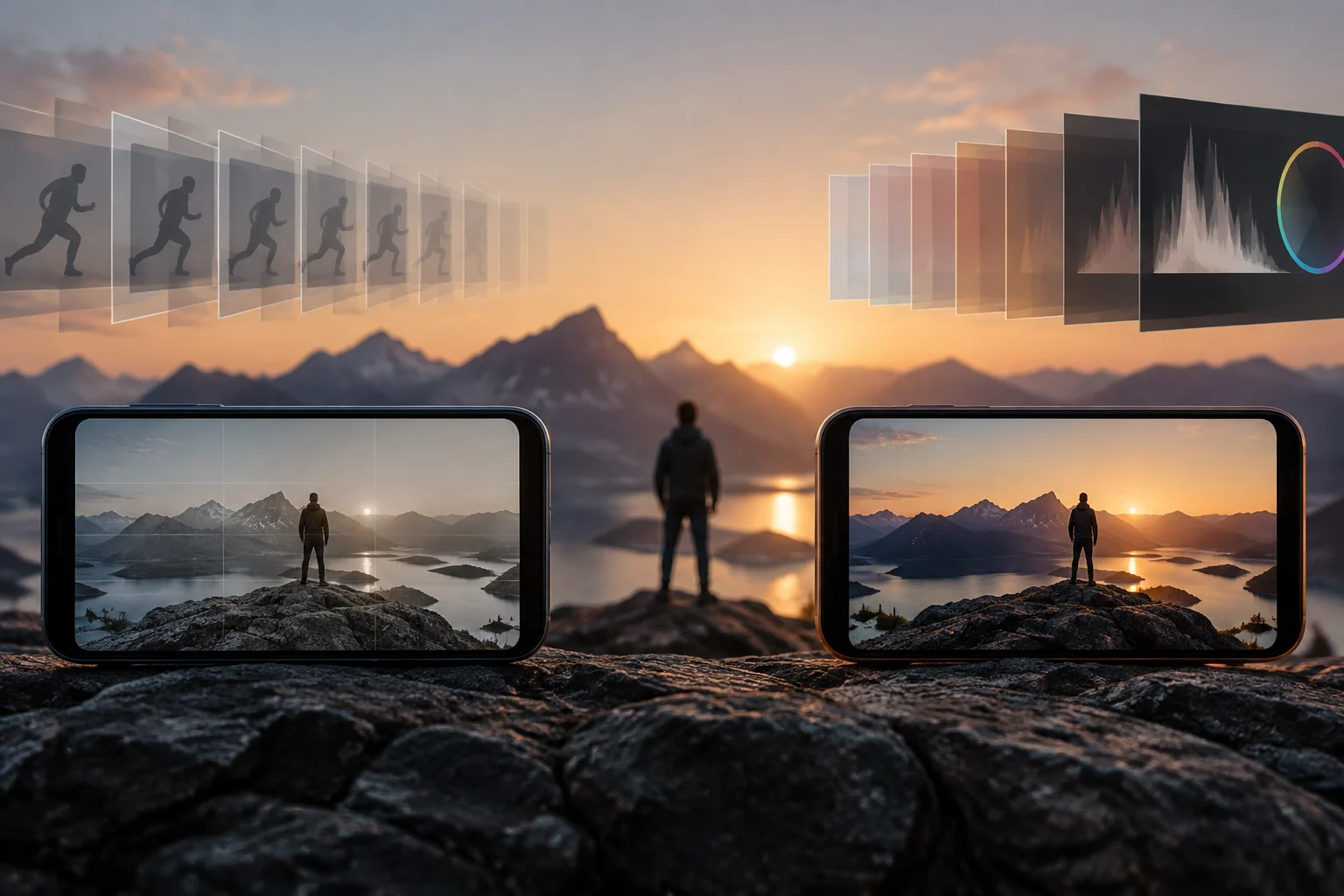
Sources Found and Their Scope
The initial search returns a heterogeneous mix of content: opinion pieces, model lists, and photography courses. However, no official press releases or recent news items confirm a specific launch. The texts focus on general 2026 comparisons but omit citing concrete events from October, limiting their value as proof of an immediate novelty.
In particular, links to portals such as Xataka and Yoigo provide detailed reviews of devices released between 2025 and 2026. These articles are useful for understanding the market’s current state, yet they do not reference a new campaign or product announced specifically in October. The confusion between a model launch and its subsequent review is common, but here there is no hint of a fresh announcement.
Apple press releases found in the search correspond to the iPhone 18 Pro and iPhone 18 Pro Max launch on 9 September 2026. That date precedes the period under analysis and does not match October’s novelty hunt. Likewise, no mentions of new cameras or software updates from Samsung or Google during that month were found, reinforcing the idea of a pause in official announcements.
Why Rankings Don’t Prove an Announcement
“Best mobile phones with camera” rankings are dynamic compilations based on technical specs and user reviews. While popular, they do not constitute direct evidence of a new release by manufacturers. The absence of specific launch dates in these lists indicates they feature already‑available models reorganized by current performance.
These lists are updated periodically to reflect price or availability changes but never announce new hardware. Therefore, seeing a device at the top of a ranking does not imply it was recently presented. It is crucial to distinguish product popularity from technological novelty—a nuance often lost in quick reads.
Mobile photography courses published in 2026 offer composition, lighting, and editing techniques. These educational resources are valuable for improving image quality but do not reference recent tech changes or new features introduced by manufacturers. Teaching relies on existing capabilities, not imminent innovations.
Official Documentation Needed to Confirm a Change
To assert with certainty that a manufacturer has launched a new camera or feature, one requires a press release with an exact date, detailed technical description, and direct links to the product page. This primary source validates the existence of a novelty and sets official parameters for innovation.
Moreover, technical specifications on the official website must reflect measurable changes from the previous generation—larger sensors, new optics, AI processing improvements, or significant software adjustments. Without such concrete data, any claim about enhancements remains unsupported technically and becomes mere speculation.
Cross‑checking between the announcement and technical sheets is essential. A verbal statement or leak does not suffice to confirm an update. Consumers and analysts must wait for consistent official documentation before accepting that a real change has occurred in mobile photography.
How to Contextualize a Potential Novelty
If, in the future, an official announcement were found, it would be useful to compare its scope with prior releases to gauge impact. The key question is whether it represents an incremental update or a revolution in sensors and image processing. This distinction determines the real value of innovation for the end user.
Comparing with the iPhone 18 Pro line and Galaxy S26 Ultra helps situate any new advancement within the current market. These devices set the benchmark in terms of image quality, focus speed, and video capabilities. Any novelty must be measured against these standards to determine whether it signifies a substantial leap or a marginal improvement.
Contextualizing the novelty also involves considering the software ecosystem. An excellent camera is useless if the software cannot harness its potential. Thus, evaluation should include both hardware and accompanying editing and sharing tools.
Implications for Consumers
For users, the lack of official confirmation means expectations about mobile photography improvements must remain moderate. Purchasing a device based on rumors or leaks can result in an experience misaligned with promises, causing frustration and potential financial loss. Prudence is the best strategy in such a dynamic market.
Retailers and distributors are also affected by this uncertainty. Without official data, they cannot offer specific guarantees or plan marketing campaigns around new features. This leads to a more conservative sales approach focused on already‑available models and their known advantages.
Moreover, content creators and professional photographers must plan equipment based on verified hardware. Investing in an unconfirmed device can disrupt workflows and jeopardize projects. Stability and predictability are key factors in purchasing decisions within the mobile photography sector.
Editorial Conclusion
In the absence of official press releases, we cannot assert that a recent announcement about mobile photography occurred in October 2026. The available evidence does not support the existence of a significant novelty during that period. Caution is the most responsible stance amid missing primary information.
The available articles are useful for understanding general trends and comparing existing models, but they do not replace verification with primary sources. Therefore, we recommend waiting for official confirmations before considering any novelty valid. Accuracy in technological information is essential for informed decisions and preventing the spread of unfounded rumors.