Why support matters in a budget tablet
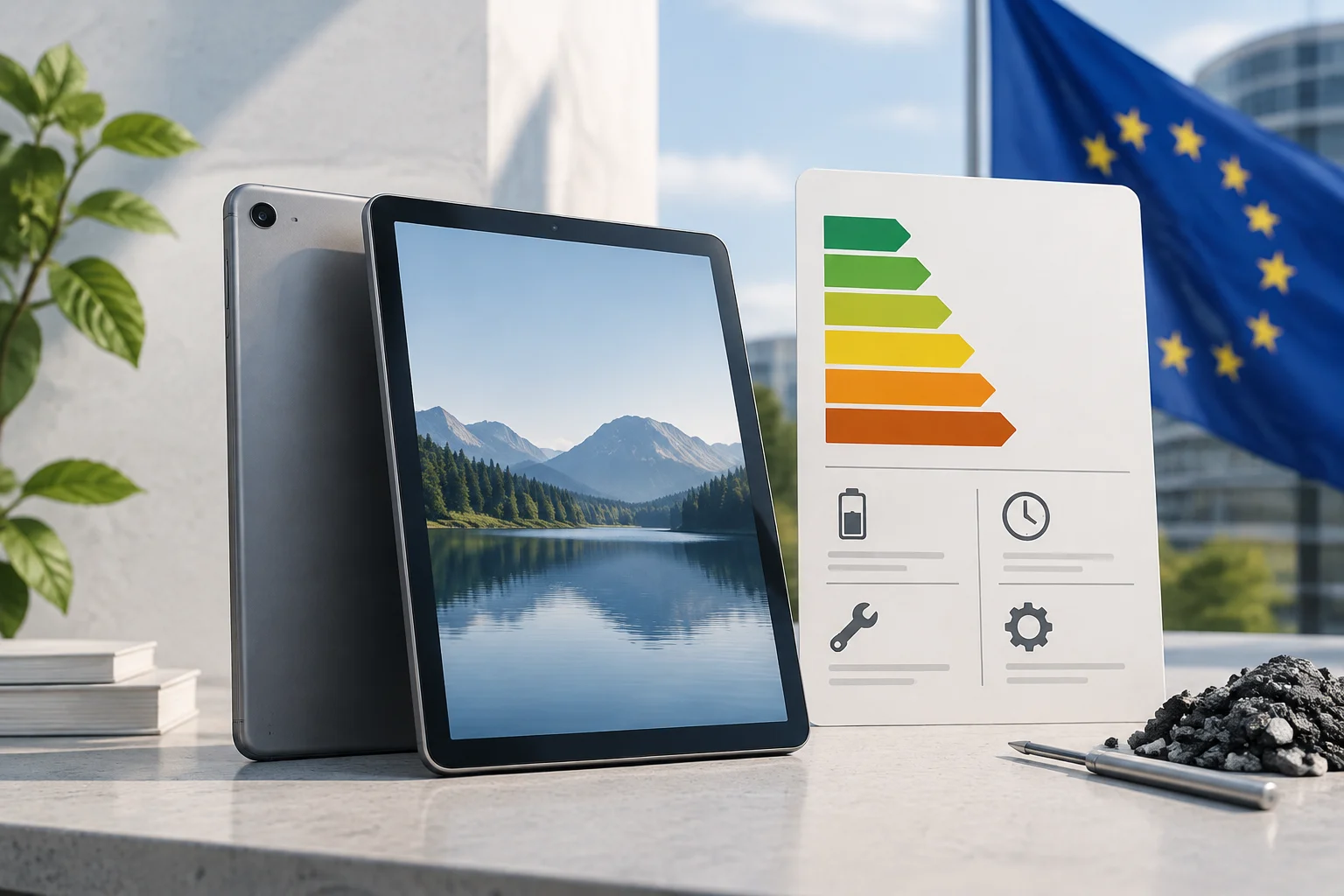
In a tablet for browsing, watching videos, or accompanying school tasks, the processor and screen usually dominate the comparison. However, the security update timeline also conditions how long it is advisable to use the device with personal accounts and connected services. Therefore, a figure of years is only useful if it is known what it covers and from when it is counted.
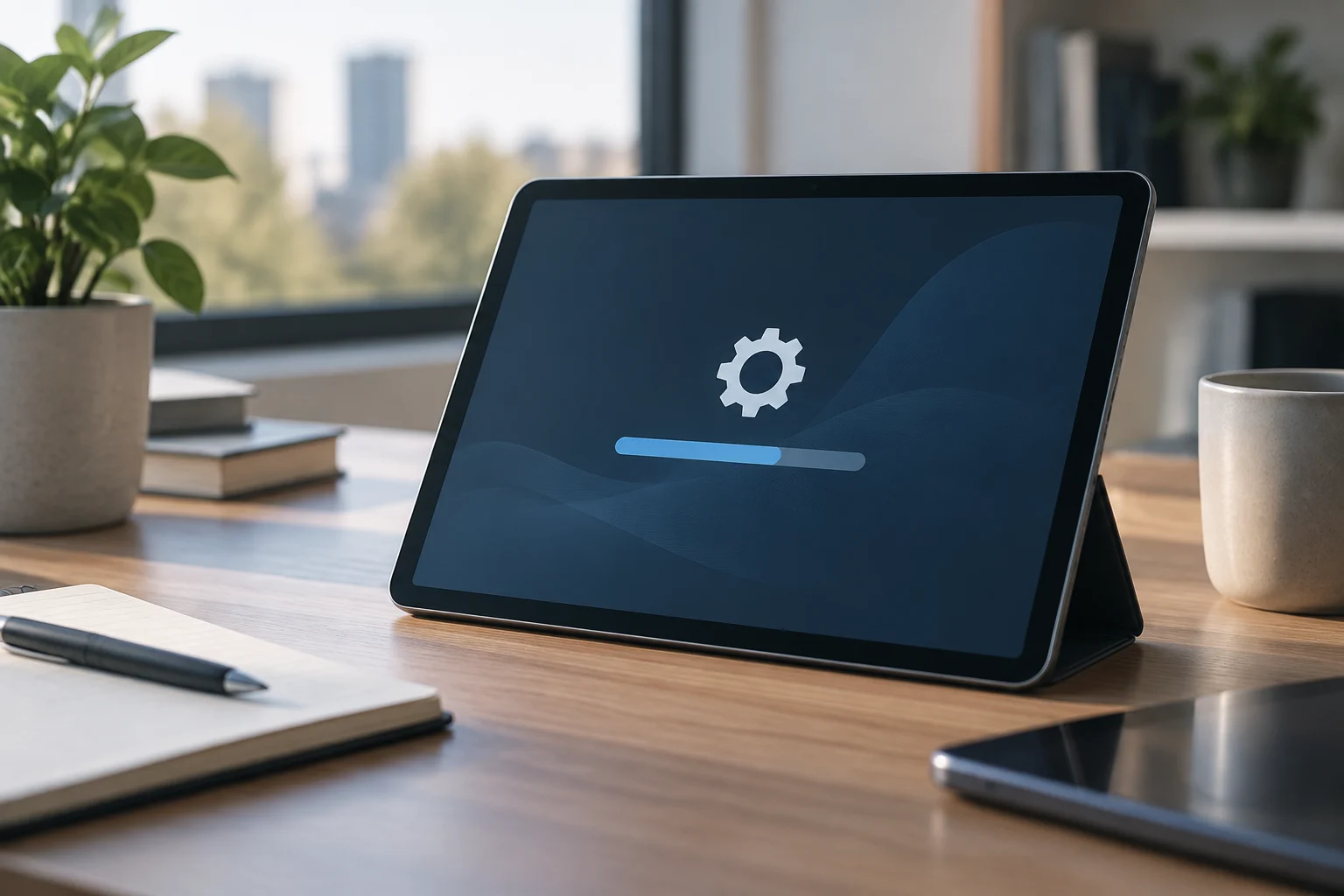
Not all updates are equivalent. New versions of Android may add features or change the experience, while security patches fix known vulnerabilities. A manufacturer may commit to maintaining one category of updates without promising the same frequency in all countries or variants. It is advisable to distinguish between system updates and security patches before comparing models.
The seven-year promise: what can be affirmed
The Galaxy Tab A11+ was the center of reports on possible extended support, but the evidence included here does not credit that Samsung has officially confirmed seven years for this model. Notebookcheck published in October 2025 that Samsung mentioned that timeframe in certain communications, although it did not then find an equivalent reference in the official sheet. That is an observation from a media outlet, not an official policy reproduced in the available sources.
It is also incorrect to present as a confirmed fact that support will end exactly in 2031. End of Life Date, an independent database, lists December 30, 2031, as the end date for Android and security updates for the A11+. It is a secondary reference, not a statement from Samsung, and therefore does not by itself resolve the discrepancy about the seven years. The prudent decision is not to turn any of those timeframes into an official guarantee without a Samsung policy that expressly identifies the model and the scope of support.
The Samsung security page included in the research is a general scope resource; the available evidence does not contain a legible entry confirming the specific calendar of the A11+. Furthermore, the model's commercial page describes product features, but does not fix a support duration in the reviewed material. The absence of confirmation in these sources does not prove that there is no commitment in other documentation: it only limits what can be affirmed with backing here.
What the comparison with other brands brings — and what it does not
Information on Xiaomi also does not allow affirming that all its tablets receive five years of support. UITECH reports that some devices from the Xiaomi, Redmi, and POCO brands may receive up to five years of Android and HyperOS updates. It is a journalistic description of a policy for certain equipment; it does not identify in the provided material a specific tablet comparable in price with the Galaxy Tab A11+. A maximum announced for some devices should not be confused with a universal guarantee.
In the case of Lenovo, Gizmochina reported on January 19, 2026, that the deployment of Android 16 for the Idea Tab had begun. This proves that the model received a major update, but does not establish how many years of updates or patches it will receive in total. It is also not enough to classify it as a direct equivalent by price: the provided evidence does not include a comparable price nor the complete official support calendar.
Available sources do not allow building a homogeneous comparison of support years for Samsung, Xiaomi, Lenovo, and Huawei. In particular, the Huawei purchase page included in the research does not provide a verifiable update policy, and there is not enough data to locate its conditions against the A11+. The useful comparison is by model and variant, not by a general figure associated with a brand.
How to interpret the end of updates
When patches stop arriving, the system may remain exposed to vulnerabilities for which fixes already exist in newer versions. This does not mean that any unsupported tablet will suffer an attack or stop working immediately; it means that the manufacturer no longer offers the same response to security flaws. The concrete risk depends on usage, installed applications, and the information accessed.
For a family device, it is reasonable to separate tasks according to sensitivity. Viewing content or using applications without important data does not present the same profile as logging into financial services or saving personal information. If the end-of-support date approaches, the user can review which Android version they have, when the last patch was applied, and whether the manufacturer still includes the model in its maintenance list. There is no basis here to recommend antivirus or alternative ROMs as equivalent substitutes for official patches.
A longer support life can make a tablet remain a viable option for longer, but it does not guarantee that the battery, storage, or performance will maintain their utility. There are also no provided data to ensure a concrete effect on resale price. Support is a criterion of longevity, not a promise of physical duration or future value.
A purchase decision based on verifiable data
To decide whether to pay for a budget tablet, it is advisable to compare the real price of available variants with the official support calendar of each. In this research, there is not enough backing to confirm the €270 price of the starting headline nor to compare offers in the €190 to €270 range. Therefore, the price should not be treated as a verified datum in this piece.
Before buying, check these points on the manufacturer's page or the support documentation of the exact model:
- Whether the timeframe refers to Android updates, security patches, or both.
- From what date the period starts counting and what is the published end date.
- Whether the policy applies to the specific variant and the market where it is sold.
- What patch frequency the manufacturer declares and whether the tablet still appears in its support list.
The practical conclusion is simple: the Galaxy Tab A11+ should not be chosen assuming it has seven confirmed years of updates, but it also should not be described as certainly limited to five years based solely on an independent database. Until there is a specific and verifiable official statement, compare the support published by model and take any unconfirmed timeframe as uncertainty, not as a guarantee.