What a spatial audio label says — and what it does not
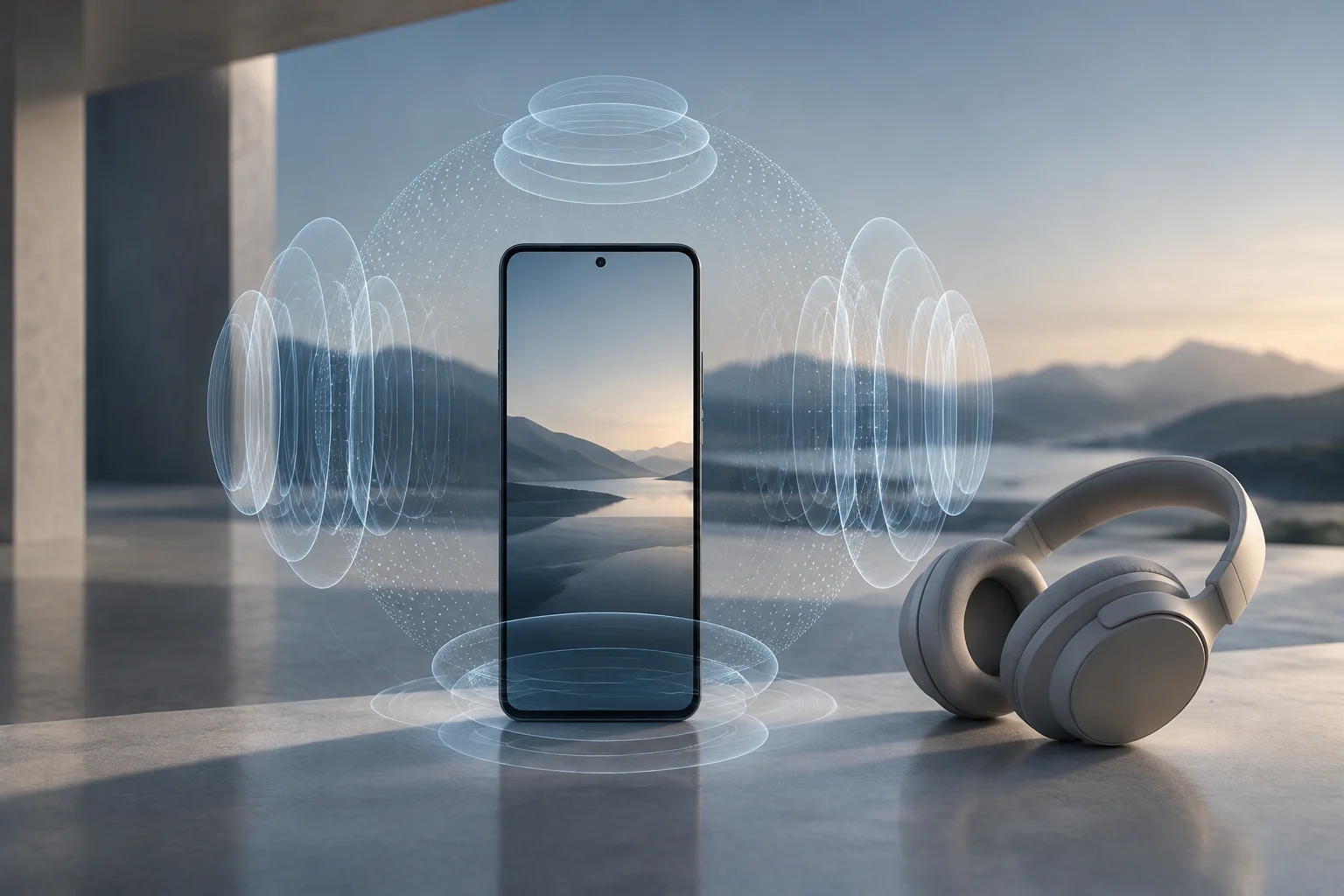
A phone including Dolby Atmos or spatial audio technology is a compatibility fact, not a quality measurement. The label does not describe the acoustic result by itself: it does not inform about maximum clean volume, speaker response, or how much the spatial effect is perceived in a specific room. The documentation available for this evaluation does not include a series of 2026 mobile and tablet lab tests; therefore, it does not allow classifying models or confirming that a range has extended the feature in a generalized way.
It is also worth clarifying the vocabulary. Spatial audio can refer to different formats, configurations, processing, or tools; it is not a single specification that guarantees the same performance in all devices. A technical explanation of format categories distinguishes, for example, between codecs and containers, formats and configurations, and other standards or tools. Before comparing specs, one must know what is being compared: support for a format, signal processing, or a specific speaker feature.
Format, signal, and device: three distinct pieces
The listening experience depends on a chain. First, there is the content and the format in which it is delivered; then, the device must recognize and process that signal; finally, speakers or headphones convert it into sound. A limitation in any link changes the result. Therefore, a device announcing compatibility does not mean that every video, song, or game will be played with the same spatial treatment.
The distinction also avoids confusing format and codec. A format describes how a mix is organized or represented, while a codec handles encoding or compressing data to store or transport it. This is a useful simplification, not a complete description of all commercial systems. In practice, for a mobile buyer, it matters to find out if the service or file used offers a compatible signal and if the phone processes it through the intended route. The presence of the name on the box is only the beginning of that check.
Dolby Atmos and DTS-X: do not assume equivalence or superiority
Dolby Atmos and DTS-X often appear in conversations about surround sound, but the evidence gathered here does not allow sustaining that one is always superior, compresses better on mobiles, or is the predominant option on a specific platform. It also does not provide official documentation from both manufacturers detailing which implementation is used for this phone range. It is not responsible to turn a label into a performance comparison without verifiable specifications or reproducible tests.
To assess compatibility, the buyer can review the device manufacturer's information, the content service documentation, and output options separately. Check if the feature activates with the phone's speakers, headphones, or both, and if there are additional settings or requirements. Do not deduce that a video certification implies audio compatibility: they are distinct capabilities. The key is to document the actual signal path, not to accumulate technology names in a list.
What can be concluded from information on mobiles and tablets
Available sources show why it is wise to distrust generalizations about '2026 mobiles'. A commercial guide from June 2026 mentions several phones and attributes Dolby Atmos to the Redmi Note 15 Pro+ 5G, but it is secondary coverage and does not replace an official spec sheet or independent measurement. It serves as a clue to investigate a model, not as proof that an entire category has adopted a feature, nor that the sound is superior.
Information on the 2026 Moto G family offers some configuration data for certain models —for example, 5G connectivity, 120 Hz screens, and processor differences—, but the cited material does not document the implementation of Dolby Atmos or DTS-X in them. Similarly, a tablet guide lists high-end models but does not present a comparable lab evaluation of their audio. Those gaps cannot be filled with inferences about price, size, or commercial position: each model and market requires specific verification.
A practical check before buying
A technical spec sheet is more useful if contrasted with how content will be consumed. Before deciding, review these issues on the model's official page and, when possible, in the documentation of the service you use:
- Exact model and market: features and configurations may vary between regional variants; verify the full name and the page corresponding to your country.
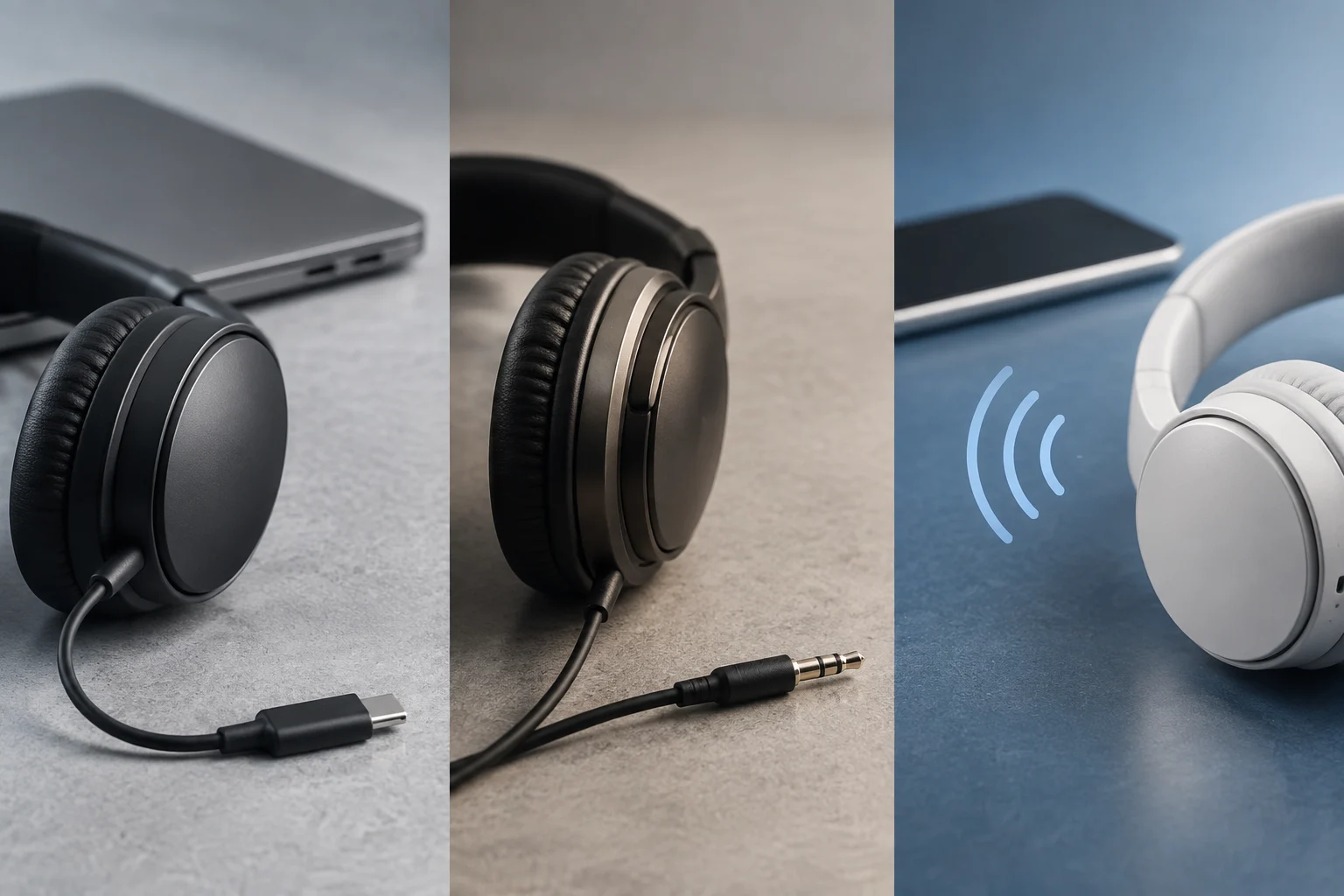
- Intended output: check if the feature refers to integrated speakers, headphones, or both outputs, and what connections or accessories it requires.
- Compatible content: confirm that the service, file, or game offers compatible audio; do not assume any content activates spatial processing.
- Independent tests: look for comparable measurements of volume and response, and listen with the type of output you will use. A subjective impression can guide, but it does not equal a lab measurement.
This method helps avoid two opposite errors: discarding a useful feature because its name is confusing, or paying more assuming the badge guarantees an audible improvement. The decision must start from real use: if you usually listen through the phone's speakers, look for evaluations of those speakers; if you use headphones, review the behavior with your equipment and service. The cited documentation does not establish a universal test or threshold to decide if spatial audio is 'good'.
What can be concluded and what remains pending
The defensible conclusion is limited: spatial audio terms identify technologies or compatibilities that must be understood within a playback chain, but they are not enough to predict the sound quality of a mobile or tablet. To compare two devices, specific spec sheets and tests under equivalent conditions are needed; to confirm effective playback, content, software, and output used must also be checked.
In this research, there are no lab tests of the mentioned models nor sufficient primary documentation on the implementation of Dolby Atmos or DTS-X in a representative selection of 2026 mobile devices. A general relationship between a format and availability in specific services is also not verified. These are limits of the evidence, not reasons to claim that the technologies do not work. For the consumer, the useful recommendation is to verify the exact model and playback route, and not treat the label as a test result.