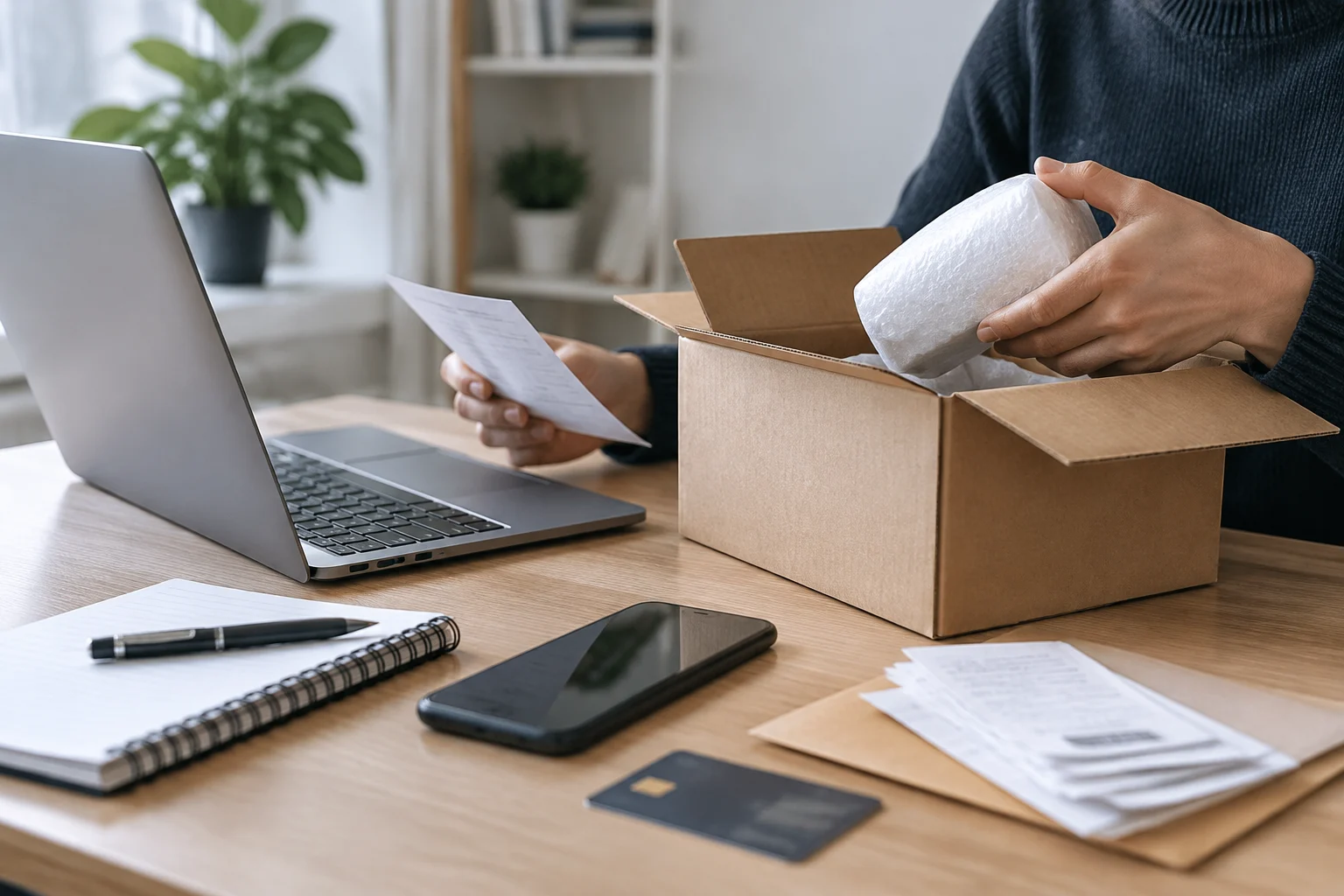
Check the store, platform, and seller
Start by identifying who the seller is. For an independent store, check its business name, contact details, and published legal information. On a marketplace, distinguish between the company operating the platform and the third party offering the product: the intermediary may handle payment, returns, and complaints differently from the seller.
Search for the store or seller’s name alongside terms such as “complaint” or “scam,” and compare recent experiences from multiple places. Reviews can help reveal patterns, but they are not a guarantee: they may be fake, biased, or fail to disclose incentives. Check that the listing identifies the product, its condition, and the specific seller; catalog photos cannot verify the condition of a used item.
An address that begins with HTTPS encrypts the connection between your browser and the site, but does not certify that the business is legitimate. Scammers can use encrypted sites too. If a link arrives in an unexpected message, avoid opening it; search for the store separately or type an address you already know.
Calculate the total cost and read the terms
Compare the final price, not just the amount featured in the listing. Add shipping, handling, taxes, and any other charges, and read the full description: terms such as “refurbished,” “used,” or “final sale” change what you are buying and may affect returns. If a branded product costs far less than at other retailers, consider that it could be counterfeit or that the listing may not accurately describe its condition.
Before paying, check the delivery, return, and refund terms. Find out who pays return shipping, whether restocking fees apply, and what deadline the seller sets. On a platform, confirm whether its buyer-protection program covers that seller and purchase, and note any deadline for opening a case. A platform’s rules are not necessarily the same as the seller’s.
In the United States, the FTC says sellers must ship orders as promised; if no shipping date was provided, the federal rule generally requires shipment within 30 days after the seller receives the information needed to process the order and payment or authorization to charge. This U.S. rule is not a universal deadline: elsewhere, check local consumer-protection rules and authorities.
Choose a payment method that gives you options
When possible, paying by credit card offers a way to dispute certain charges, such as when an item does not arrive or a charge differs from what you agreed to. That does not guarantee the issuer will decide in the buyer’s favor: contact the issuer, explain the problem, and follow the procedure and deadlines that apply to your case and location.
In the United States, the FTC recommends promptly disputing certain billing errors. For cases covered by federal billing law, it says written notice must reach the issuer within 60 days after the first statement showing the error. That is not a deadline for every claim or a rule that automatically applies in other countries; check with your card issuer and the laws in your jurisdiction.
Be wary if a seller insists on a bank transfer, gift cards, cryptocurrency, or another hard-to-reverse payment method. On a marketplace, do not pay outside its system if doing so removes the protections it offers. Before using a payment service, read what it covers, what it excludes, and how to file a dispute: “secure payment” does not mean every purchase automatically qualifies for a refund.
Spot deceptive messages and limit the information you share
A message about an order that demands immediate action, asks for financial information, or includes an unexpected link may be a phishing attempt. Do not reply or open attachments under pressure. If the notice might be genuine, check your order through the official app or website, reached independently rather than through the message link.
Scammers can imitate well-known retailers and use similar-looking web addresses. Check the domain and the account that sent the message carefully, but do not rely on polished writing alone: CISA warns that fraudulent messages can be well written. If in doubt, contact the business using details published on a page you found independently.
Provide only the information needed for the purchase, and check what data the store or its app collects, how it uses it, and whether it shares it. The privacy policy and service terms can help you decide whether to proceed. Keeping your browser, phone, and apps up to date and protecting accounts with unique passwords and multifactor authentication reduces security risks, but does not verify a seller or replace reviewing the purchase.

Keep a simple record of the purchase
Keep a copy of the confirmation and record the date, product, and amount. Also save the seller’s name and address, the return policy in effect, the promised delivery date, and the payment method. A confirmation email or screenshot of the listing can be useful if the page changes or becomes unavailable.
Archive emails, messages, and replies from the seller or platform. If an important promise was made by chat or phone, ask for it in writing. Download relevant statements or payment receipts and record tracking numbers. Keep only necessary information and store it so other people cannot access financial or personal details.
If a problem arises, document what you received—or that the order never arrived—and when you contacted the seller. Keep a brief timeline of responses and your interactions with the platform and payment issuer. A clear timeline makes the case easier to explain, but keeping records alone does not guarantee a refund or replace the formal requirements for a dispute.
Records to keep for an online purchase
A concise checklist of purchase details and communications to retain in case a delivery, return, or payment issue arises.
-
Order details
Seller, website, item, date, and amount
-
Terms and delivery
Return policy and shipping promise
-
Communications
Messages with the seller
-
Payment proof
Relevant payment statement
Keeping records can help explain a dispute but does not guarantee a refund or replace applicable dispute procedures.
Sources and references1
Resolve the problem through the right channels
First contact the seller through a channel that creates a record, and state the resolution you want: delivery, replacement, return, or refund, depending on the situation and applicable terms. If you bought through a marketplace and the seller does not resolve the problem, file a complaint with the platform and check its procedures and deadlines.
If you paid by card and the charge is incorrect, the item did not arrive, or the product differs from what you agreed to buy, also contact the issuer to ask whether you can dispute the transaction and what documentation it needs. Do not wait for a lengthy exchange to end if a deadline is approaching. For other payment methods, contact the relevant provider; recovery options vary, and some transfers can be hard to reverse.
In the United States, you can report a scam or problematic business practice to the FTC at ReportFraud.ftc.gov; for state-level issues, the state attorney general may also be relevant. In other countries, use local consumer-protection authorities and complaint channels; rights, deadlines, and the responsible agency depend on the jurisdiction.