What it means to run Gemini Nano on a phone
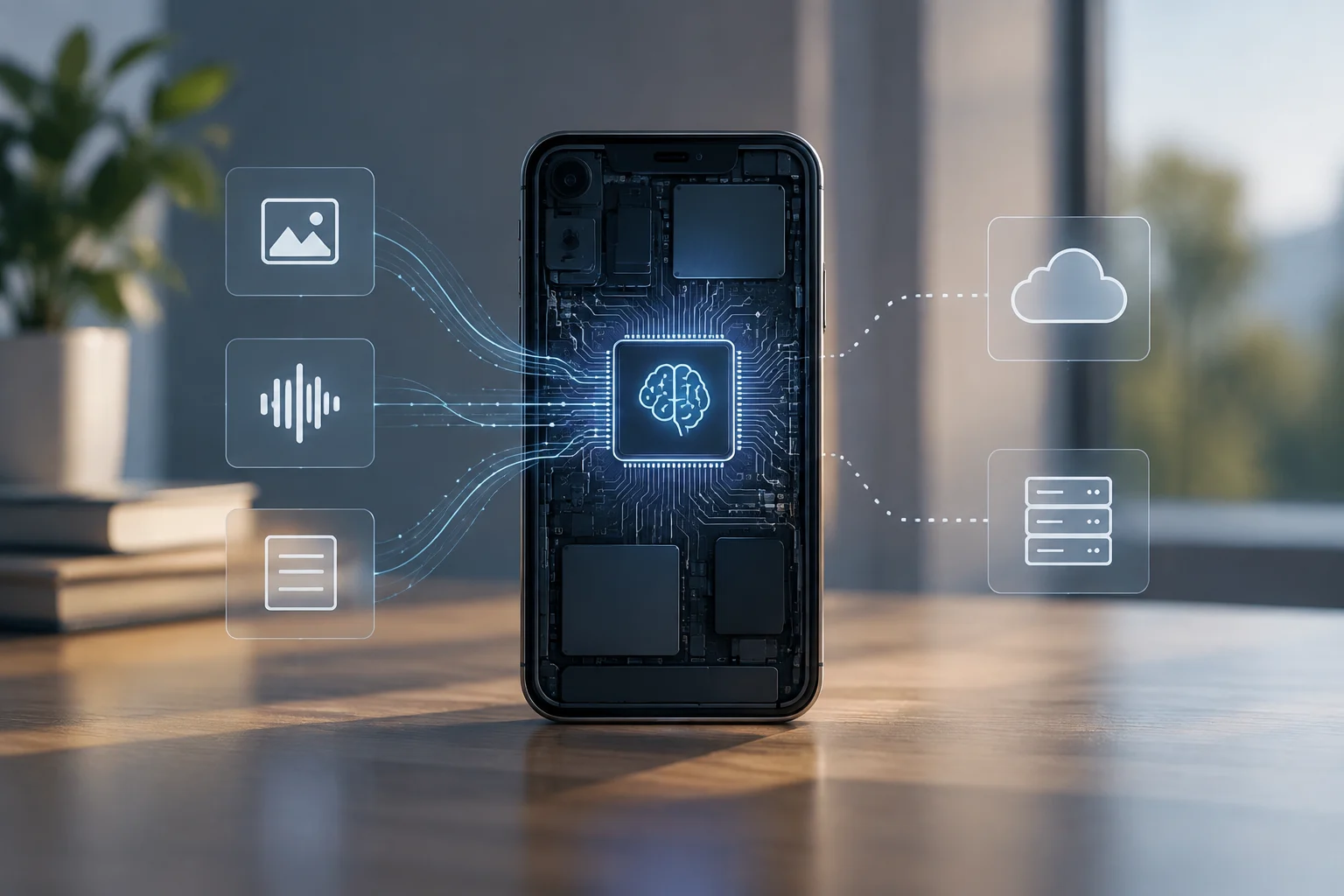
Gemini Nano is Google’s model for certain generative artificial intelligence tasks on devices. On Android, it works through AICore, a system service that gives apps a way to access the model and manages its delivery and updates. Compatible apps can therefore use the model built into the device instead of having to bundle all of those components themselves.
When a supported task is processed locally, its request does not need to be sent to a server for that inference. This can reduce reliance on a network connection, enable some features to work offline, and keep the content needed for that specific operation on the device. It does not mean that every Gemini feature or every Android app works offline: it applies only to tasks that can run locally and that an app has integrated.
What tasks on-device AI can perform
ML Kit’s GenAI APIs, built on AICore, give developers access to capabilities such as text generation, summarization, proofreading and rewriting messages, image description, and audio transcription. These are specific capabilities an app can integrate, not a promise that every complex query will be handled on the phone or that every app includes them all. Which features are available depends on the integration its developers choose.
Google notes that local inference has limits related to request length, device resources, and model capabilities. An app may therefore reserve Gemini Nano for bounded operations and use another model when a task needs more context or capacity. The final behavior depends on each app’s design: the on-device model may handle one part of a feature while another part uses a different option.
Compatibility depends on the device
Gemini Nano does not automatically run on every Android phone. The model and supported features depend on the device and its software support; having Android is not enough to assume an on-device feature will be available. Compatibility needs to be checked for the specific phone and feature, rather than inferred from the operating system’s name alone.
In May 2024, Google named the Pixel 8 Pro and the Samsung Galaxy S24 series among devices then compatible with Gemini Nano and AICore. To check whether a feature works on a particular phone, look up compatibility for that specific model and software version, since support can vary.
What local processing means for privacy
Processing a request on the phone can prevent its content from being sent to a server for that inference. Google says AICore isolates requests and does not retain their inputs or outputs after processing. That describes this processing route, not a general guarantee about all the data an app handles or about other features that may communicate with external services.
An app may combine local features with remote services that handle data differently. It is therefore useful to distinguish which task runs on the device and which features depend on the cloud; the answer can differ from one feature to another within the same app. “On-device AI” describes where an inference takes place, not necessarily the entire path the information follows.
When the cloud comes into play
Google supports hybrid inference for cases where Gemini Nano is unavailable or not capable enough for a task. With the Firebase AI Logic Hybrid API, developers can configure requests to be sent to cloud models such as Gemini Flash or Gemini Pro. This fallback can extend capabilities for a task beyond the local model’s limits, but it requires a connection and means the request is processed through a remote service.
The experience depends on how each app handles the switch and which route it uses for each task. A local task may be unavailable on an incompatible device; a request sent to the cloud cannot be completed offline. In apps that combine both routes, the processing location and data handling can vary depending on the feature being used.
What to check before using it
When assessing an AI feature on Android, check three things: whether the device supports it, whether it works offline, and whether the app may send some requests to remote services. The name Gemini Nano does not answer these questions by itself: it identifies the model, not each phone’s compatibility or an app’s full data policy. This distinction helps clarify what runs locally and what might need a connection.
For developers, AICore manages access to and updates of the model on supported devices, while ML Kit provides APIs for specific tasks. The choice between local, cloud, or hybrid processing should reflect the task’s complexity, the available connection, and the sensitivity of the data. Each option involves a different trade-off between capability, offline use, and where a request is processed.