Micro RGB identifies a TV technology
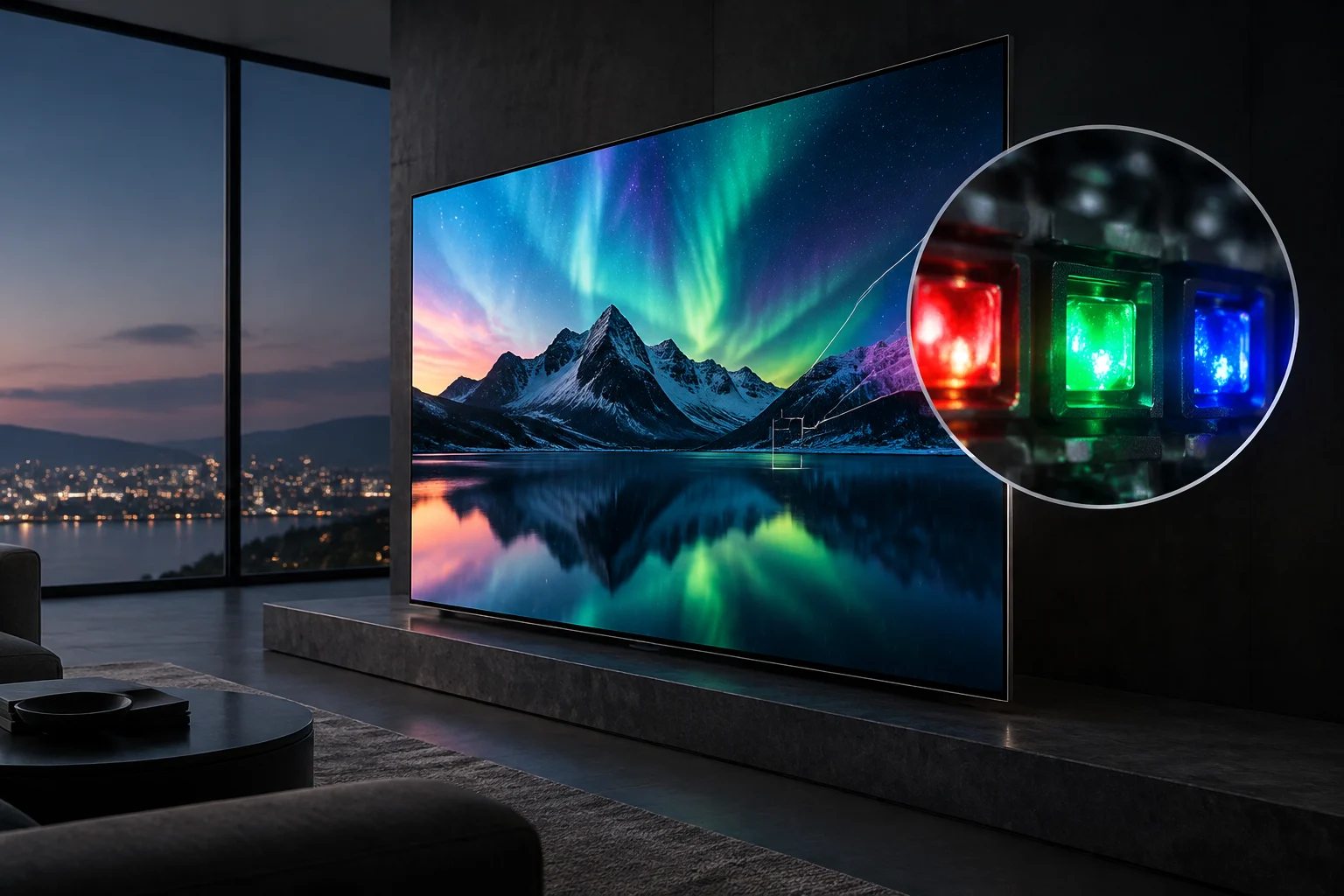
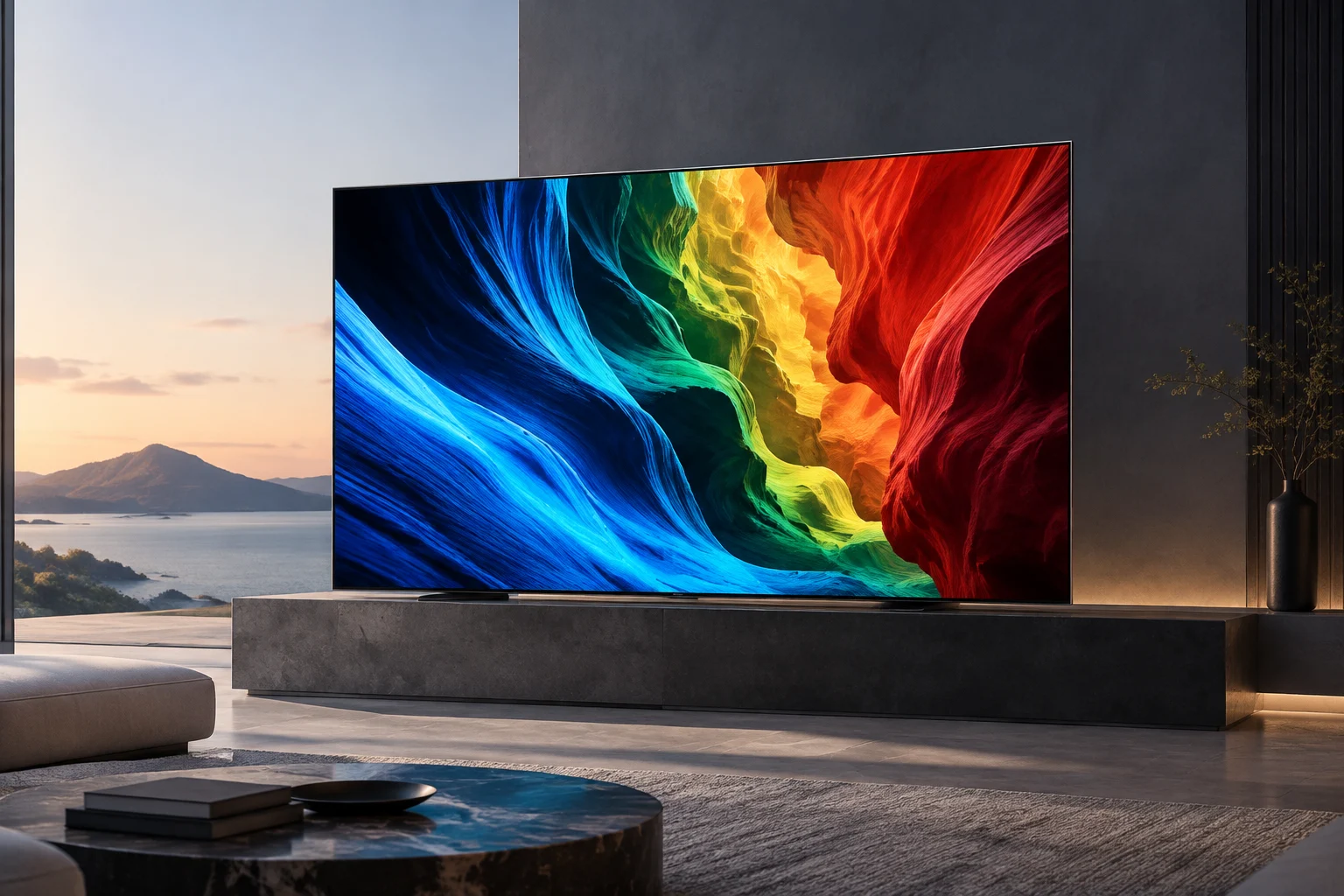
Samsung describes Micro RGB as an image technology present in its televisions: it uses backlighting with microscopic red, green, and blue components to control the screen's color and brightness. Micro RGB identifies a Samsung TV display technology here.
Samsung's 2026 TV lineup includes Micro RGB, OLED, Neo QLED, Mini LED, Crystal UHD, and The Frame. In its buying guide, Samsung positions Micro RGB among its home cinema proposals and notes that features and availability vary by model and region. The name RGB alone does not describe all product capabilities.
What changes compared to other screen technologies
Samsung presents Micro RGB as a way to control light using microscopic red, green, and blue components. The technical intent is to adjust color and brightness with greater precision; this describes a display system, not independent ambient lighting.
The useful comparison when choosing a TV is with other technologies in the brand's lineup. Samsung explains that OLED uses self-emissive pixels; to compare Micro RGB with Neo QLED and Mini LED, it is advisable to review the specific model's features. The Micro RGB label alone does not conclude that a TV is better for any room or content: it is best to compare its capabilities and intended use.
Samsung's Micro RGB lineup in 2026
Samsung's Spanish guide identifies two Micro RGB families for 2026: R95H and R85H. The company attributes different functions to each, so it is not advisable to automatically transfer specifications associated with the R95H to the R85H model. Among the names Samsung uses for this technology are Micro RGB AI Engine Pro, Micro RGB HDR Pro, and Micro RGB Precision Color 100.
Samsung claims that Micro RGB Precision Color 100 achieves 100% of the BT.2020 color space and has VDE certification for color reproduction. This is a manufacturer's claim linked to specific evaluation criteria, not an independent measurement of the performance of all Micro RGB TVs or a guarantee for every piece of content viewed on screen.
Matter and Thread are not confirmed Micro RGB features
Matter is an interoperability standard for smart home devices; Thread is a network technology used by some connected home devices. A product having RGB lighting or carrying “RGB” in its name does not prove compatibility with either. Do not buy a Micro RGB TV assuming it works as a Matter lamp or Thread device.
For those looking for a smart bulb, the practical criteria are different: connection type, compatible platform, need for a hub, and color and dimming functions. For example, the Tapo L535E spotlight datasheet describes Wi-Fi connection, Matter compatibility, and color control from the app; these data belong to that specific product and cannot be attributed to Samsung TVs.
How to choose between screen and connected lighting
If the goal is to buy a TV, the decision starts with size, available space, and main use—movies, sports, video games, or daily television—and then compares the features of specific models. Samsung warns that feature availability may vary by model and region. The technology family is a clue to guide comparison, not a complete device spec sheet.
If what is needed is smart lighting, one must look for a datasheet that explicitly identifies the lamp model and its protocols. Matter can facilitate interoperability between platforms, but it does not make products compatible by default if they do not implement it. It is also important to distinguish Matter over Wi-Fi from Matter over Thread: network requirements and control devices may change.
Samsung uses Micro RGB for an image technology in its TVs. When choosing one, it is advisable to compare the specific model's features and intended use; if connected lighting is sought, the lamp's datasheet must be reviewed to check which protocols it declares.