Omdia's forecast points to fewer units, not a 14% drop
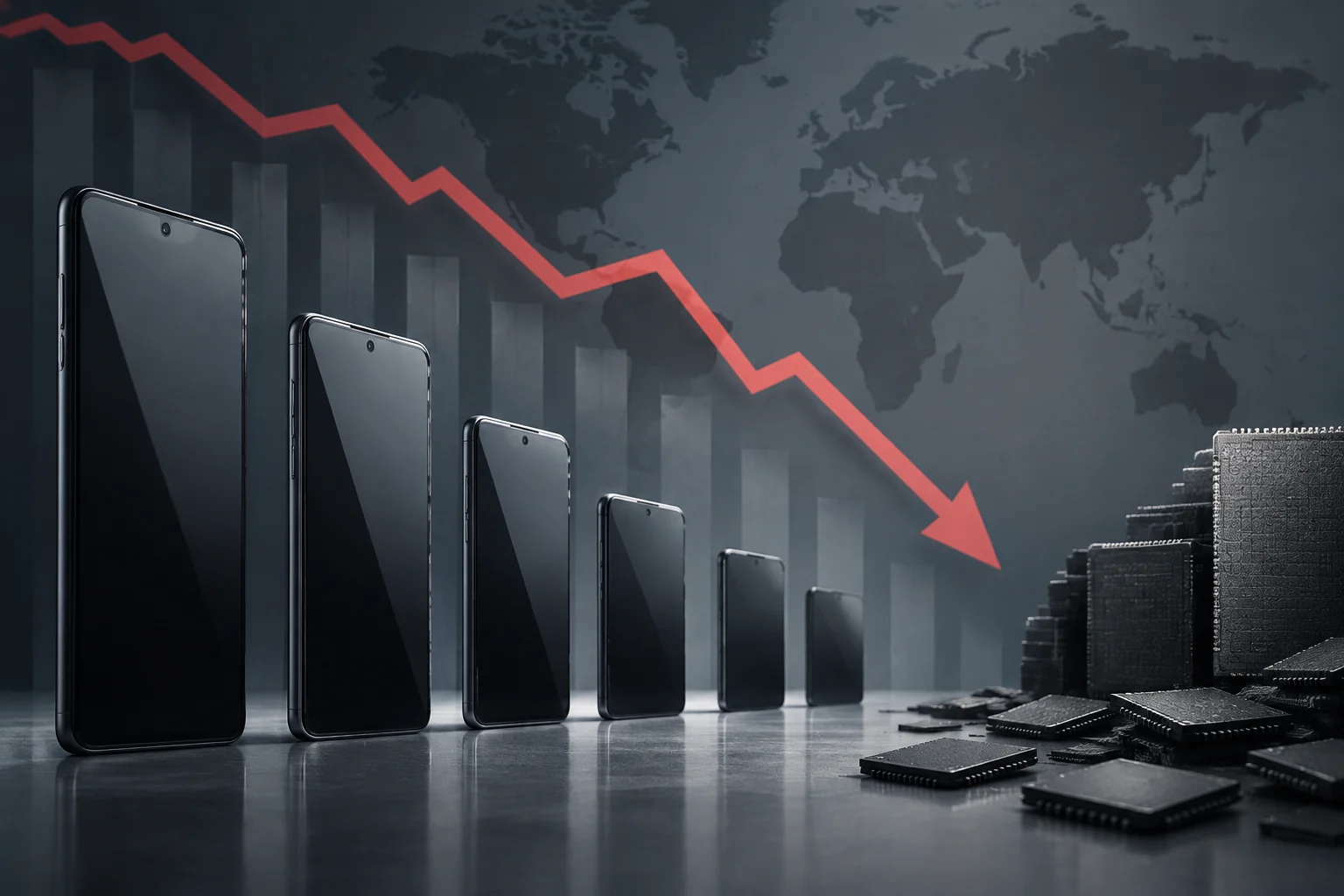
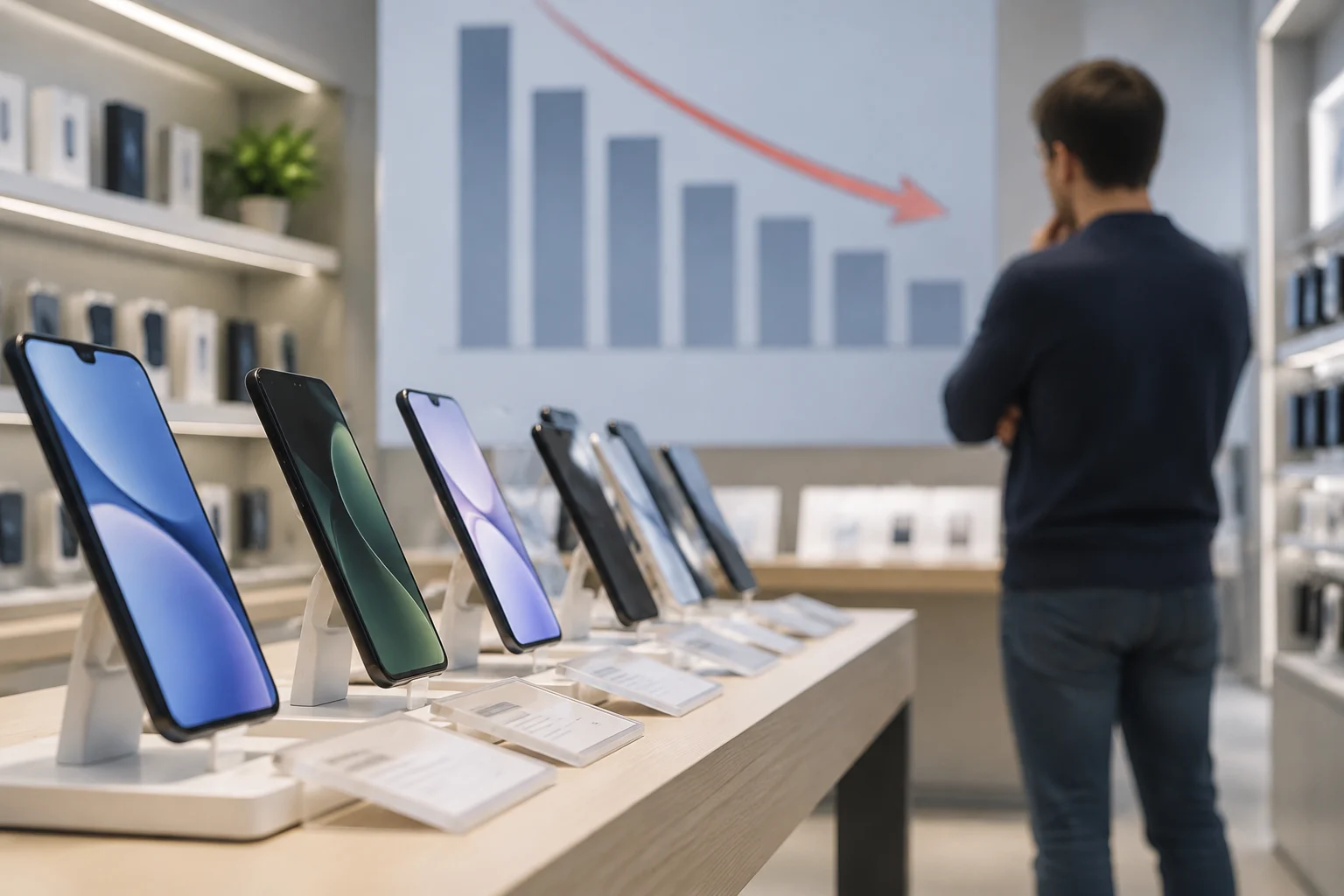
Omdia calculates that approximately 1.097 billion smartphones will be shipped worldwide in 2026, a 12% decrease compared to the previous year. This figure is an annual forecast, not a definitive count of consumer sales: manufacturer shipments and store purchases are distinct metrics.
The consultancy also predicts a new contraction in 2027, according to La Razón, which reports its estimates. This figure should be read as a projection, not a confirmed result. Omdia estimates a 12% drop in global smartphone shipments during 2026.
The decline does not mean that all manufacturers or segments will retreat equally. Omdia attributes part of the adjustment to cost pressure and changes in market composition. For the Spanish consumer, the indicator helps understand the context, but it does not predict the price of a specific model on its own.
Fewer cheap phones and more weight for the premium range
La Razón, summarizing data attributed to Omdia, notes that phones under 200 euros would drop from 40.6% of the market in 2025 to 25.6% in 2026. At the upper end, models over 800 euros would rise from 21.1% to 28.4%. These are global market percentages, not specific data for Spain.
This shift matters because the market may reduce its volume while simultaneously concentrating more activity on expensive terminals. A higher premium share does not prove that every phone has increased in price: it may also reflect that fewer budget models are being purchased or that buyers keep their phones longer.
For those seeking an affordable phone, the practical implication is to compare generations and configurations, rather than assuming the newest model necessarily offers better value. A mid-range phone from a previous generation can meet the same needs if it maintains software support and the battery is in good condition; that decision depends on the model and its local price.
Memory pressures costs, but does not determine price alone
Memory is one of the items identified by sector coverage as a focus of pressure. Infobae links the increase in component costs to demand for memory for artificial intelligence infrastructure and reports a downward revision of smartphone shipment forecasts attributed to Counterpoint Research. This is not sufficient explanation to attribute the entire contraction to RAM.
Smartphones use low-power memory variants, such as LPDDR, integrated into compact designs. Therefore, speaking of a 'DDR5 RAM' crisis as a direct and uniform cause for all models oversimplifies the supply chain. Cost pressure can vary depending on the component and the manufacturer.
Computerworld reports that IDC and Omdia identified memory and storage costs among the factors affecting the market during the third quarter of 2026. This explanation does not allow calculating how much of the retail price of a Spanish mobile phone corresponds to memory.
The 2026 landscape mixes figures that should not be compared directly
Figures published for the year do not necessarily describe the same period or the same metric. Omdia's annual estimate cited by La Razón speaks of a 12% contraction; Computerworld reports year-on-year drops close to 20% for the third quarter, with 23% attributed to IDC. A quarter and a full-year forecast can differ without one figure automatically invalidating the other.
Infobae reports another estimate from Counterpoint Research: a 2.1% drop in global mobile shipments for 2026, along with a downward revision of its previous forecast. The difference compared to Omdia is substantial and advises against presenting a single percentage as sector consensus.
The robust conclusion is more limited than a headline of uniform collapse: there are contraction forecasts, but their magnitude depends on the firm and the period. To evaluate the market, it is advisable to keep the analyst's name, the time horizon, and the metric—shipments, retail sales, or revenue—together rather than mixing percentages.
Global smartphone shipment forecasts for 2026
Two analyst estimates reported by La Razón and Infobae. The different projections are not directly interchangeable or a single industry consensus.
| Omdia | 12% decline |
|---|---|
| Counterpoint Research | 2.1% decline |
Forecasts from different firms; methodologies may differ.
What can someone buying a mobile in Spain do?
A global forecast is not a Spanish price list. Omdia's estimate refers to global smartphone shipments, not to the availability or price of a specific model in Spain.
If the current phone works well, the drop in shipments does not in itself constitute a reason to buy earlier or wait. It may be more useful to set a budget, check how many years of updates the model offers, and evaluate battery, storage, and camera according to real use. Comparison should be made between final prices, including interest or rate commitments where applicable.
If it is necessary to upgrade now, reviewing the features and final price of each model allows assessing whether it fits needs and budget. If there is no specific improvement needed, keeping the current device is a reasonable option; market projections do not guarantee that waiting will make a specific model cheaper.
The purchase decision depends more on the model than on the market headline
Omdia's forecast describes a market that may ship fewer phones in 2026 and in which budget segments would lose relative weight. It does not prove that all mobiles will rise in price nor allows ensuring when Spanish store rates will change.
For the buyer, the useful rule is to separate sector trend and individual opportunity: the market helps contextualize, but the decision must be based on final price, support, battery life, and needs. If a current mobile still fulfills its function, there is no purchase urgency derived solely from shipment forecasts.