Hangang and the announced leap for research
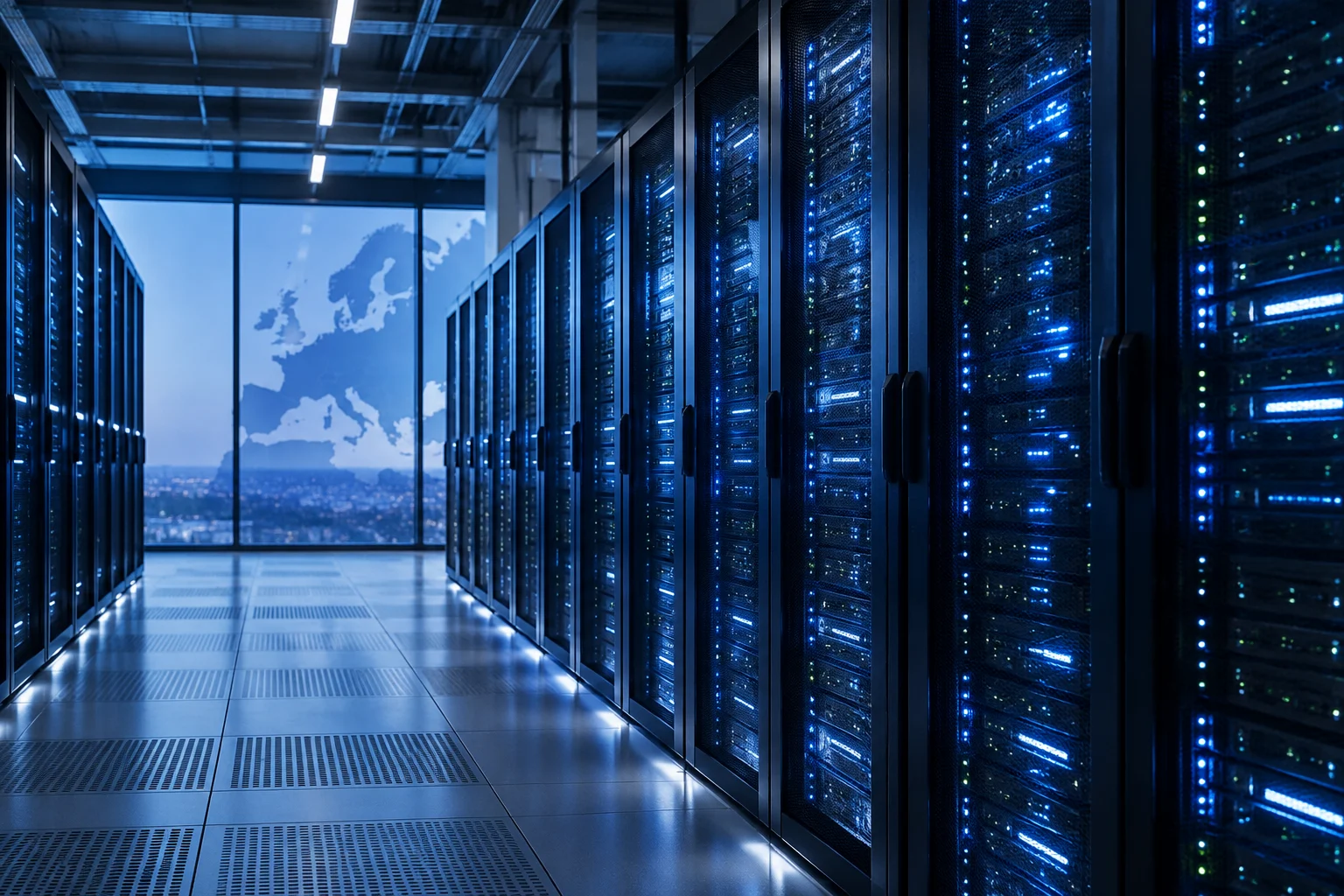
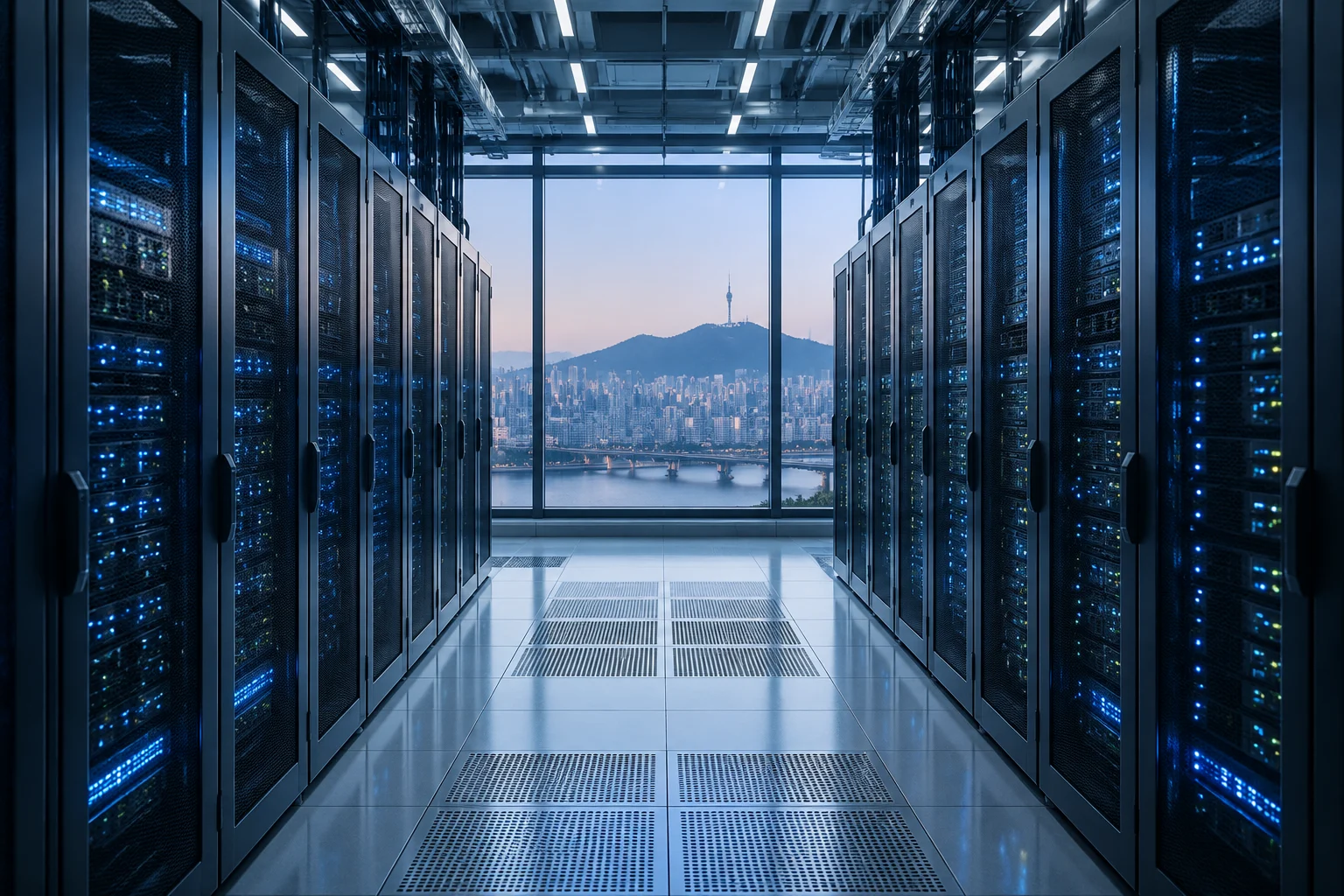
Hangang is the name of a South Korean supercomputer that, according to a news report published on November 2, 2026, was presented at the Korea Institute of Science and Technology Information (KISTI) in Daejeon. The coverage attributes a maximum theoretical capacity of 614.7 petaflops to it and places the start of regular services in December 2026. The presentation and effective access are distinct milestones: for researchers and companies, the latter determines when they can actually utilize its resources.
The same coverage describes it as the successor to Nurion, a system that entered operation in 2018, and claims its theoretical capacity would be 24 times greater. This comparison indicates the announced scale, not that every program will run 24 times faster. The speed of a job depends, among other factors, on its code, how it is distributed across processors, and the memory and network it requires. The aggregate figure does not replace application-specific measurement.
The practical interest of a national supercomputer lies in offering resources for tasks that exceed the capacity of conventional equipment: simulations, analysis of large data volumes, and certain artificial intelligence workloads. However, having installed power does not guarantee that all users can access it or that their programs will fully leverage the architecture. Availability, compatibility, and usage conditions are as relevant as the maximum figure when deciding if a project can be executed there.
Petaflops, processors, and what they actually describe
A petaflop represents 10¹⁵ floating-point operations per second. Therefore, the 614.7 petaflops attributed to Hangang equate to a theoretical capacity of 614.7 × 10¹⁵ operations per second. It is a useful measure for describing the scale of computation, but it does not predict how long a specific simulation, AI training, or analysis will take. Effective performance depends on the workload and the conditions under which it is executed.
The coverage assigns Hangang 8,496 GPUs and 9,936 CPUs, in addition to 205 petabytes of storage and network connections exceeding 400 gigabits per second. It also mentions NVIDIA GH200 Grace Hopper, but does not detail how many of the GPUs are of that model or how the components are distributed. Consequently, the total of 8,496 GPUs does not equate to stating that the system has 8,496 GH200 units.
NVIDIA describes the GH200 Grace Hopper as a superchip that combines a Grace CPU and a Hopper GPU via NVLink-C2C, with coherent memory between both components. This official description helps understand the chip technology, but it does not by itself verify the complete design of Hangang. A component and a supercomputer are not the same specification.
| Data attributed to Hangang | What it describes | What it does not prove on its own |
|---|---|---|
| 614.7 petaflops | Maximum theoretical capacity | Execution time of an application |
| 8,496 GPUs | Total number of accelerators reported | That all are NVIDIA GH200 |
| 205 PB | Attributed storage | Available space per project |
| Over 400 Gb/s | Announced network connectivity | Effective bandwidth per user |
What workloads could benefit from it
Hangang is presented as infrastructure for artificial intelligence, scientific simulation, and data processing, and is linked to research in materials, energy, and industrial uses. The coverage describes these areas as possible applications, not as exclusive functions of the system.
In mining, for example, infrastructure of this type could serve to explore geological models, combine datasets, or study complex operational processes. The possibility depends on whether the data, tools, and algorithms are suitable, in addition to access to the system. Hangang is not described as a supercomputer specifically designed for mining; the connection to that sector is a possible application, not an exclusive function or a credited use case.
For a research center or a company, the decision should not be based solely on the maximum petaflops. It is advisable to assess whether the software can run on the architecture, how much memory and storage the project requires, what rules govern allocations, and what access deadlines exist. Capacity only becomes utility when the work can be executed viably.
The quantum connection planned for 2027
South Korea plans to connect Hangang with a quantum computing platform during 2027, according to the coverage. The integration is proposed as future, not as an operational function of Hangang.
The integration of high-performance computing and quantum processors is usually framed as a hybrid system: each type of equipment could address different parts of a problem, with the classical computer managing tasks compatible with its architecture and the quantum processor reserved for specific operations. This does not imply that quantum computing will replace classical supercomputing or that any workload will gain an improvement.
The planned date opens a development line, but it does not by itself establish which problems will be solved or when practical results will be available. To assess the advance, details on the quantum hardware, integration software, and use cases to be tested will be needed. A planned connection does not equate to demonstrated quantum advantage.
Technological sovereignty and limits of international comparison
A national supercomputer can expand local research capacity and reduce the need to rely solely on external resources. However, technological sovereignty is not measured only by total power: it also matters who controls the components, where tools are developed, who operates the infrastructure, and which sectors can access it. The system's scale is an indicator, not a complete measure of autonomy.
Comparing Hangang with systems in the United States or Europe would require equivalent criteria: performance tests, availability, energy consumption, cost, and access conditions. A published theoretical figure is not enough to establish a ranking or determine which region has a general advantage. It is also important to separate nominal capacity from results measured with specific applications.
The coverage mentions NVIDIA GH200 Grace Hopper technology among Hangang's components. The presence of components from an international company describes an aspect of its architecture, but by itself does not allow concluding how much the system depends on foreign technology or measuring South Korea's technological autonomy.
What to watch for when service begins
The start date for regular services published by the coverage is December 2026. For universities, laboratories, and companies, the decisive factor will be knowing what resources can be requested, how computing time is allocated, and what software and tools are available. Presentation, installation, and user access are different stages.
It will also be important to know the results with representative workloads, rather than extrapolating from theoretical capacity. A performance test must specify which program was executed, in what configuration, and with what measurement method. Without that context, comparing figures from different systems can be misleading. For an organization evaluating options, these details help decide between shared infrastructure, own resources, or cloud services.
In practice, Hangang could be relevant for computation-intensive projects if access, software, and technical conditions fit its needs. The published figures serve as a scale reference; they are not enough to estimate costs, deadlines, or productivity improvements. Informed decision-making depends on service conditions and measured performance for the specific work.