October is not the date for these announcements
The evidence gathered does not support that Snap Specs have reached stores in October or that Meta VR Glasses have launched in September. Meta's event took place at Connect on September 23, 2026; Meta's official page indicates that the VR Glasses will be available in early 2027. The announcement date and the sales date are distinct data points, and confusing them would turn a forecast into confirmed availability.
For Snap, the sources consulted place the announcement of its consumer Specs at AWE 2025 and describe an expectation of launch during 2026. A later publication claims they were presented to the public in June 2026, but the available material does not include a primary confirmation from Snap regarding the final price, delivery date, or general sale. Therefore, it is not possible to assert that they are available in October.
Snap Specs: an autonomous augmented reality proposal
Snap presented Specs as augmented reality glasses for consumers, distinct from the Spectacles aimed at developers. The coverage of the 2025 announcement describes them as a computer integrated into lightweight glasses with transparent lenses, although Snap offered few technical details at the time. It is a proposal for augmented reality over the physical environment, not a full immersion viewer; that difference matters more than the brand name when comparing it with products from other categories.
A June 2026 publication attributes to glasses called SPECS autonomy from the phone and computer, as well as AI and gesture functions, citing a price of $2,195 and deliveries scheduled for autumn. Without verifiable official confirmation in the research package, these data must be treated as secondary information pending corroboration, not as closed specifications or sales prices. The figure is also insufficient to advise a purchase: market, availability conditions, and support details are missing.
Meta VR Glasses: confirmed announcement, future sale
Meta did publish primary information about its VR Glasses in September 2026. The official Spanish page presents them as a lightweight device for movies, sports, and work screens, and points to availability in early 2027. This allows positioning them as a product announced, not yet available according to the date indicated by Meta; not as a commercial launch in October.
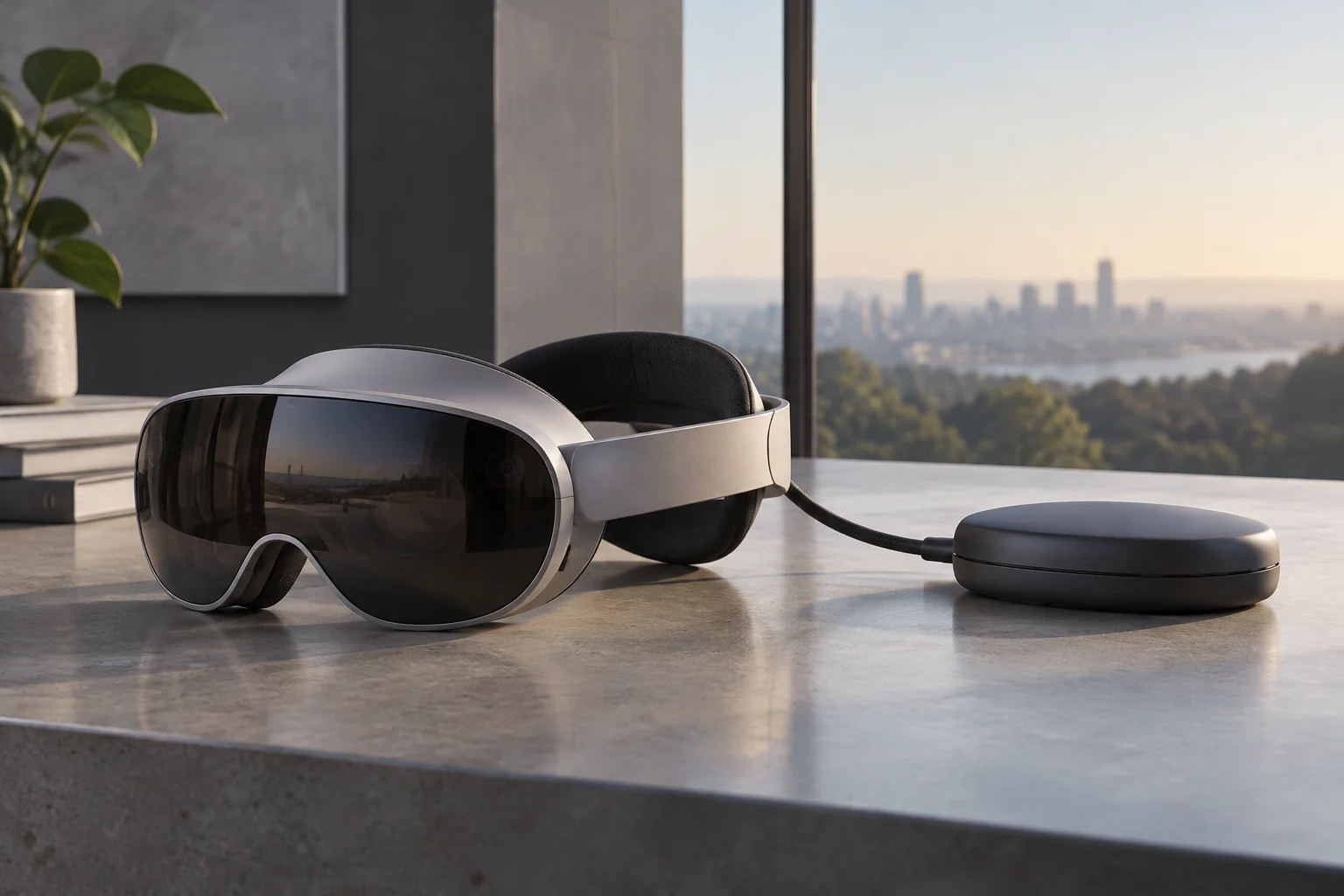
Secondary coverage attributes to the device a weight close to 100 grams, micro-OLED, color passthrough, and control by gaze and gestures, in addition to a processor and battery in an external unit connected by cable. These details can help understand the concept, but they are not all confirmed by the provided official page. The separation of components suggests a design compromise: less load on the head in exchange for relying on a connected module. It does not by itself demonstrate comfort in prolonged use or superiority over other viewers.
Two formats that do not answer the same need
The useful comparison is not which product “wins,” but what problem each format intends to solve. Specs are planned as augmented reality glasses and, according to a secondary source, would function autonomously; Meta VR Glasses are presented as a spatial computing device with future availability. Augmented reality and virtual reality are not interchangeable: the former adds digital elements to the visible environment, while a viewer may prioritize an immersive visual experience or virtual workspaces.
To evaluate any option, it is advisable to check before deciding: what is seen through the lenses, whether a phone or external module is required, how long the battery lasts, which applications work, where it will be sold, and what privacy policy governs the cameras and sensors. In this case, the sources do not allow completing all those points for the Specs, nor confirming the final experience of the Meta VR Glasses. The lack of practical data prevents a purchase recommendation, although it does allow distinguishing the categories.
What the sources contribute and what they do not prove
Meta's official source credits that Connect 2026 included the VR Glasses and sets an availability window for early 2027. A Meta product page also supports the approximate weight of 100 grams. In contrast, more specific details about screens, controls, and external components come from secondary coverage; it is reasonable to attribute them as such, but not to present them as independent verification or proof of performance.
For Snap, the provided sources are third-party publications about the 2025 announcement and about the claims attributed to Specs in 2026. They serve to reconstruct the announced calendar and explain why there is interest in the device, but they do not replace a product sheet or a Snap statement. Price, availability, and final capabilities remain unaccredited by a primary source in the received research.
Conclusion: wait for confirmation before buying
The most solid reading as of October 21, 2026, is limited but useful: Meta announced its VR Glasses and its own page places availability in early 2027; Snap had announced Specs for consumers with a 2026 horizon, but the price and delivery data included here do not have verifiable primary confirmation. Therefore, there is no basis to describe both products as simultaneously available nor to present October as the month of their launch.
Those considering a purchase should wait for the official sales pages and check price and market, delivery date, connection requirements, application compatibility, and data handling. For businesses, the same caution serves to avoid committing budget or development on preliminary specifications. The conclusion is not that there is no XR activity, but that announcement, availability, and confirmed features must be kept separate until each manufacturer publishes the corresponding data.