It is not a Meta Quest 3 Pro
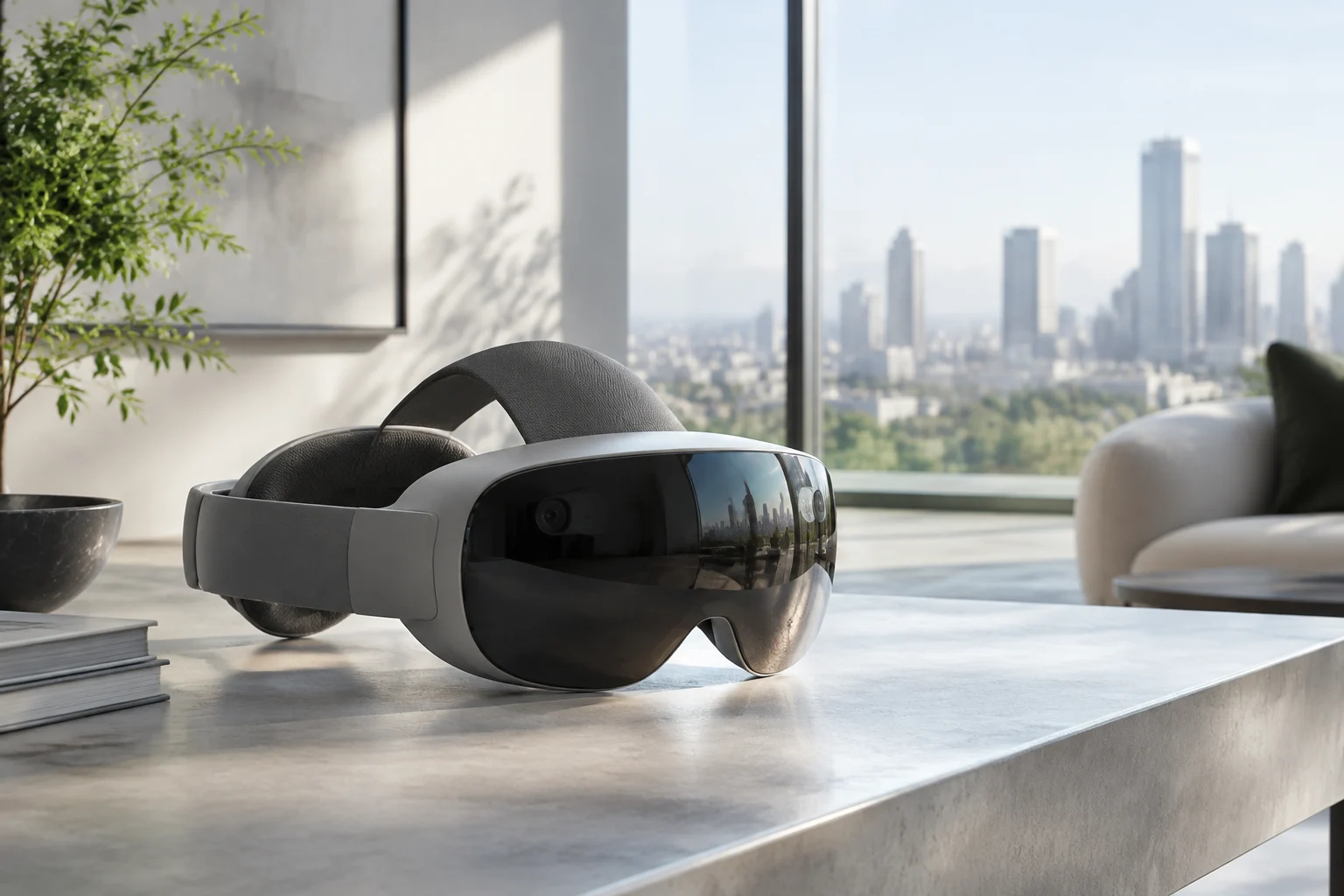
The original draft starts from an incorrect premise: the provided sources do not document the arrival in Spain of a product called Meta Quest 3 Pro. What does appear in available coverage is another device, announced as Meta VR Glasses, with an announcement date of September 23, 2026, and a launch scheduled for spring 2027. The difference matters: it is incorrect to attribute the specs, price, or availability of a different product to the Quest 3 Pro.
Therefore, the practical question is not when a Quest 3 Pro will be purchasable in Spain, but what has been announced about Meta VR Glasses and what data remains pending. Available information describes the price in dollars and a general launch window; it does not confirm a specific date or Spanish availability. It is advisable to read the announcement as a product presentation, not as a local sales sheet.
Price and timeline: announcement, not Spanish availability
Road to VR coverage places the announced price at $1,300 and the launch at some point in spring 2027. It does not offer, in the available material, an exact sales date or an official conversion to euros. It also does not prove that the product will be sold in Spain in that same window; the timeline and the market must be kept distinct.
For those considering buying a headset now, this means Meta VR Glasses is not yet an available alternative to compare in a Spanish store. The announced price places it in a high-end segment, but it is not enough to calculate the final local cost: confirmed data on taxes, distribution, and the euro price are missing. It is not prudent to treat the $1,300 as a Spanish price or to assume that the spring date implies immediate availability in all markets.
A lightweight design with separate compute
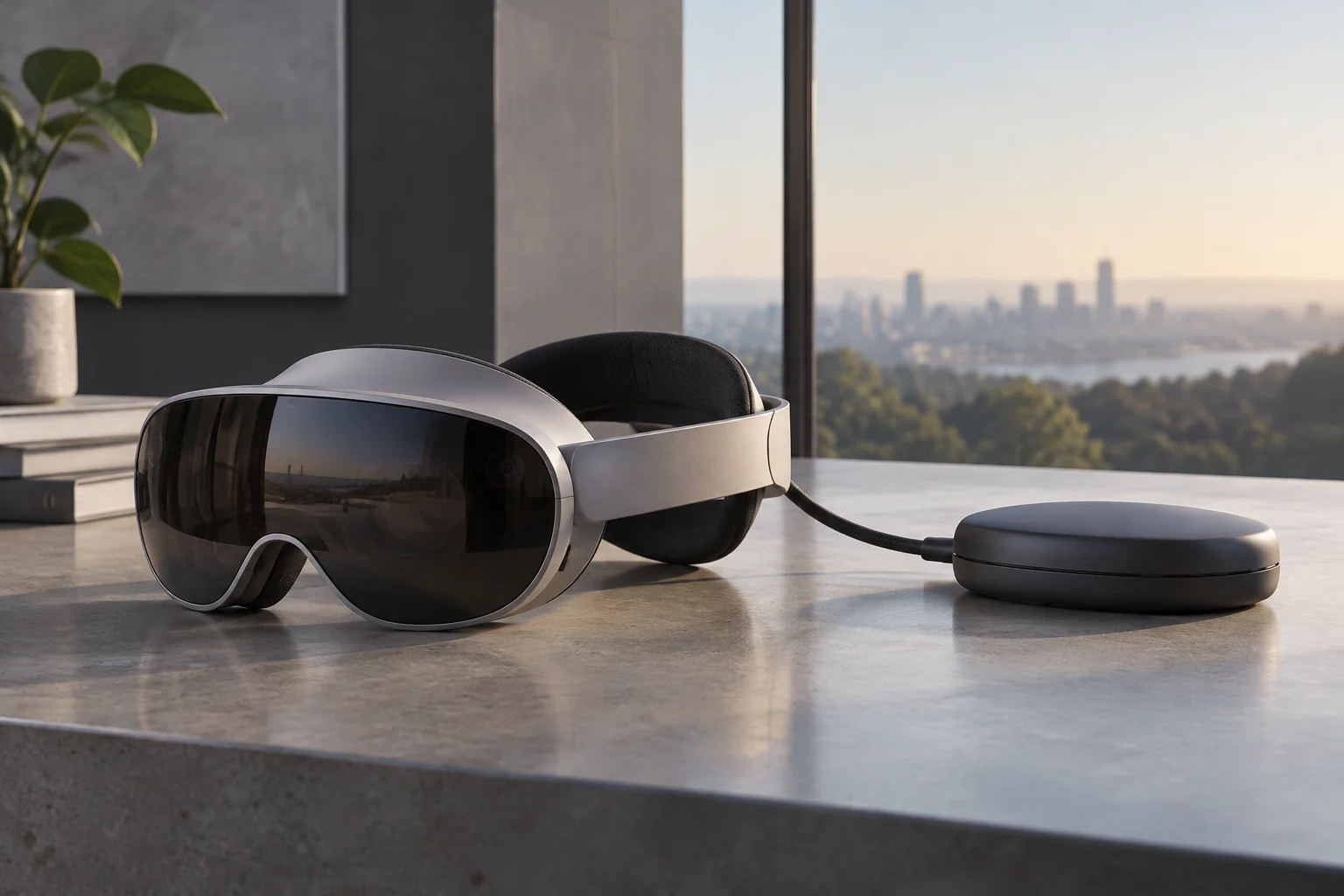
According to Road to VR, the headset weighs around 100 grams on the head because the battery and processing are moved to an external module, described as a compute puck. The module connects via an optical cable and a proprietary port. This is a design decision that trades some of the simplicity of a standalone device for less weight on the head; it does not mean the set lacks a cable or an external unit.
The practical consequence is that the announced weight does not by itself represent the comfort of the complete system. To assess daily use, the placement of the module, the cable, battery life, and fit will also matter, aspects not resolved by that figure. The cited source supports the architecture and weight, but it does not allow concluding that the headset is comfortable for any person or session.
Display: announced figures and comparison limits
Published information attributes to the headset micro-OLED panels, a resolution of 2,412 × 2,288 pixels per eye—5.5 megapixels—and a density of 37 pixels per degree (PPD). The same coverage compares that density with the 25 PPD assigned to Quest 3. These are specifications presented in a journalistic source, not an independent evaluation of the final product's visual performance.
A field of view of about 88 degrees diagonally is also described, with 70 degrees horizontally and 66 vertically. Resolution or PPD comparison does not by itself determine which headset offers the best experience: field of view, lenses, fit, edge clarity, and content all play a role. The figures help understand the technical approach, but they do not replace a test of the commercial product or a complete comparison with other headsets.
The XR market context
The announcement arrives in a market that, according to Omdia figures distributed by Business Wire and collected by AFP, recorded 1.9 million XR device shipments in the first half of 2026, a year-on-year drop of 38.7%. The same information notes that XR glasses raised their share of shipments from 10.2% in the first half of 2025 to 25.8% in the same period of 2026.
These data describe shipments and broad categories, not Meta VR Glasses sales or a demand forecast. They help situate the announcement in a sector with shifts between formats, but they do not prove that a lighter design will reverse the decline. They also do not allow directly comparing the acceptance of this product with that of connected screen glasses, as they are distinct segments.
What a buyer can decide today
Those looking for a headset to buy now should separate available products from future announcements. MediaMarkt shows a listing for a Meta Quest 3 with 512 GB in Spain; that reference serves to identify a different model, not to validate a price or availability for the product announced as Meta VR Glasses. There is no basis in the provided sources to recommend waiting for a supposed Quest 3 Pro or to confirm its arrival in the country.
Before making a decision, it is advisable to check three points when Meta publishes sales information:
- Exact name and model in the official store or an authorized distributor.
- Price in euros, sales market, and effective availability date in Spain.
- Final specifications of the headset and external module, including battery life and what the announced price includes.
Until then, Meta VR Glasses should be treated as a product announced for 2027, with specifications and price communicated in journalistic coverage. The essential correction is simple: there is no support in this package for news about a Meta Quest 3 Pro in Spain.