Definition and scope of privacy control
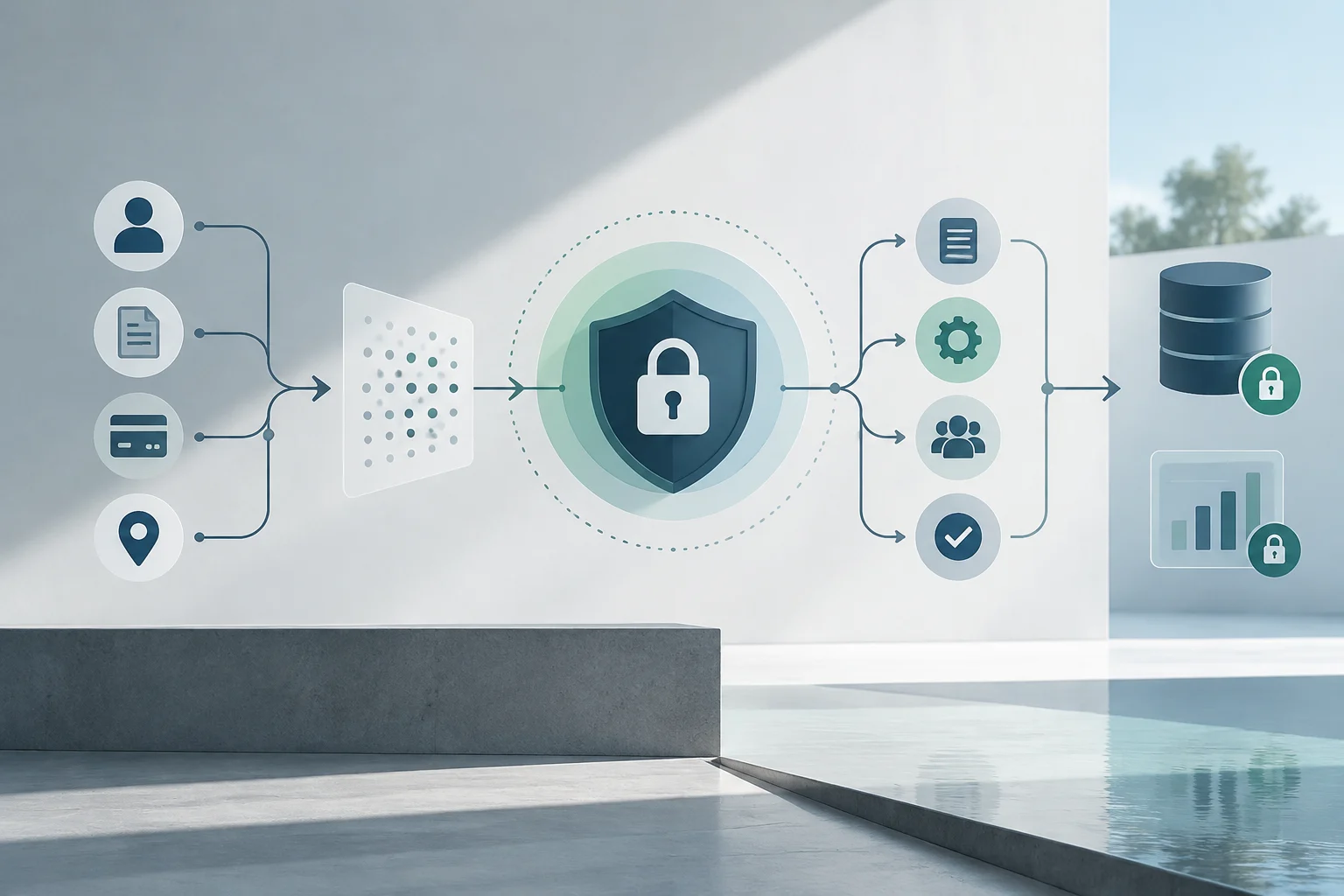
A privacy control is any technical, organisational or contractual measure designed so that the processing of personal data complies with data protection principles. It’s not limited to a software tool: it also includes policies, processes and configurations that help preserve confidentiality, integrity and availability throughout the data life cycle. Thus, it can intervene in how data are collected, used, stored and deleted.
Unlike information security, which protects an organisation’s assets, privacy control is specifically aimed at the rights of individuals and at reducing the impact of processing on their privacy. This requires assessing what data are needed and for what purpose, rather than simply ensuring that information is protected from unauthorised access. Each measure must serve a legitimate purpose and be proportionate to it, avoiding unnecessary or disproportionate data handling.
Implementation is not a one‑off task that ends when a tool is activated or a policy approved. It’s an ongoing process: each control must be documented, reviewed and evaluated to confirm it works as intended. Adjustments may also be needed when technology or applicable regulations change. This proactive way of working forms the basis of privacy by design, because it integrates privacy considerations into development and configuration from the outset.
Types of controls: technical, organisational and contractual
Privacy controls are grouped into three categories based on their nature and scope of application: technical, organisational and contractual. This classification shows that compliance does not depend on a single tool or team, but on complementary measures. It also helps define who applies them, who maintains them and how they relate to each data processing.
Technical controls
These are measures embedded in systems, programmes or devices to apply guarantees directly in data operations. They include data encryption, anonymisation, role‑based access control, consent management and automatic deletion. Their presence in digital flows makes it easier to verify how they’re configured and whether they run consistently, though that verification does not replace effectiveness assessment.
The choice must respond to the specific processing: for example, controlling who can access information and setting how it’s stored or deleted. Technical tools enable those decisions to be integrated into systems, but require coherent configuration with purposes and organisational policies.
Organisational controls
These are policies, procedures and governance structures that order processing. They include appointing a Data Protection Officer (DPO), staff training, Data Protection Impact Assessments (DPIAs) and incident response protocols. Together they establish the internal framework so obligations translate into responsibilities and understandable practices for teams.
Training, for instance, helps those handling data know the procedures to follow; protocols define how to act in incidents. DPIAs assess potential privacy impact. They are distinct measures but complement each other by embedding data protection into everyday management and decision‑making.
Contractual controls
These are clauses and agreements an organisation sets with third parties, especially processors. They may include engagement contracts, standard contractual clauses (SCCs) for international transfers and Service Level Agreements (SLAs) specifying security measures. Their purpose is to set obligations and conditions so that third‑party processing aligns with agreed requirements.
These controls extend privacy management beyond own systems and equipment. By specifying measures and responsibilities in agreements, they help the supply chain apply consistent privacy standards with the organisation. Therefore, reviewing contractual commitments is part of the overall control structure, not a separate data‑management aspect.
Legal framework: GDPR requirements and default protection
The General Data Protection Regulation (GDPR) sets out in Article 25 the obligation to apply data protection by design and by default. This means guarantees must be integrated when determining processing means and during processing, rather than added as a later layer. Design must incorporate appropriate technical and organisational measures to apply data‑protection principles and necessary safeguards to comply with the Regulation.
Default protection concretises this obligation in the initial configuration of processing. Without requiring the individual’s intervention, only data needed for each specific purpose should be processed. In practice, this requires reviewing what information is requested, what operations are performed and which options are enabled by default. The initial setup should not depend on each person correcting settings to limit a treatment that could have been minimised from the start.
The Spanish Data Protection Agency (AEPD) has published practical guides to help apply this principle, aimed at controllers, DPOs and departments involved in design and development of applications and services. These guidelines link minimisation with various aspects of processing, not just data volume. Assessment covers also the scope of use, retention period and data accessibility.
Consequently, controls must ensure that default values are the most privacy‑respectful and favour minimally intrusive processing. This application of minimisation affects decisions that may appear independent: limiting collected information, narrowing its use, deciding how long it’s kept and restricting who can access it. Considering them together translates the legal principle into concrete configurations and practices.
Non‑compliance can lead to significant sanctions, so organisations must be able to demonstrate that their measures are adequate and proportionate. Documenting controls and retaining DPIA results helps show how risks were considered and what responses adopted. That documentation also serves as a reference for reviewing measures and evidencing compliance before supervisory authorities.
Practical implementation: steps and tools
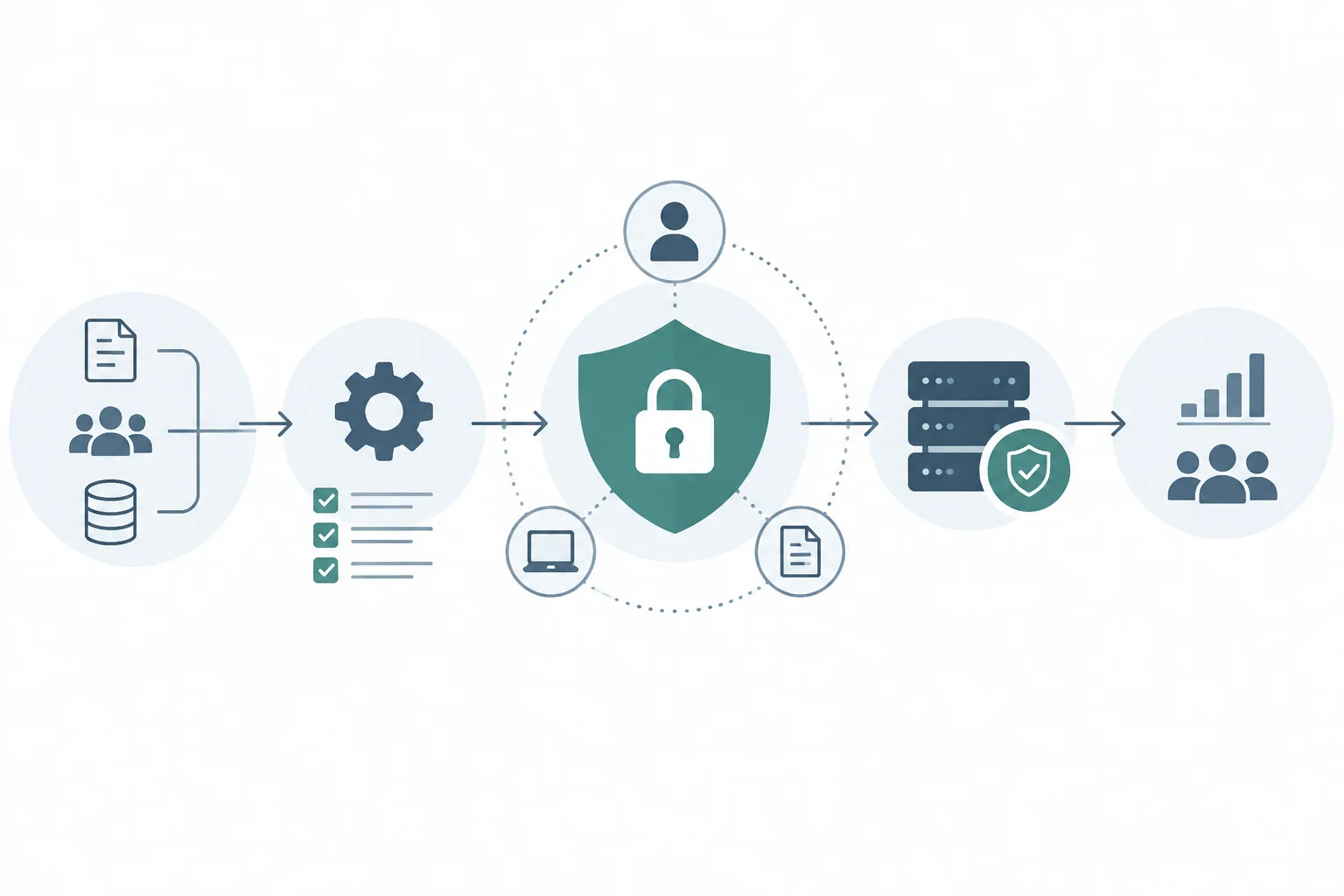
Implementation requires a structured approach involving technology, legal and business teams. The starting point is to create a processing map that identifies what data are collected, for what purpose and what privacy risks may arise. This map helps understand how information flows and avoids choosing controls without considering the processing context.
Once flows and risks are identified, proportional measures can be selected and responsibilities assigned to deploy them. Work is not just installing a solution: it also involves translating privacy decisions into procedures and configurations, then verifying they remain operational. Coordination across areas links business needs with legal requirements and technical possibilities.
Key implementation steps
- Data inventory: Identify all personal data flows and their owners so you know what information is processed and who intervenes.
- Risk assessment: Determine the potential privacy impact on individuals to understand which situations require attention.
- Control selection: Choose technical and organisational measures proportional to identified risks, avoiding unrelated solutions.
- Deployment and configuration: Implement controls in systems and processes, ensuring configured options match intended purposes.
- Verification and audit: Confirm that measures work as expected and document results for review.
Consent platforms and encryption systems, among other privacy‑management tools, can facilitate automation of certain controls and their integration into workflows. Thus, some measures run from the systems themselves rather than relying solely on manual interventions. The usefulness of these tools depends, however, on selecting and configuring them according to processing needs.
Technology alone is insufficient. For controls to be applied coherently, they must be backed by clear policies, defined responsibilities and an organisational culture committed to data protection. In this way, technical measures, staff practices and management decisions reinforce each other rather than functioning as isolated elements.
Measuring effectiveness and control limits
Measuring effectiveness allows confirming that controls achieve their goal and identifying aspects needing review. This can use key performance indicators (KPIs) such as the number of privacy incidents, response time to individuals’ rights requests and percentage of correctly anonymised data. These metrics provide observable signals about various operational aspects but must be interpreted in relation to processing and control objectives.
Internal and external audits offer an independent assessment of effectiveness. They can verify that documented measures are applied in practice and results reviewed. Combined with KPIs, they help form a more complete picture: KPIs track outcomes while audits independently examine whether controls are established and operating as expected.
It’s also important to recognise the limits of any control. No system is infallible, and an effective measure today may become obsolete due to technological or regulatory changes. Moreover, having a control does not automatically prove it sufficiently reduces privacy impact. Therefore, review must assess both design and application and results, without assuming that an initial configuration will remain adequate indefinitely.
It’s recommended to review measures periodically, at least annually, to adapt them to new threats or legal requirements and update documentation as needed. This cadence treats privacy as a dynamic process, not a static state achieved after one implementation. Periodic review also keeps design decisions, daily operations and effectiveness evaluation connected.
The following table compares default protection regulatory requirements with common technical measures, to facilitate linking legal obligation with practical application.
| Default protection requirement | Common technical measure |
|---|---|
| Process only data necessary for each purpose | Limit fields and information collected |
| Apply minimisation to the scope of processing | Configure data use according to intended purpose |
| Limit retention period | Set automatic deletion when appropriate |
| Restrict data accessibility | Apply role‑based access controls |