Two distinct initiatives announced at MWC 2026
On March 2, 2026, during the Mobile World Congress in Barcelona, two initiatives linked to Telefónica were presented. The European Commission and a consortium led by the operator unveiled EURO-3C, a project to connect telecom, edge computing, and cloud resources. On that same day, Telefónica announced a collaboration with Satellite Connect Europe to explore direct-to-device (D2D) satellite connectivity.
These are not two phases of the same service. EURO-3C proposes cooperation between European infrastructures and organizations; the D2D collaboration studies technical models and use cases in Spain and Germany. The practical difference lies in scope: one initiative coordinates distributed digital capabilities, while the other evaluates whether a phone can use satellite connectivity as a complement to terrestrial mobile networks. Neither equates, by itself, to a new tariff or an automatic signal improvement for customers.
EURO-3C: Federated networks, edge computing, and cloud
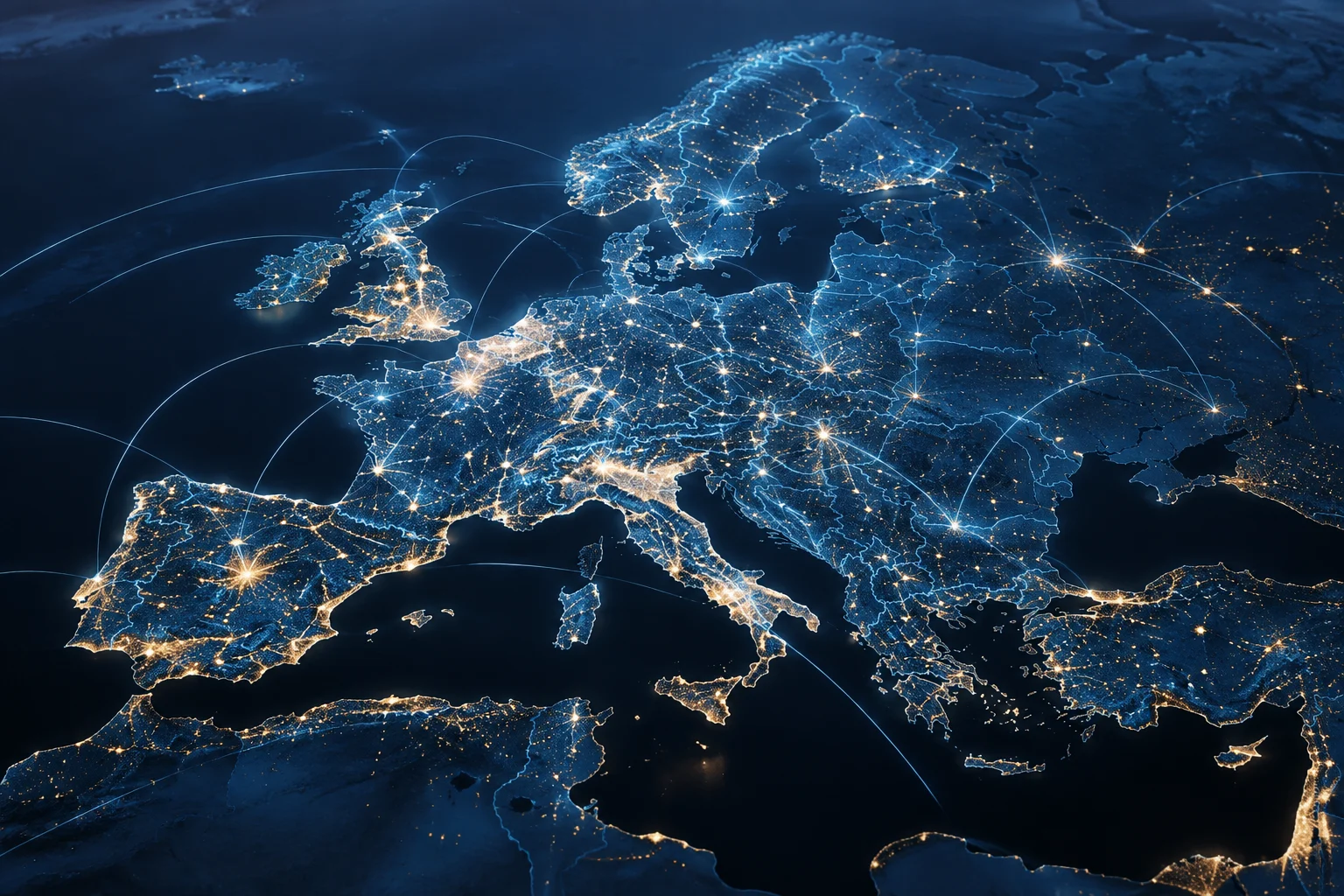
The European Commission presented EURO-3C as a 75 million euro project backed by Horizon Europe, aimed at developing a large-scale federated Telco-Edge-Cloud infrastructure. Telefónica leads the consortium, which includes more than 70 entities. The proposal consists of connecting capabilities of different operators and providers through a common framework, rather than treating each infrastructure as an isolated system.
The project seeks to bring computing power closer to end users through an integrated platform combining networks, edge computing, and cloud. By federating these capabilities, the approach allows coordinating resources from different participants, although it does not imply a single pan-European mobile network or that all services function identically.
Telefónica describes more than 70 Edge and Cloud nodes in over 13 European countries, and nine use cases intended to evaluate the project's applicability and scalability. It also mentions AI-supported orchestration capabilities. These are scope data communicated by the company; they are not performance measurements nor a promise of coverage or speed for specific phones.
Especificaciones clave del proyecto EURO-3C
Resumen de los parámetros estructurales y de alcance del proyecto federado Telco-Edge-Cloud anunciado en el MWC 2026.
| Presupuesto total | 75 millones de euros |
|---|---|
| Entidades en el consorcio | Más de 70 |
| Nodos Edge y Cloud | Más de 70 |
| Países europeos cubiertos | Más de 13 |
| Casos de uso previstos | 9 |
Datos declarados por el consorcio y la Comisión Europea en el momento del anuncio; no representan mediciones de rendimiento en tiempo real.
What the federated model can offer
Federating resources means coordinating capabilities belonging to different operators, cloud providers, and organizations through interoperable mechanisms. In theory, this allows a service to combine resources distributed among several entities or territories, instead of relying on a single provider. The proposed change is organizational and technical: connecting existing infrastructures so they can collaborate.
For businesses and administrations, the approach may be relevant when they need to deploy services in more than one environment or combine connectivity and local processing. Telefónica cites sectors such as transport, energy, automotive, and public safety. The nine announced use cases will allow evaluating specific applications, but their existence within the project does not prove that services are already commercialized or that all participating entities offer identical capabilities.
The European Commission places EURO-3C in the context of technological sovereignty and the reduction of external dependencies. That is a project objective, not an already accredited result: the announcement does not prove that dependencies have been eliminated or that all infrastructure technology is of European origin. The assessment will depend on what the project deploys and the results it can demonstrate.
D2D satellite connectivity remains in the exploration phase
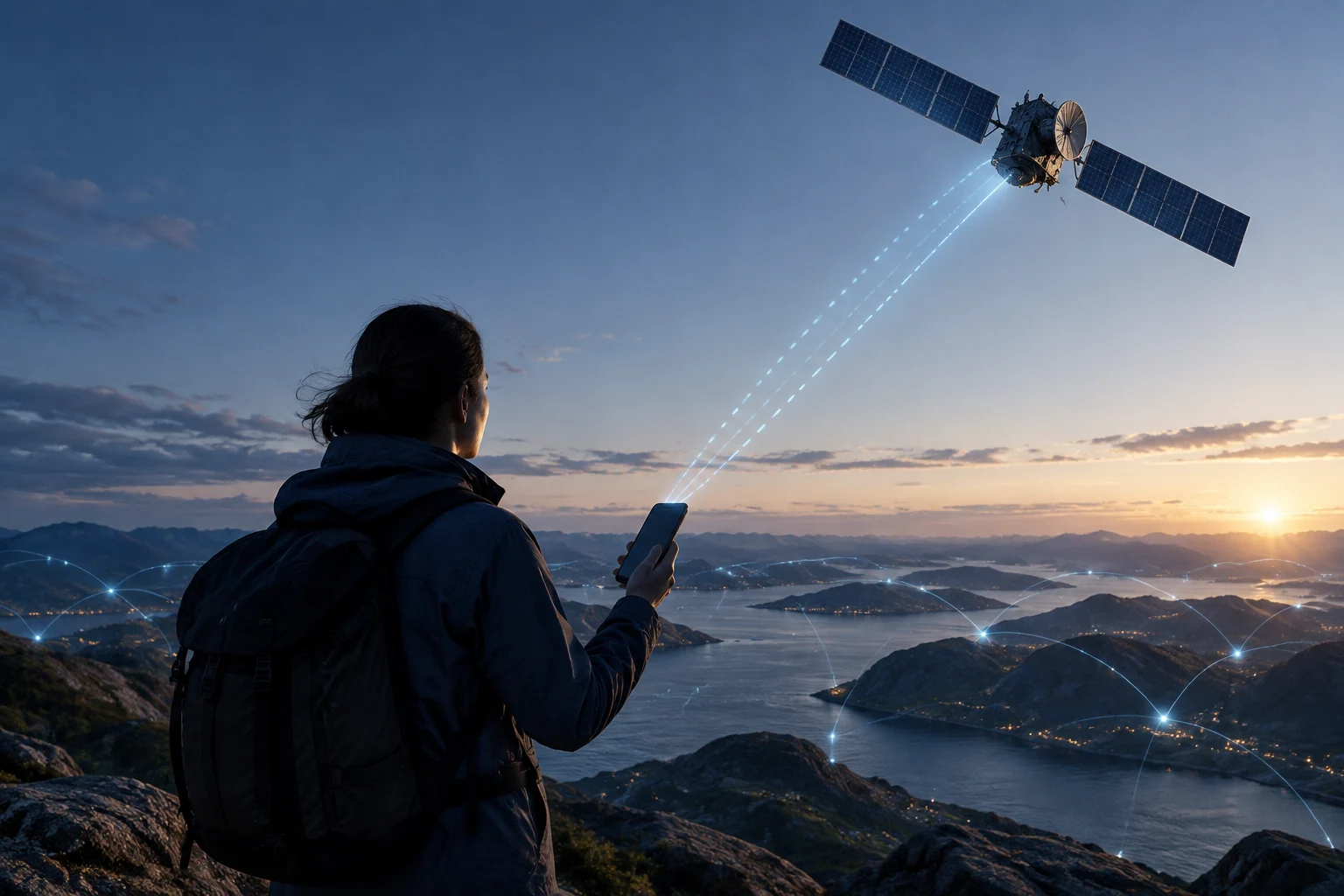
Telefónica announced it would collaborate with Satellite Connect Europe to evaluate how to integrate D2D satellite capabilities with its 4G and 5G networks in Spain and Germany. The company indicated that the work includes technologies, integration models, and potential use cases for consumers, businesses, and public services. The announcement describes an evaluation, not the start of a commercial deployment.
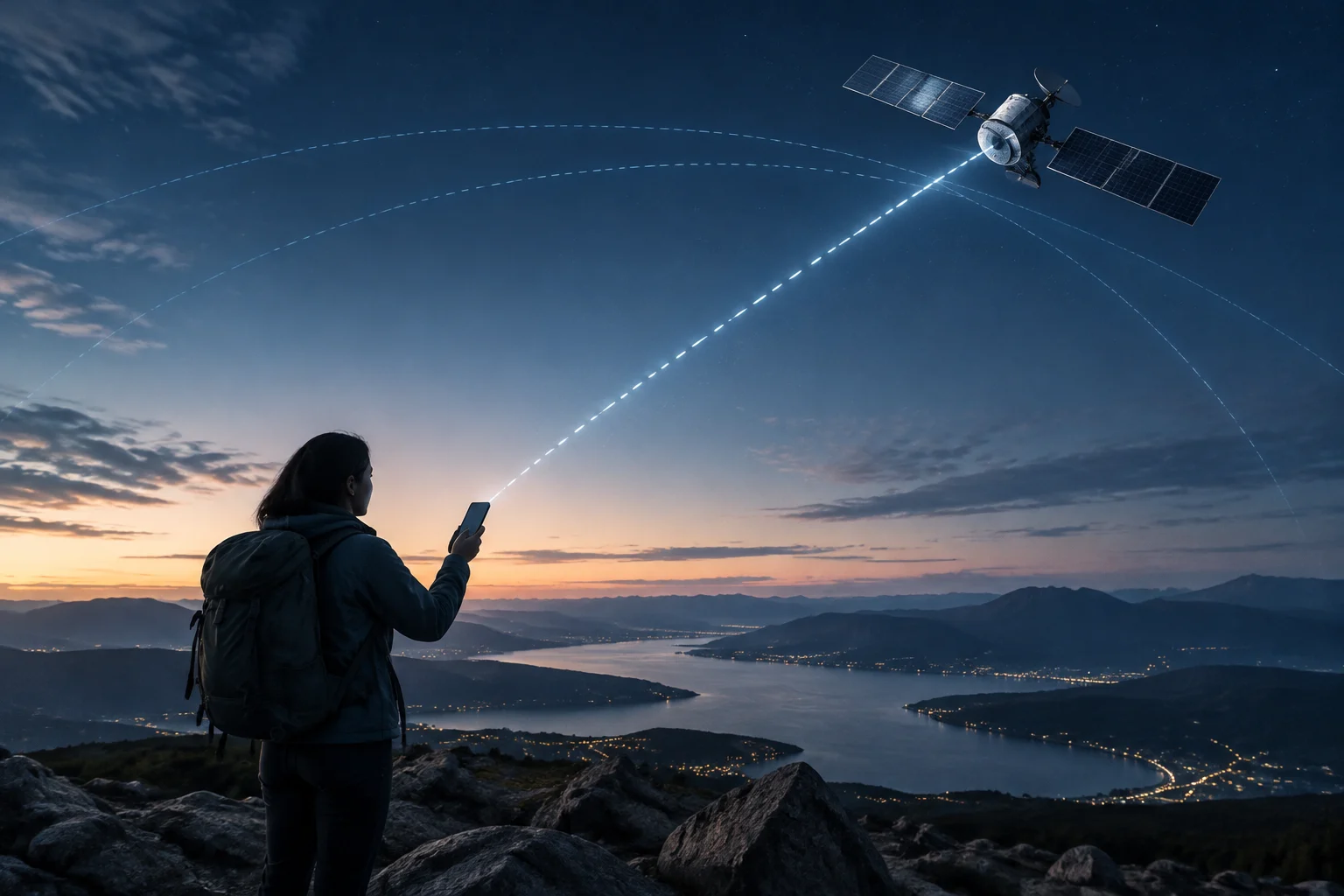
D2D refers to a direct link between a compatible device and a satellite, without a terrestrial base station mediating in that communication segment. Its potential interest lies in complementing the mobile network in places or circumstances where terrestrial infrastructure is limited. Telefónica proposes studying that integration with its existing networks to reinforce resilience in specific scenarios, such as remote areas or exceptional situations.
The operator notes that the experience would remain managed by it and that satellite connectivity would be complementary, not substitutive, of the terrestrial network. The collaboration focuses on technical evaluation: it describes the study of integration models and use cases, while spectrum usage and the European regulatory framework remain part of the conditions that must be considered.
Coverage in Spain: National figures and local limits
The Spanish context helps understand why complementary technologies are being studied, but it does not allow attributing an immediate coverage improvement to these announcements. In May 2026, the Ministry for Digital Transformation reported that 5G coverage reached 99.27% of the Spanish population and 96.13% of the rural population, according to the 2025 Broadband Coverage Report. These are population percentages, not a guarantee of signal in every building, road, or plot.
The same report placed 5G Stand Alone (SA) coverage at 98.1% of the population and 91.22% in rural areas. These figures correspond to another 5G modality and should not be confused with the general indicator. To check a specific home or route, the operator's coverage in that location matters, not just the national percentage.
Therefore, neither EURO-3C nor the D2D exploration should be interpreted as an immediate expansion of mobile signal in Spain. Aggregated coverage and local reception measure different things: one summarizes the population reached, and the other depends on the location, available network, and device.
Regulation and what to watch
Telefónica has expressed its support for European satellite services respecting applicable regulatory frameworks and spectrum usage requirements. Integrating satellite and mobile communications requires coordinating those resources with current rules. The company describes the collaboration as an evaluation and work with relevant actors, not as an authorization to offer a specific commercial service.
EURO-3C and D2D address different problems. The former seeks to coordinate telecom, edge computing, and cloud networks among multiple participants; the latter studies a direct satellite link to the device that can complement mobile networks. They share an interest in resilience, but differ in architecture, recipients, and development stage.
For users, the relevant point will be knowing if the D2D exploration translates into a service compatible with their phones, where it would work, and under what conditions. In EURO-3C, it will be necessary to observe which use cases are launched and what results the federated nodes produce. The announcements mark lines of work, but they are not enough to anticipate concrete changes in the daily connection experience.