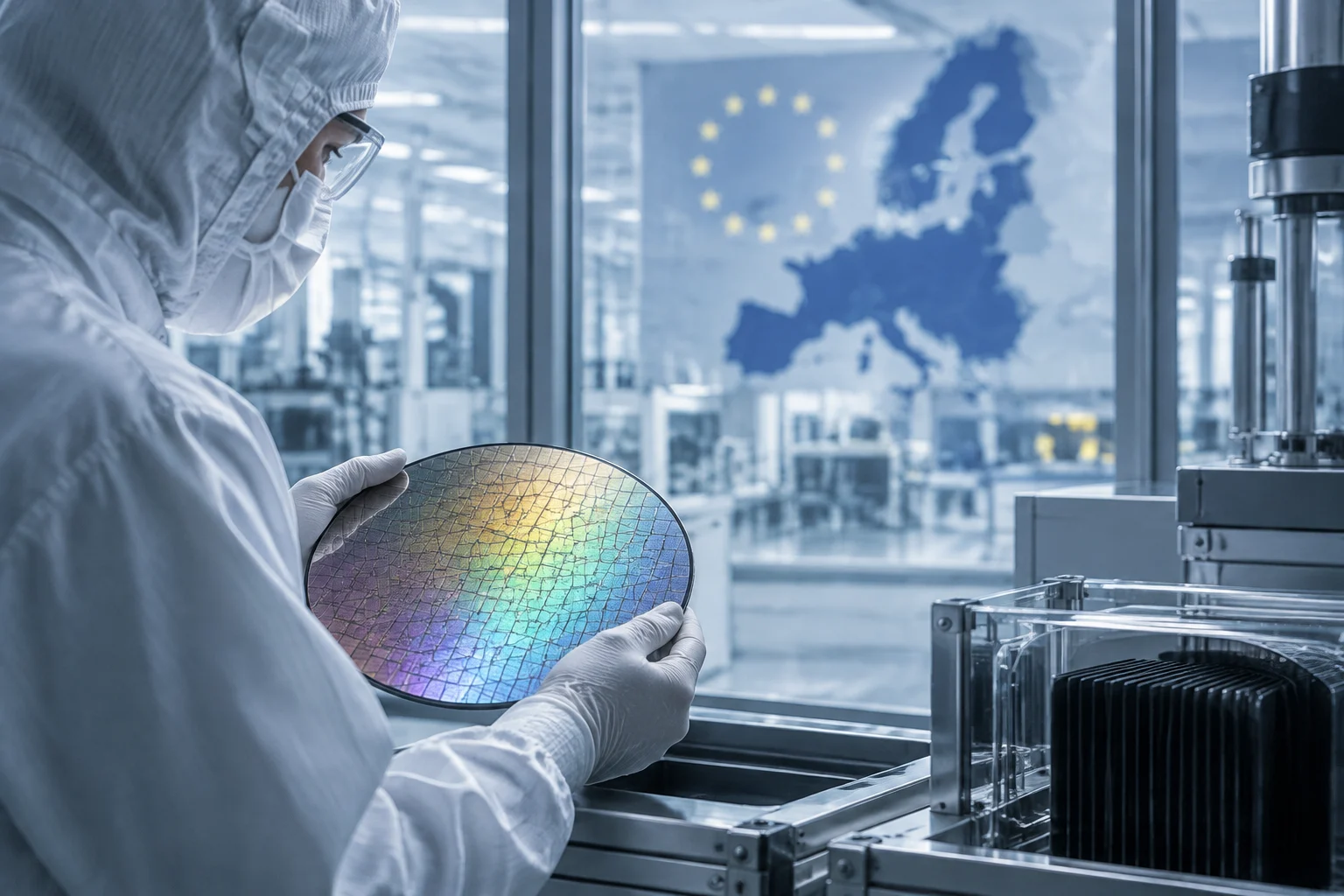
Technological Sovereignty vs. Total Self-Sufficiency
The concept of technological sovereignty in the semiconductor sector focuses on the ability to guarantee critical supply and maintain control over strategic decisions. The impact assessment of the new regulatory framework defines the objective as strengthening resilience and crisis preparedness, without seeking total self-sufficiency. This distinction is fundamental to understanding current policies: the goal is to reduce structural vulnerability while maintaining international cooperation.
The Chips Act 2.0 proposal, presented on June 3, 2026, updates the previous 2023 regulation and expands its scope to address challenges arising from the growing demand for artificial intelligence and advanced computing. The stated objective is to increase the competitiveness of the European ecosystem, reinforce technological sovereignty, and improve preparedness for supply crises. The initiative acknowledges that, despite the progress of the first regulation, the EU still presents structural vulnerabilities across the value chain, especially in the excessive dependence on a limited number of third-country providers for the design and manufacturing of advanced semiconductors.
The Market Gap: Europe's 9% vs. the 20% Target
Data from the European Commission, published in the fourth report on the State of the Digital Decade, shows that the EU represents only 9% of the global semiconductor market, far from the 20% target set for 2030. This figure contrasts with the fact that the EU's internal production accounts for about one-fifth of its consumption, indicating a significant gap between local production capacity and demand. Structural dependence extends to cybersecurity, where Europe still relies on non-European providers, and to the shortage of ICT professionals, who represented only 5% of employment in 2025, half of the 10% target set for 2030.
The concentration of advanced manufacturing in Asia constitutes a significant geopolitical bottleneck. TSMC controls 72.5% of the revenue of the world's top ten foundries in the second quarter of 2026, while SK Hynix and Samsung dominate approximately 83% of the high-bandwidth memory (HBM) market that powers AI infrastructure. China, for its part, dominates 67% of edge AI chip manufacturing. This triple geographic concentration represents a critical dependency in the global technology supply chain, although the EU maintains industrial dialogues with key partners like Taiwan to manage this dependence.
Indicadores clave de la dependencia europea en semiconductores (2026)
Comparación entre la situación actual de la UE, sus objetivos para 2030 y la concentración de mercado en Asia, según datos de la Comisión Europea y analistas del sector.
| Cuota de mercado global (UE) | 9% |
|---|---|
| Objetivo 2030 (UE) | 20% |
| Inversión Plataforma Diseño | 525 M€ |
| Cuota TSMC (Foundries) | 72.5% |
| Cuota HBM (Corea del Sur) | 83% |
Los datos de cuota de mercado asiática corresponden al segundo trimestre de 2026 y pueden variar según la fuente de análisis.
Sources and references3
- efe.comLa UE movilizará 525 millones de euros para dar alas a las ‘startups’ europeas de chips - EFE
- eldiario.esLa UE solo representa el 9% del mercado global de chips y en ciberseguridad depende de proveedores no europeos - Has elegido la edición de
- digitalinasia.comAsia's AI Semiconductor Supply Chain: TSMC, Samsung and ...
Status of European Fabs: TSMC, Intel, and the ESMC Project
TSMC's plant in Dresden, operated through the joint venture ESMC (European Semiconductor Manufacturing Company) along with Bosch, Infineon, and NXP, plans to begin production at the end of 2027. The industrial park in northern Dresden will add at least 7,000 jobs, and the city council has planned an extension of tram line 8 with an investment of at least 54 million euros to connect the industrial zone with public transport. Works are progressing as planned, with production scheduled to start at the end of 2027.
Intel has resumed its investment in Europe with the modernization of its Fab 34 in Leixlip, Ireland, to manufacture chips using its Intel 3 (3nm) process. The total investment is estimated at approximately 5 billion euros, and the factory will mainly produce Xeon processors for servers. However, the Magdeburg, Germany project is under reevaluation in 2026 due to the company's financial difficulties and strategic shifts. This decision reflects the tension between the EU's strategic ambition and manufacturers' need to prioritize specific orders over capacity expansion.
Design as the New Front of European Sovereignty
The European Commission has identified that new manufacturing capacity in the EU will only be sustainable if there is local demand, and that European chip design companies account for less than 1% of global segment revenue. To address this gap, the European Chip Design Platform was presented on November 5, 2026, with an investment of 525 million euros. The initiative will provide access to design tools, support services, intellectual property blocks, and manufacturing capacity, resources that are the most expensive and difficult to obtain for early-stage companies.
Of the total allocation, 440 million are public grants from the EU and member states, and 85 million will be dedicated to cloud infrastructure, support services, and open-source design tools. Early-stage startups can apply for up to 100,000 euros for proof-of-concept prototypes, and more developed ones, grants of 16 million to cover development until commercialization. This investment is framed within the Chips Act and comes five months after the Commission proposed the Chips Act 2.0, which aims to boost demand and support chip design and production in the EU. The focus on design is strategic, aiming to strengthen Europe's position in the value chain where advanced manufacturing remains concentrated in Asia.
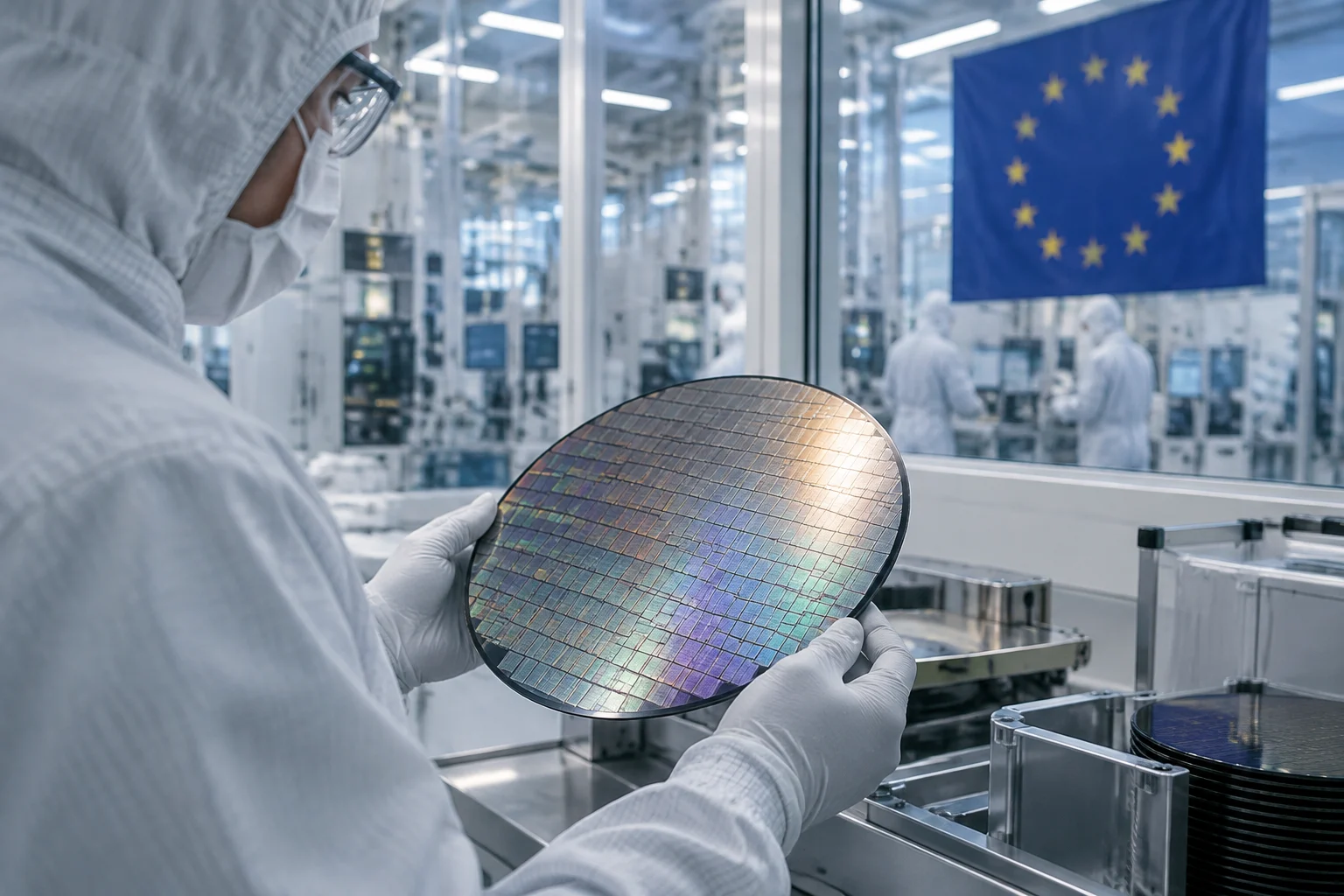
Advanced Materials and Lithography: The Basis of Technological Independence
Chips Act 2.0 incorporates for the first time a definition of "semiconductor" that explicitly includes advanced materials, integrating this concept into the legal text of the EU's industrial regulation. Advanced materials are expressly linked to support mechanisms for innovative first-time industrial deployment projects, along with other essential elements of the value chain such as manufacturing equipment, printed circuit boards, and advanced packaging technologies. This inclusion opens new opportunities for companies and institutions linked to the development and production of advanced materials to access public support instruments and investment incentives.
The proposal also establishes an explicit relationship between Chips Act 2.0 and the Critical Raw Materials Act, indicating that both instruments cover different segments of the same technological value chain. This approach positions advanced materials as a connecting element between the supply of strategic raw materials and the production of advanced electronic technologies. For the European ecosystem, this regulatory evolution is a clear signal that advanced materials will be increasingly decisive in areas such as advanced electronics, photonics, artificial intelligence, high-performance computing, communications, and industrial digitalization, all priority sectors for European competitiveness in the coming decade.
Key Metrics to Assess Supply Risk Exposure
For a reader or company to assess its own exposure to semiconductor supply risk, it is useful to follow several specific metrics. The first is the EU's global market share, currently at 9% and to be compared with the 20% target for 2030. The second is the participation of European companies in global design revenue, which is currently less than 1% of the global segment. The third is the advanced manufacturing capacity available in Europe, which is currently limited and subject to ongoing expansion projects.
Other relevant metrics include the availability of HBM memory in the EU, advanced packaging capacity (CoWoS, InFO), and the depth of the supply chain for manufacturing equipment and materials. The European Commission has noted that existing mechanisms under the Chips Regulation are based on voluntary information exchange in non-crisis situations and have not achieved the depth or timeliness of supply chain intelligence needed to be effectively prepared for crises. Chips Act 2.0 introduces intelligence mechanisms for crisis preparedness and response, which should allow for more proactive monitoring of supply disruptions.