An Air Feature Inside a Screen
Monitors typically compete on resolution, size, refresh rate, and connectivity. The ASUS VU Air Ionizer series adds another promise: an integrated negative ion generator to act on the air near the user. This claim deserves attention, but it should not be confused with an eye care function: ionizing air and reducing eye strain are distinct objectives.
ASUS states that the ionizer in models like the VU34WCIP-W can reduce up to 90% of suspended dust in three hours within a closed one-cubic-meter space. The company attributes this result to independent tests and describes an effective coverage of one cubic meter. This figure is tied to specific conditions, not a guarantee of performance in a normal room with air currents, ventilation, and variable particle sources.
The series was presented in March 2025, so it is not a recent launch. The useful question for buyers today is not whether the feature is novel, but what can be concluded about air and comfort in front of the screen, and what cannot. The answer depends on separating the commercial claim, the described trial, and independent clinical evidence.
What an Ionizer Does and What the Manufacturer's Figure Means
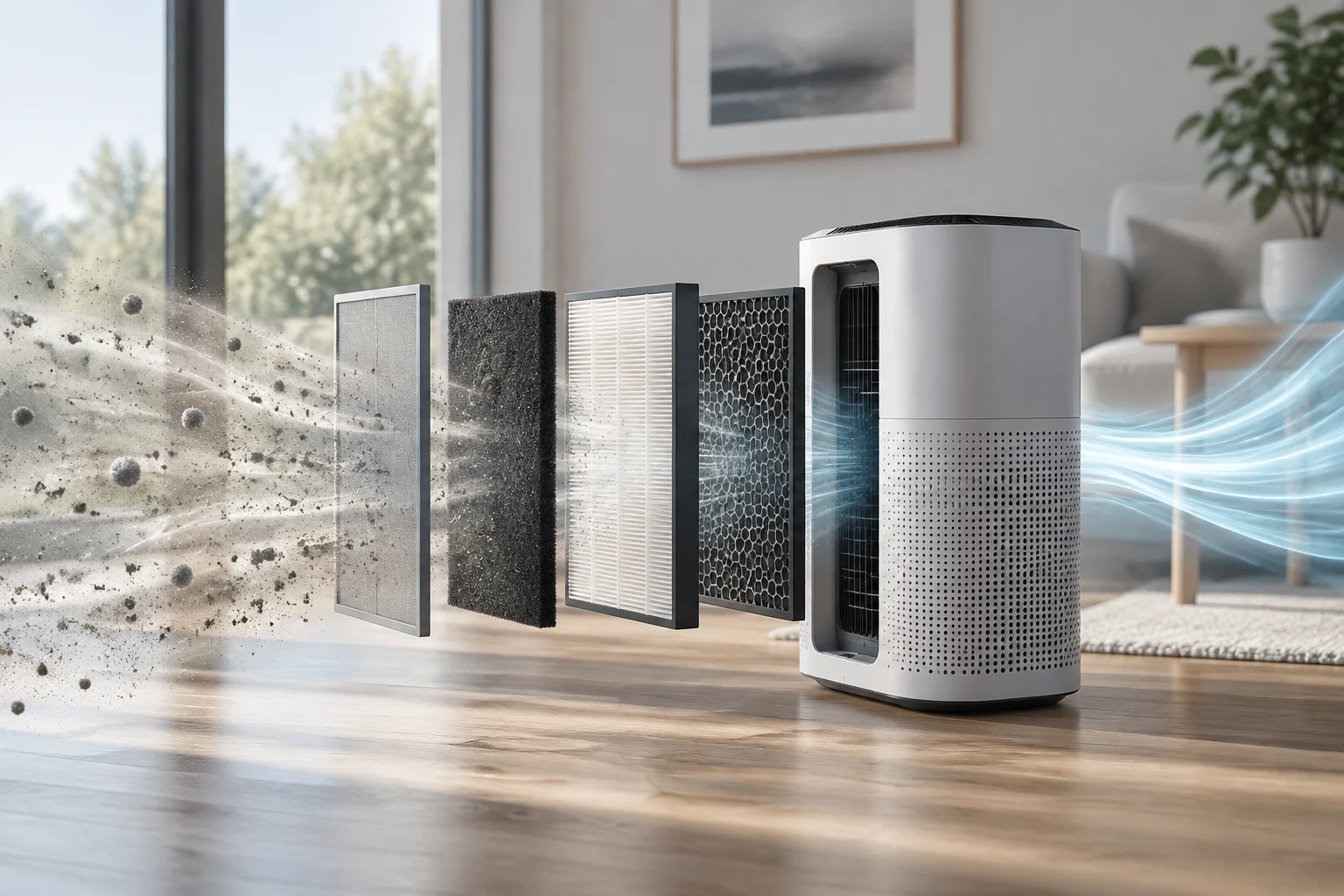
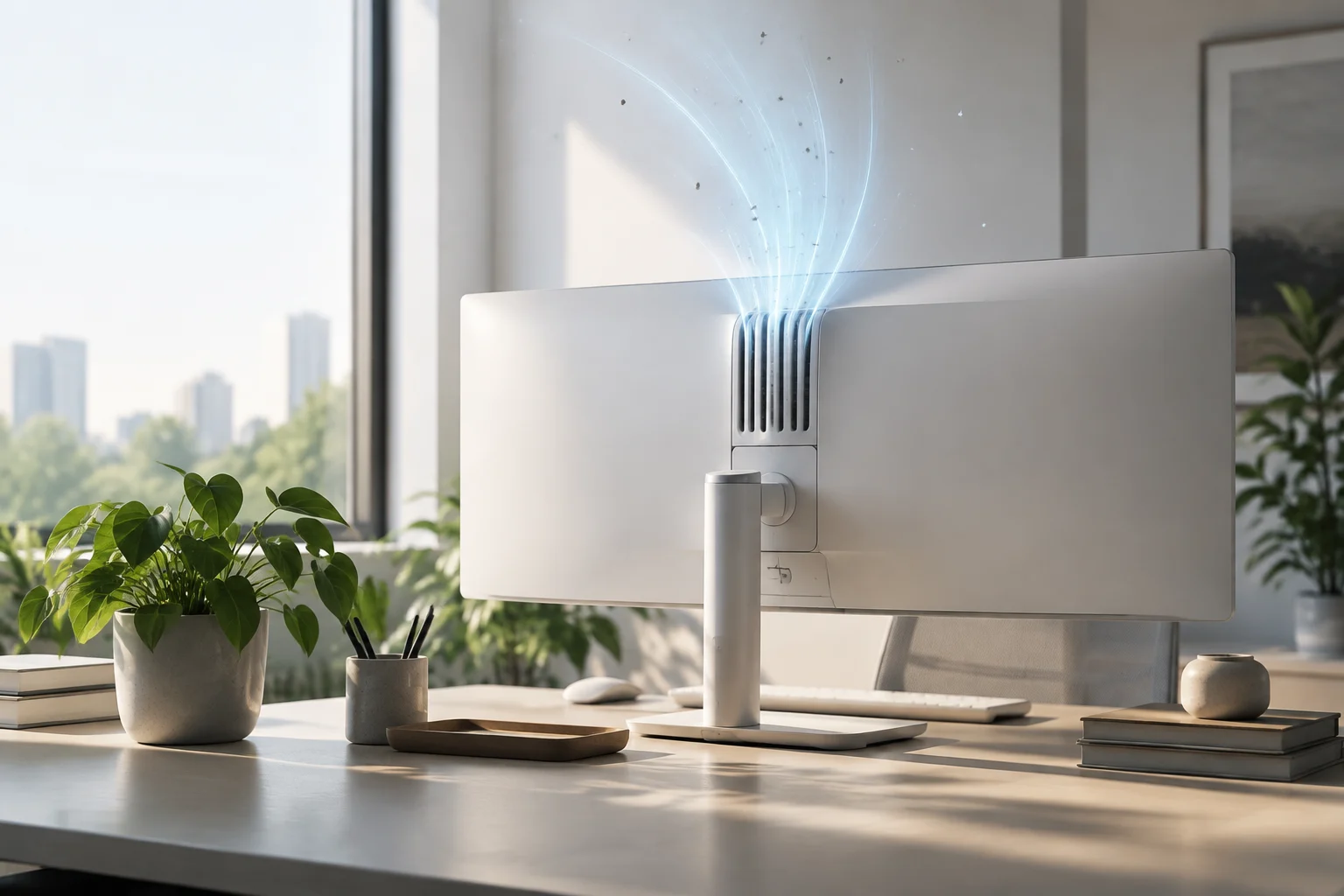
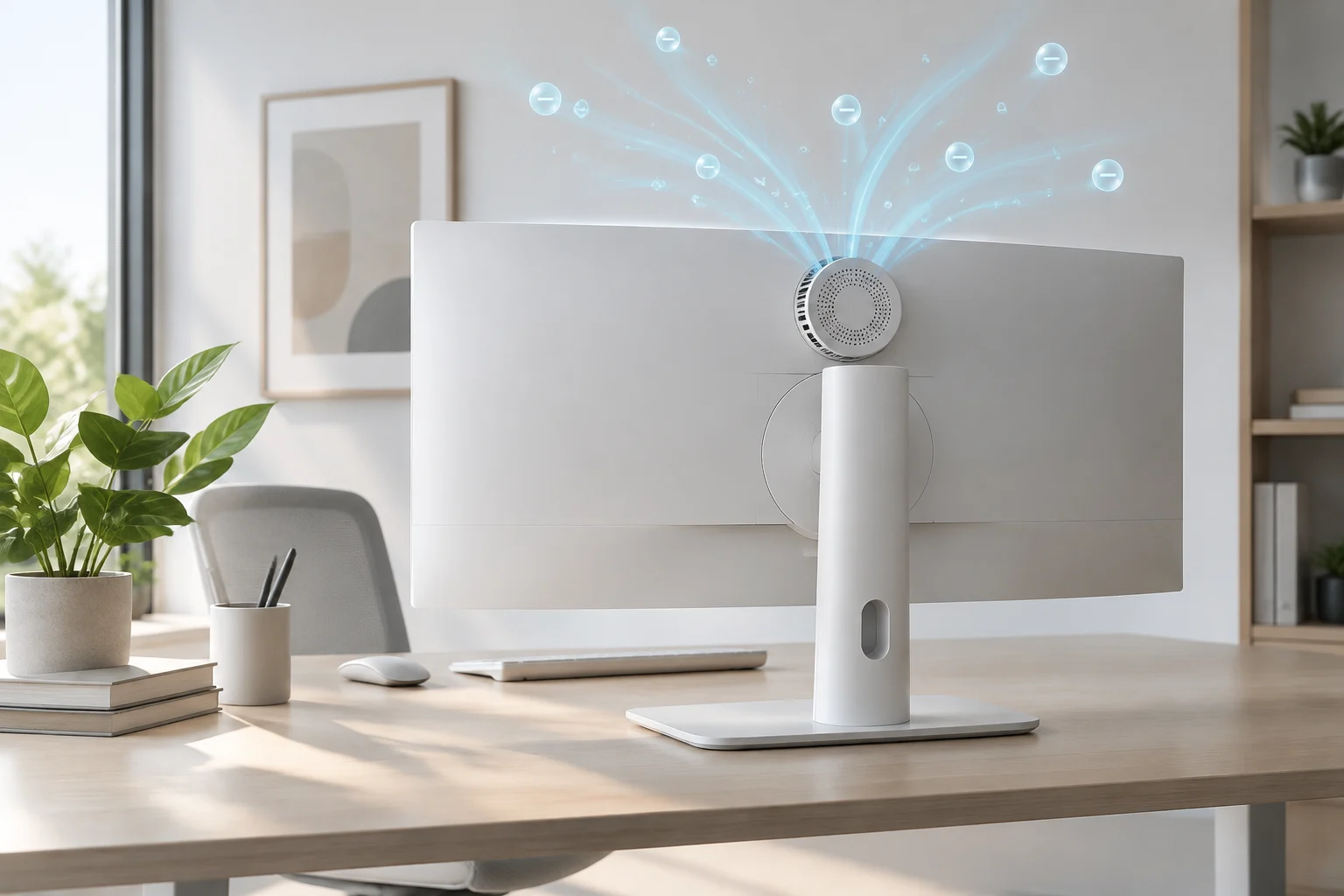
Monitors in the VU Air Ionizer series incorporate a device that emits negative ions into the surrounding air. ASUS calls this system nano-ion technology and presents it as a way to reduce dust, pollen, allergens, and other contaminants without a replaceable filter. It is not the same as capturing particles in a filter: the reduction data alone does not explain where the particles end up or what exposure a person maintains over time.
The VU34WCIP-W datasheet limits the announced result to a closed 1 m³ enclosure and a three-hour period. This scale allows understanding the proposal as a zone near the monitor, not as a purifier designed to clean the entire volume of a room. The coverage scope is focused, designed to purify the air directly in front of the viewer.
To evaluate the figure, the method also matters: which particles were measured, with what instrument, and how ventilation was controlled. The product page attributes the data to independent tests in a closed 1 m³ volume for three hours. Therefore, the 90% should be read as a limited trial claim, not as a universal estimate of exposure reduction or a clinical result.
What Clinical Evidence Allows Us to Say
A Cochrane review on ion generators for chronic asthma gathered six studies with 106 participants. In the negative ionization trials, no significant differences were found compared to control air in measures of lung function, symptoms, or medication use. The review concluded that the use of environmental ionizers could not be recommended to reduce asthma symptoms. This result does not prove that no ionizer reduces particles, but it does limit conclusions about respiratory benefits in patients.
The review was published in 2012 and studied asthma patients, not VU monitors or eye strain. It is not a direct test of the ASUS device nor does it allow claiming that its system has no effect on particles under the declared conditions. It does establish an important distinction: that a mechanism may alter the air or that a test measures fewer particles does not automatically demonstrate a perceptible or clinically relevant health improvement.
The Cochrane review focused on asthma patients and did not evaluate eye strain or VU series monitors. Therefore, it does not allow concluding that ionization improves visual health or replaces other comfort measures. The air function and screen features respond to distinct objectives that must be valued separately.
Ionization Is Not Eye Care Plus
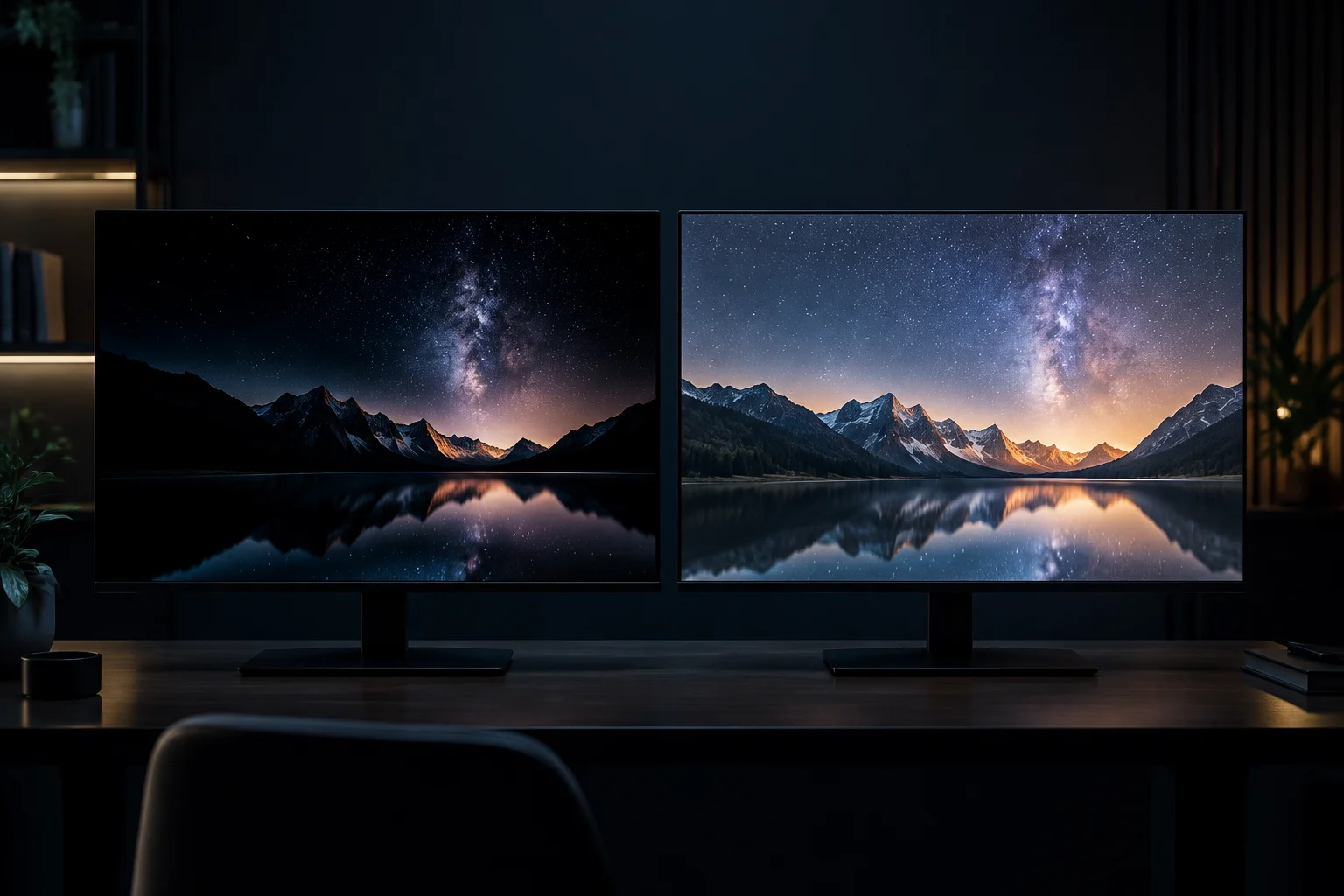
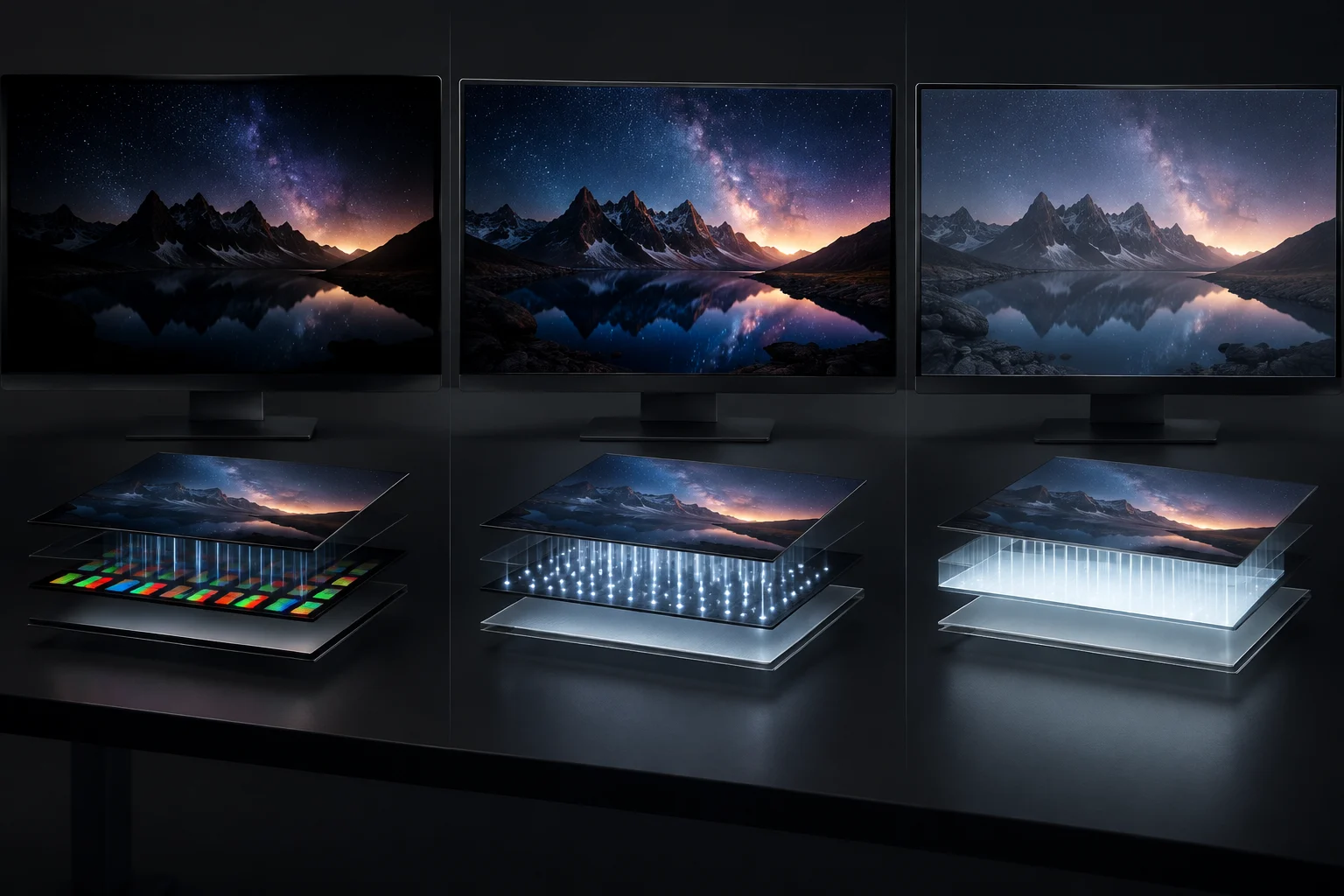
In VU models, ASUS groups several well-being functions, but they fulfill different roles. Eye Care Plus includes options like adjustable blue light filter, flicker-free mode, break reminders, and color enhancement; the product page also describes automatic brightness adjustment in some models. These tools affect the image or interaction with the screen, while the ionizer is intended for the air. The common well-being label does not turn one set of features into evidence for the other.
The TÜV Rheinland certification that ASUS mentions for the blue light filter and flicker-free operation refers to those specific characteristics. It does not certify by extension that the ionizer improves respiratory health, eliminates allergens in any room, or prevents eye strain. When comparing monitors, it is advisable to check which function is certified and what the scope of the certification is, rather than interpreting a seal or software mark as general product validation.
Refresh rate also has a distinct purpose: the manufacturer announces up to 100 Hz and Adaptive-Sync to offer smoother movement and compatible image synchronization. These specifications may matter for motion and gaming, but they are not measures of eye health. It is advisable to compare each feature with the problem you actually want to solve: flicker or blue light filter for the image; ionizer for the air quality claim.
How to Choose Without Paying for a Wrong Promise
For those looking for a monitor primarily for work or gaming, the decision should start with the panel, resolution, size, refresh rate, ports, and physical ergonomics. The VU series offers different variants: for example, the VU34WCIP-W is a 34-inch curved WQHD model, while the VU279HFI-W is a 27-inch Full HD model. They are not interchangeable by sharing the ionization function: format, resolution, and connections may weigh more in daily use.
The ionizer may interest those who value an additional function for the immediate environment and accept that the published result is restricted to a 1 m³ trial. It should not be the main reason to buy the monitor if the expectation is to treat asthma, prevent allergies, or relieve eye strain. For those needs, the Cochrane review does not support the use of ionizers as asthma treatment, and the environmental function does not replace medical advice.
Before paying for this feature, it is reasonable to check three things:
- The objective: particle reduction, not correction of eye discomfort.
- The scope of the data: declared trial in a closed 1 m³ volume for three hours.
- The monitor fit: resolution, panel, frequency, connectivity, and physical adjustments suitable for the desk.
The Practical Conclusion
ASUS VU Air Ionizer monitors combine a screen with an ion generator, and the manufacturer communicates a dust reduction of up to 90% under limited trial conditions. This describes a specific feature, but it is not enough to claim that the air in any room will be clean or that the user's health will improve. The difference between a particle figure and a clinical benefit is central.
Cochrane evidence on home ionizers and asthma found no significant benefits in the studied outcomes and does not recommend their use to relieve symptoms. Its scope does not include this specific monitor or eye strain, so it should not be extrapolated beyond what it evaluated. For the buyer, the most useful conclusion is simple: treat the ionizer as a limited environmental feature, as the promotional figure does not establish broader health benefits.
If the priority is visual comfort, give more weight to height adjustment, space lighting, appropriate brightness, breaks, and screen features corresponding to your use. If the priority is air quality, compare devices with performance data relevant to the room and the type of contaminant you want to reduce. The monitor should be chosen by its verifiable features for the main use, not because an air function is presented as equivalent to eye care.