Why panel type defines the visual experience
Choosing a PC monitor has moved beyond focusing solely on resolution or size. Today, the panel technology determines how color is perceived, the depth of blacks, and the fluidity of motion. For a design professional, a competitive gamer, or an office user, these differences translate into practical decisions that affect long-term productivity and visual comfort.
The three predominant panel types in the current market are VA, IPS, and OLED. Each manages light differently, generating specific advantages and limitations. Understanding these technical fundamentals allows buyers to avoid overvaluing promotional features and select the hardware that best fits their actual workflow.
Technical fundamentals: how each panel emits light
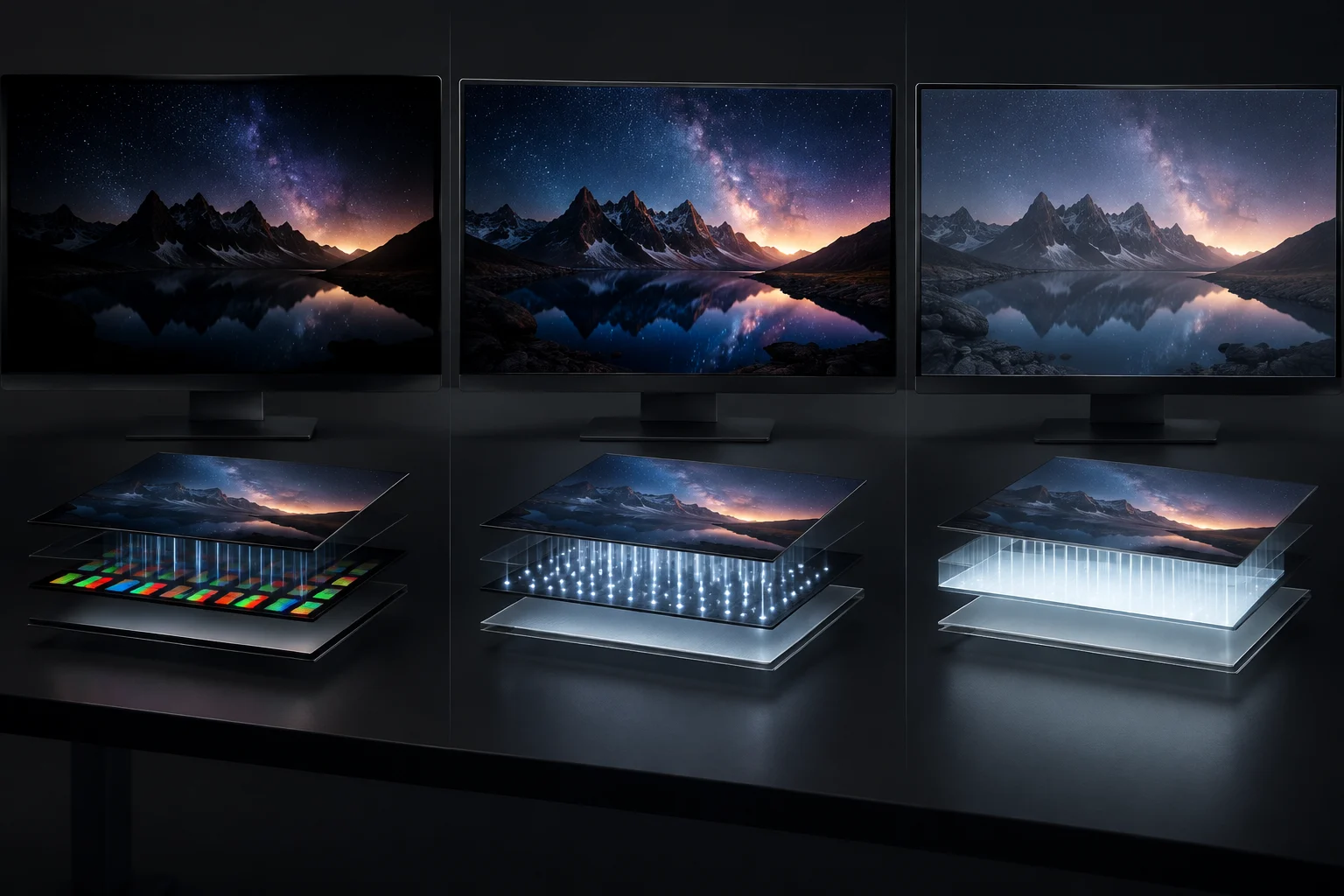
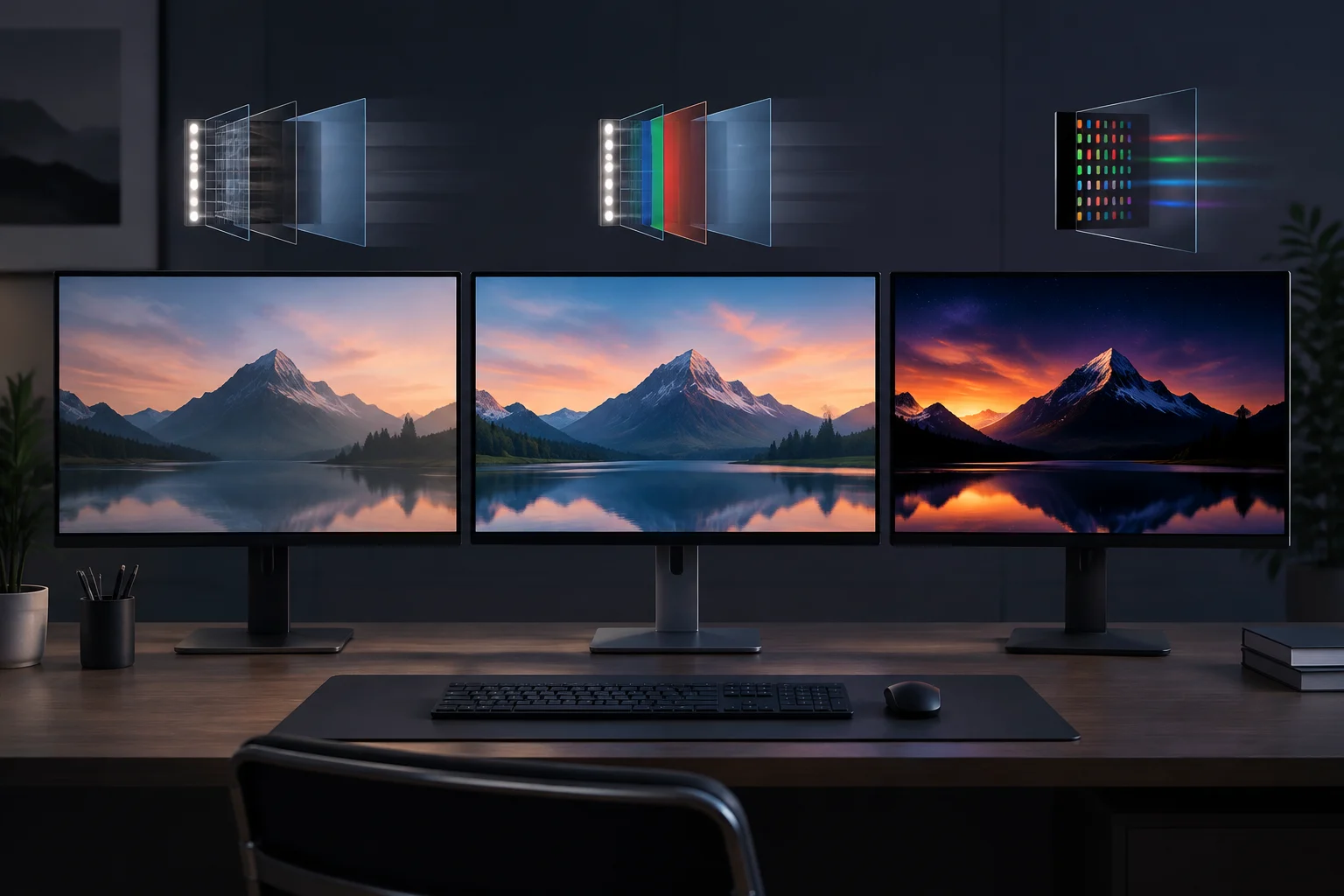
VA (Vertical Alignment) and IPS (In-Plane Switching) panels are LCD technologies that rely on LED backlighting. In VA panels, liquid crystals align vertically, allowing for higher native contrast, often with more limited viewing angles and slightly higher response times. IPS panels, on the other hand, prioritize color consistency and wide viewing angles, becoming the de facto standard for creative work requiring chromatic fidelity.
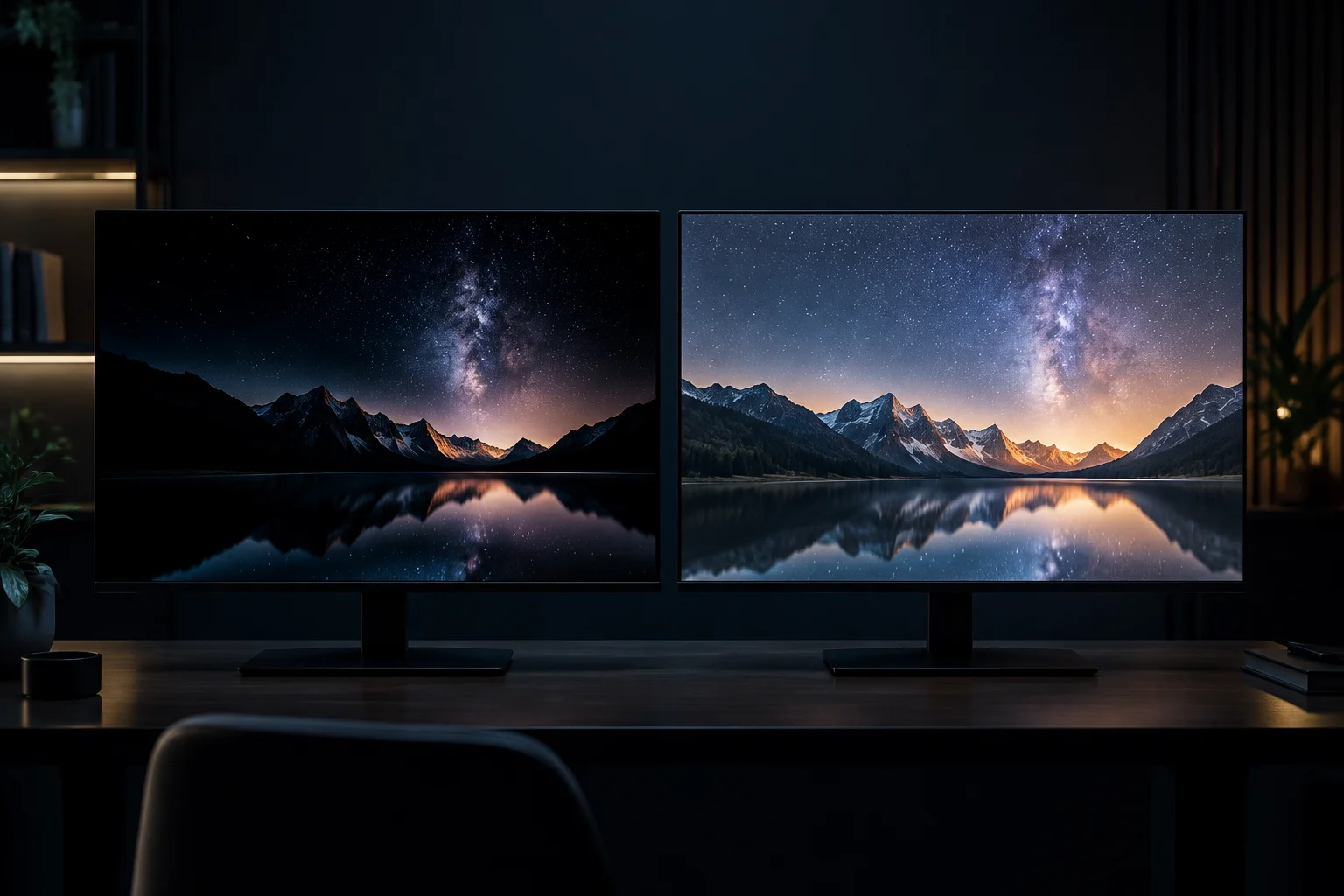
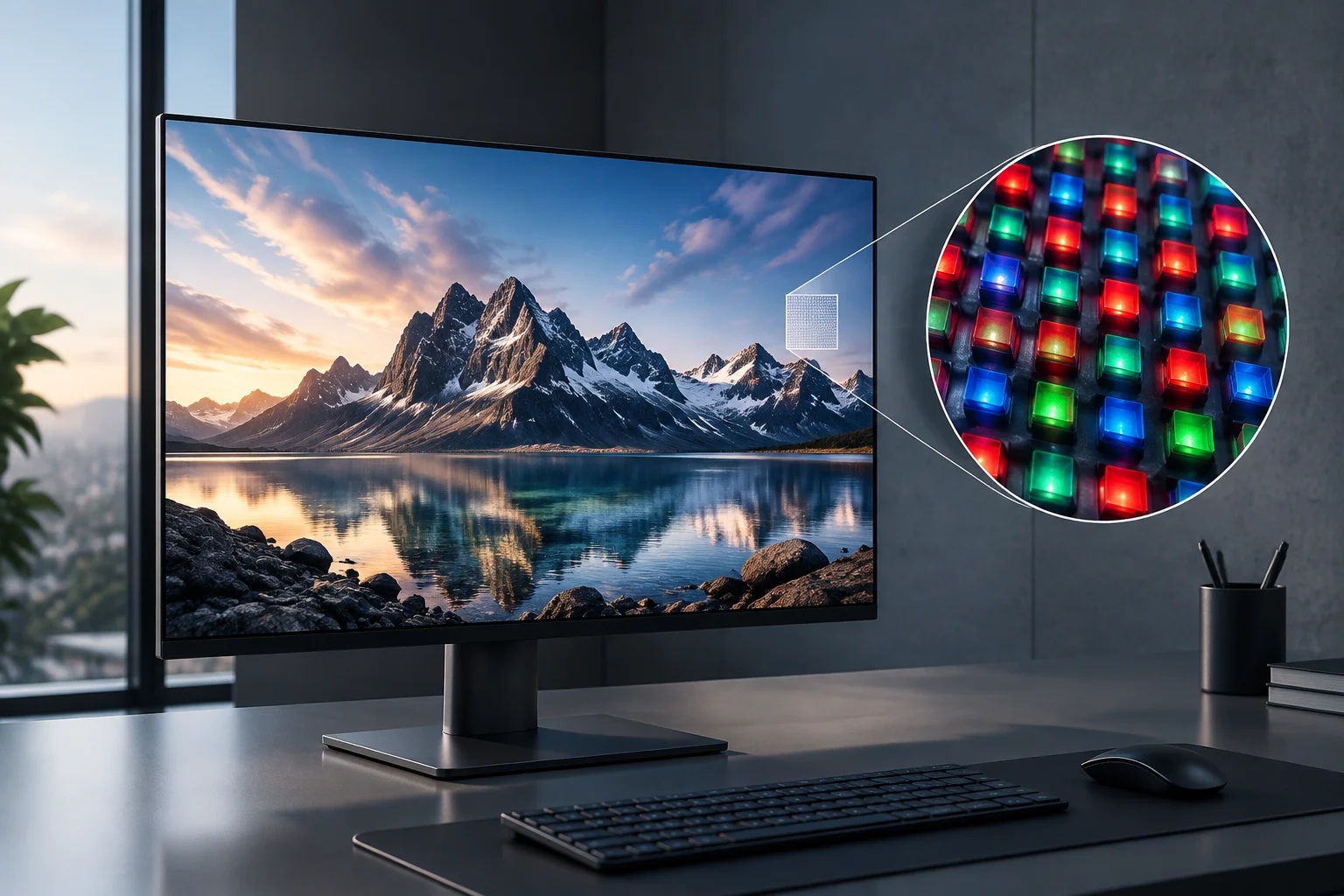
OLED (Organic Light-Emitting Diode) technology breaks with this architecture by being self-emissive. Each subpixel generates its own light and can be turned off individually. This eliminates the need for backlighting, achieving pure blacks and theoretically infinite contrast ratios. This structural difference is key to understanding why OLED dominates in depth perception, although it introduces challenges such as the risk of burn-in and long-term luminance degradation that does not exist in LCD panels.
Key parameter comparison: contrast, color, and speed
When evaluating official specifications, the quantifiable differences are significant. Contrast is the parameter where OLED distances itself abysmally. While a mid-range VA panel usually offers ratios of 3000:1 to 5000:1, and an IPS typically stays at 1000:1, OLED panels reach values exceeding one million to one in controlled environments. This figure is not just marketing: it translates into shadow detail visibility that LCD panels cannot replicate without backlight zoning techniques (Mini-LED).
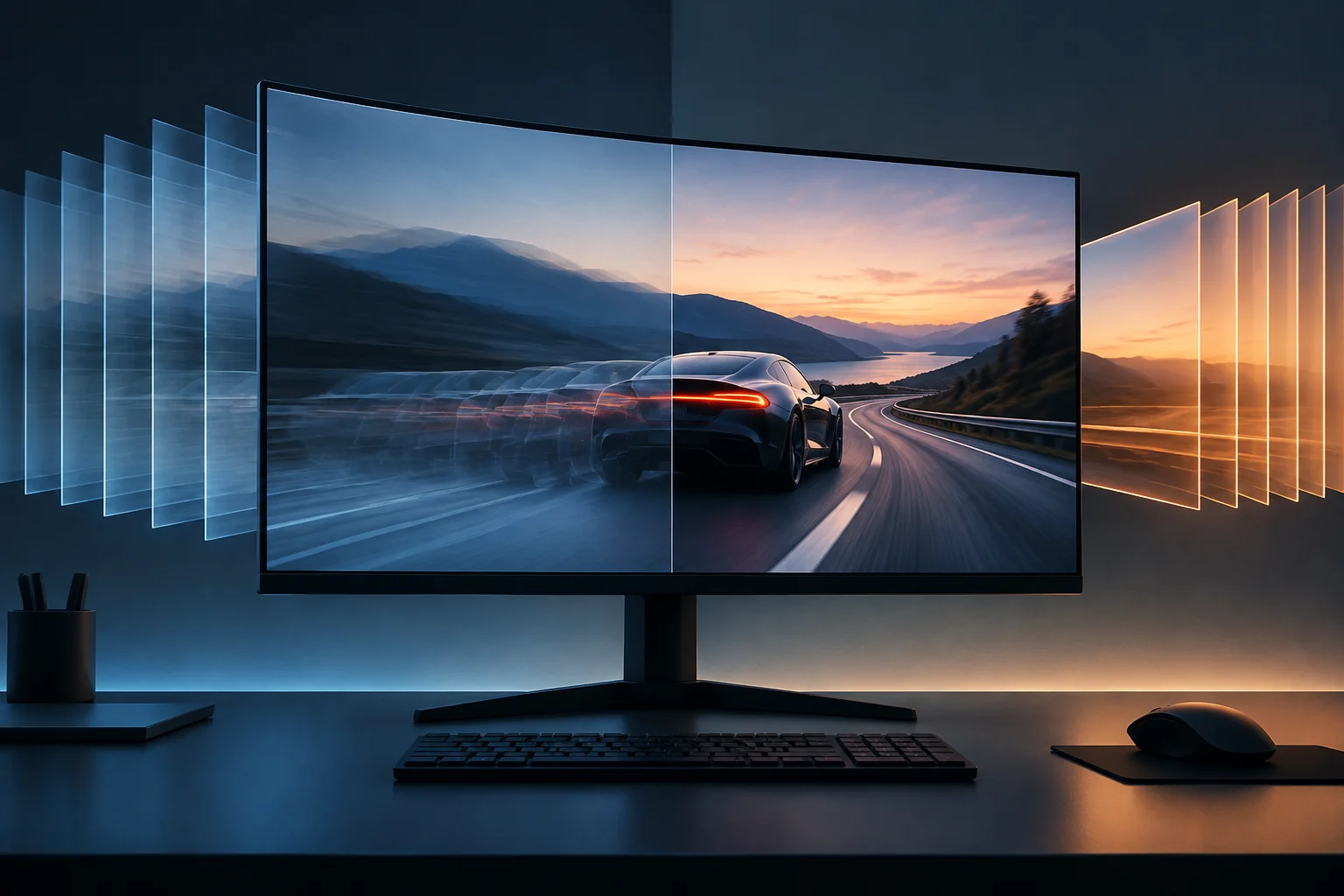
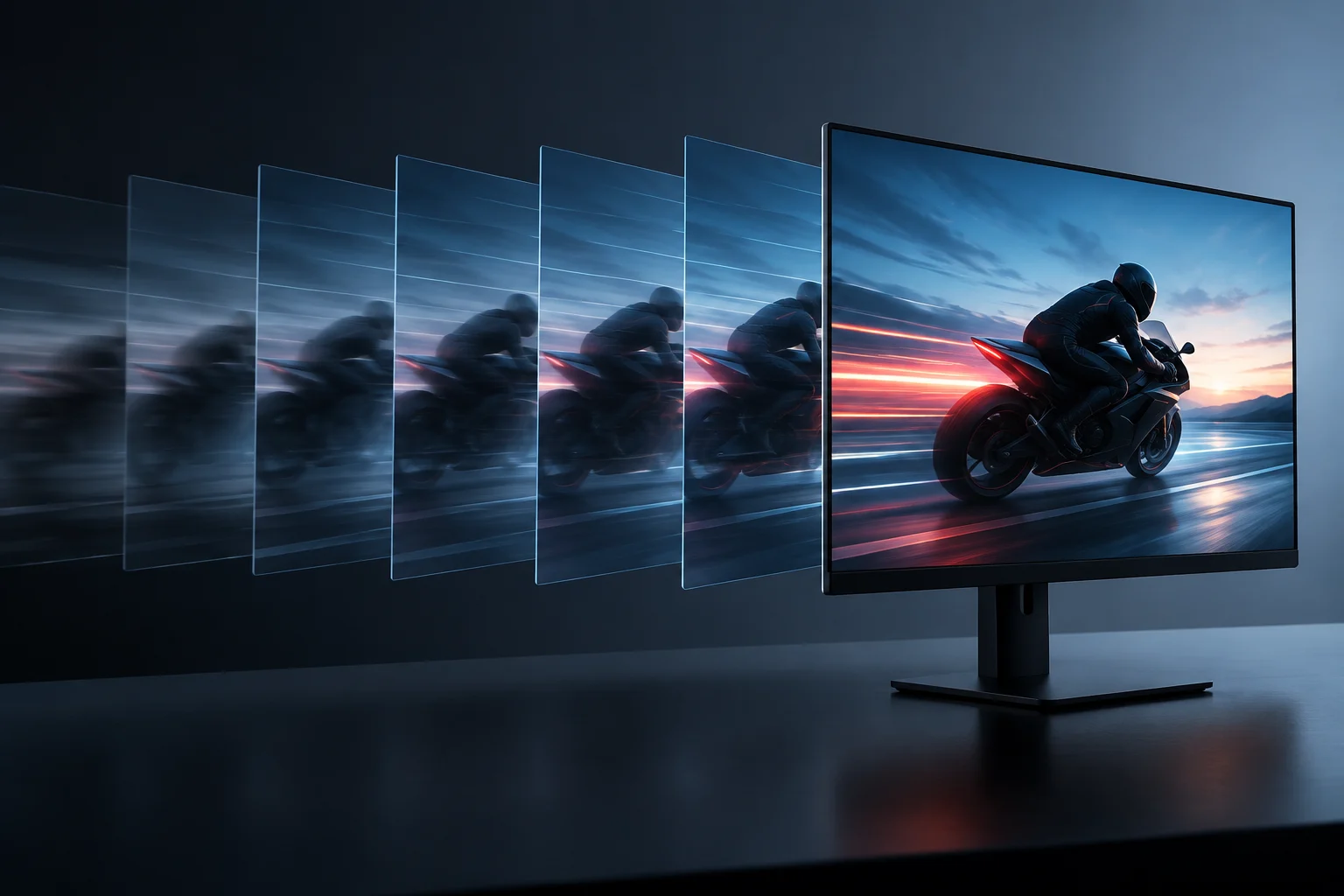
Regarding speed, the correct metric is GtG (Gray-to-Gray) response time. Current OLED panels, such as the AOC Q27G4SDR, reach 0.03 ms GtG values, practically eliminating ghosting in high-speed games. Fast IPS panels have improved to 1-5 ms, while VA panels usually range from 4-8 ms. It is crucial to distinguish this from MPRT, a metric manufacturers sometimes mix to inflate figures, as it measures image persistence time via intermittent backlighting techniques, not the actual pixel transition speed.
Performance in real tasks: design, productivity, and gaming
For graphic design and photography, color accuracy is the decisive factor. Professional-grade IPS panels, like the ViewSonic VP2776T-4K, offer 98% DCI-P3 color space coverage and Pantone validation, making them ideal for previewing content that will be printed or distributed digitally. Although OLED offers a wider color gamut, its long-term chromatic stability and the risk of burn-in with static interface elements (like toolbars) make it less recommended as a primary monitor for continuous precision work.
In the realm of general productivity, IPS remains the safest balance. It offers a good value-for-money ratio, wide viewing angles for multi-monitor setups, and a predictable lifespan. For competitive gaming, OLED has consolidated itself as the premium option. The combination of 360 Hz refresh rate and 0.03 ms GtG response in models like the AOC Q27G4SDR offers a tangible advantage in first-person shooter games, where detecting moving enemies is critical. However, for slow-paced or single-player games, a high-end IPS panel offers a visually superior experience in terms of sustained brightness and absence of burn-in.
Practical pros and cons of each technology
Each panel technology presents a distinct risk and benefit profile. Below are the key characteristics to consider before purchase:
- VA Panel: Offers the best contrast among LCDs. Ideal for movies and games in dark environments. Disadvantages: narrower viewing angles and possible banding in smooth gradients.
- IPS Panel: Excellent color accuracy and viewing angles. The standard for design and office. Disadvantages: limited contrast (1000:1) and possible light leakage (IPS glow) in pure blacks.
- OLED Panel: Infinite contrast, minimal response times, and vibrant colors. Ideal for high-end gaming and multimedia consumption. Disadvantages: burn-in risk, luminance degradation, and higher initial cost.
The final decision must weigh the primary use. If the monitor will be used 8 hours daily for video editing or design, IPS stability is preferable. If the use is predominantly recreational or high-contrast content consumption, OLED offers an immersive experience that LCD panels cannot match, provided maintenance guidelines are followed to mitigate burn-in.
Purchase recommendations and final considerations
There is no universally superior panel; the choice depends on the usage profile. For creative professionals requiring precise calibration and durability, a 4K IPS monitor with Pantone certification and Thunderbolt 4 support is the safest investment. For gamers seeking maximum fluidity and image depth, a 27-inch QD-OLED monitor with 360 Hz represents the current state of the art, although it requires a higher initial investment and attention to specific warranty policies for burn-in.
It is fundamental to verify sustained brightness specifications and not just the peak. OLED panels can reach very high luminance peaks, but their sustained brightness in large scenes (HLG/SDR) is lower than high-end Mini-LED or IPS panels. Additionally, connectivity (HDMI 2.1, DisplayPort 1.4) and compatibility with adaptive synchronization technologies (G-Sync, FreeSync) are minimum requirements in 2026 to avoid screen tearing and guarantee a fluid experience in any scenario.