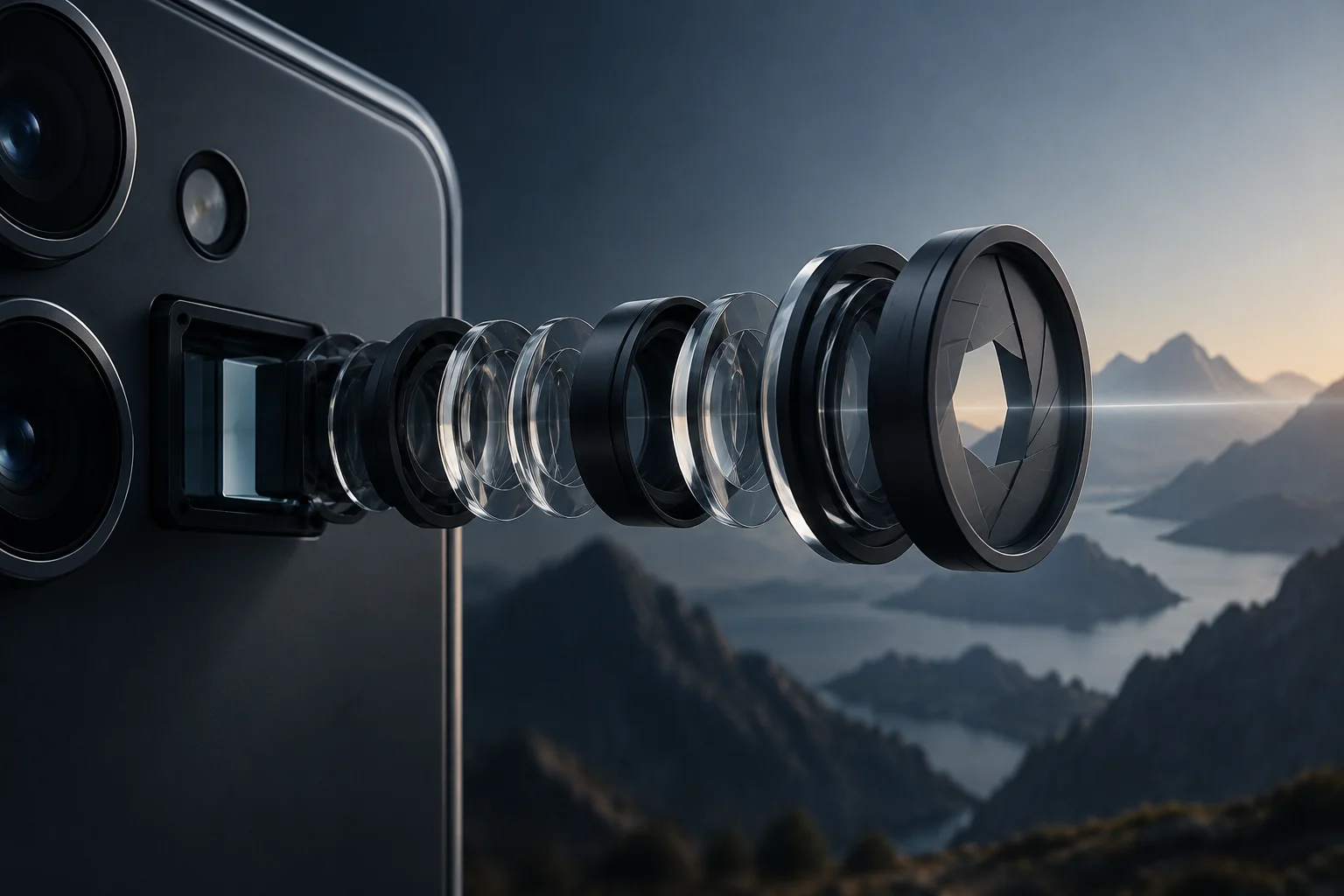
The Photographic Race Is Not About Two Functions Alone
Variable aperture and long‑range telephoto are two relevant design choices in mobile cameras, but they do not alone describe the camera system. In 2026, available sources on flagship models mention large sensors, telephoto lenses and computational processing; they do not prove that all manufacturers have adopted variable optics or an equivalent periscope architecture.
The first caution is temporal: the coverage consulted for 2026 phones includes models already analyzed during the year, but it does not constitute a complete inventory of all brands and markets. Therefore this article separates explicit specifications from inferences and does not present a universal trend that sources only credit for specific devices.
Moreover, the word zoom often groups distinct things. A phone may offer a telephoto camera with a concrete equivalent focal length, switch between several cameras or crop the sensor image via software. Without manufacturer documentation identifying the optical structure, calling any long‑range telephoto periscope would go beyond available evidence.
Variable Aperture: What Can Be Stated
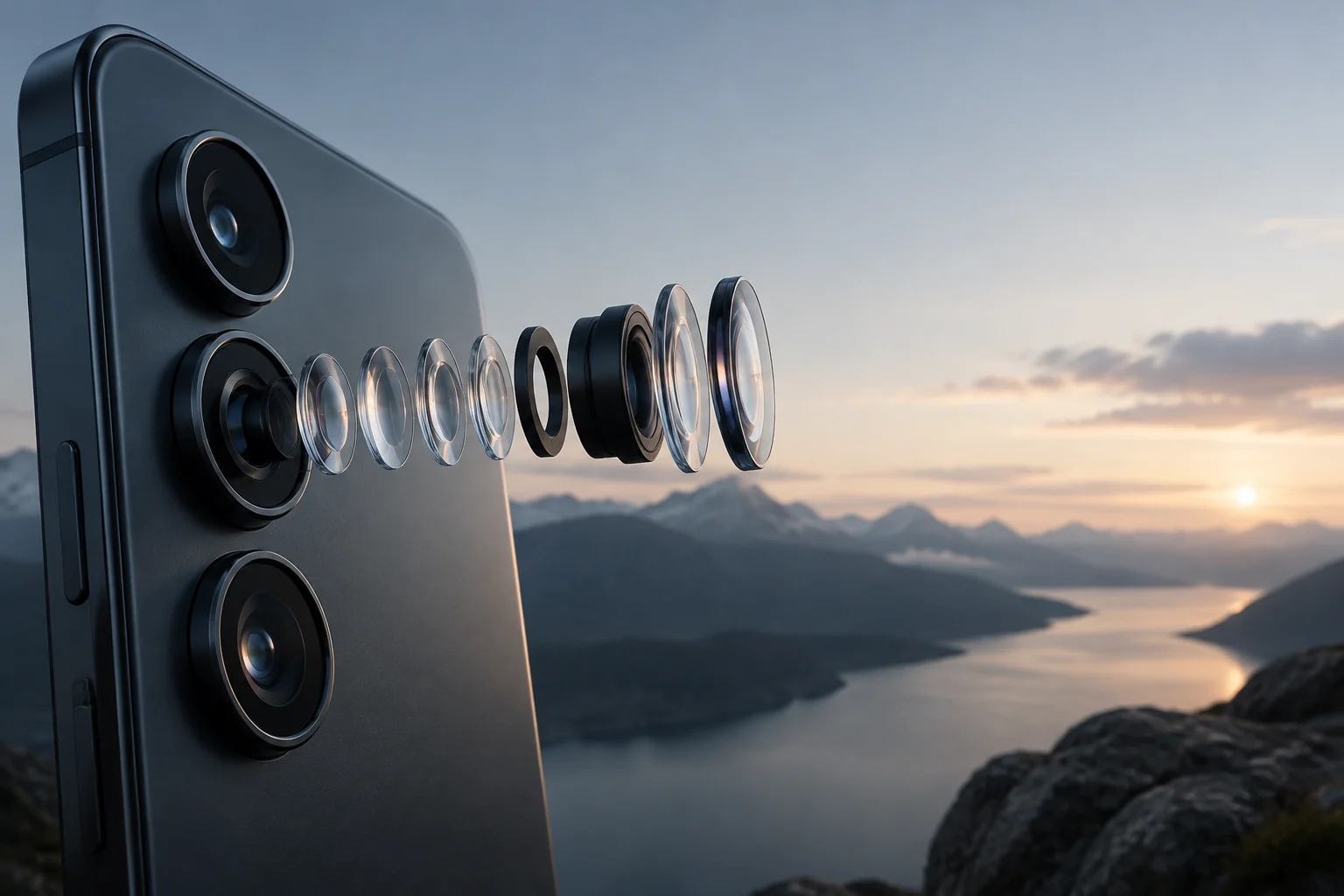
A variable aperture changes the size of the opening through which light passes, compared to a lens with fixed aperture. Practically, it can provide another control over exposure and depth of field; it does not guarantee better photos in low light on its own, as sensor size, stabilization, shutter speed and processing also intervene.
Among the materials provided, the most concrete claim about variable aperture comes from Xiaomi 17 Ultra: a secondary commercial page attributes that feature to its 200‑megapixel telephoto lens. That does not equate to official confirmation by the manufacturer and the source is insufficient to determine the aperture range or behavior in each camera mode. RedShark coverage also identifies the model as one of the standout photography phones at MWC 2026, but the available excerpt does not verify that optical detail.
In contrast, DXOMARK’s test of Samsung Galaxy S26 Ultra lists a 200‑MP main camera with f/1.4 lens and two telephoto lenses with f/2.4 and f/2.9 apertures. Those figures document indicated apertures for each module, not a variable mechanism. A spec sheet with different f‑numbers for distinct cameras does not mean the same lens can change aperture.
The useful conclusion is limited: one cannot assert from these sources that variable aperture has become widespread in 2026 flagships, nor produce a reliable comparison between manufacturers. Before buying, it is advisable to look for a specification that explicitly identifies adjustable aperture, the module it applies to and, if possible, the value range.
Optical Zoom: Read Each Camera, Not Just the Promotional Number
DXOMARK’s sheet describes two telephoto cameras on Galaxy S26 Ultra: one 10‑MP equivalent to 67 mm and another 50‑MP equivalent to 111 mm. They are distinct optical modules according to the source; the cited page does not label them periscopic, so that architecture is not attributed here. One should also avoid interpreting the focal range as continuous optical zoom: switching between cameras is not the same as moving a lens through all intermediate distances.
GSMArena’s review of Galaxy S26 standard, published in March 2026, describes limited hardware changes compared to the previous model and modest telephoto specs. That review helps avoid generalizing across the whole family: Ultra features do not automatically transfer to base or Plus models.
Regarding Apple, the list includes a social post mentioning iPhone 18 Pro Max but no verifiable official spec detailing its optical system. For OPPO, there is also no concrete documentation in the supplied sources that confirms a periscope camera on a flagship 2026 model. The reference that Find X9 Ultra achieves top results in a DXOMARK table does not verify by itself what optical architecture it uses.
The Xiaomi 17 Ultra case is supported here by secondary coverage placing it among the most photogenic phones, and by a commercial page describing a 200‑MP telephoto lens. That allows speaking of a telephoto lens but does not certify from those sources alone a specific periscope design. The label requires manufacturer documentation or a reliable technical source that details light path and optics.
Hardware and Software: Different Improvements, Combined Effects
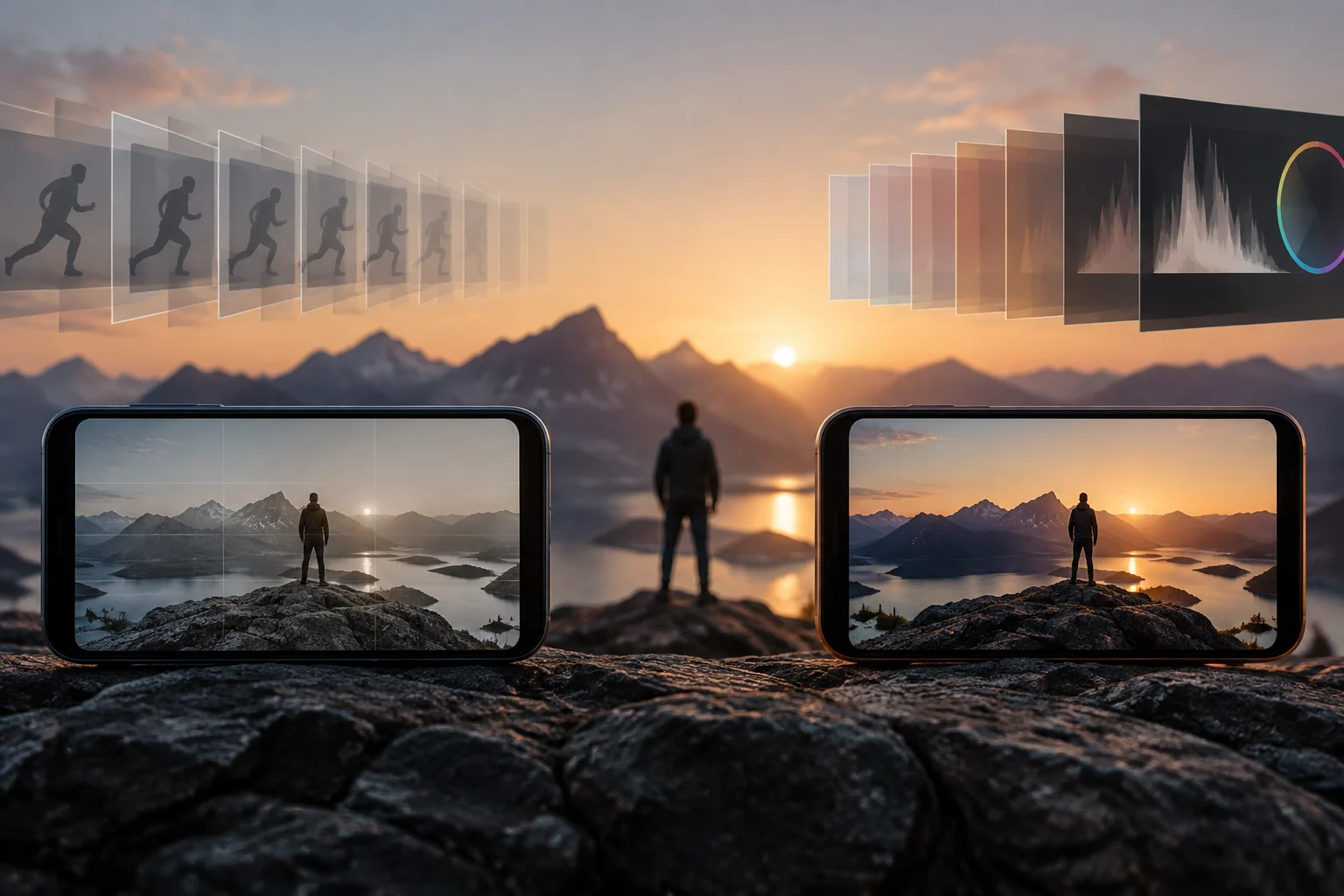
Hardware determines what light the phone gathers and from which field of view: sensor, lens, stabilization and telephoto modules are distinct components. Software, on the other hand, processes the signal, combines exposures or applies editing tools. In mobile photography, both work together; separating their functions helps understand a spec sheet, but it does not mean the final image depends only on optics.
DXOMARK and GSMArena tests are secondary analyses of camera performance, not official documentation of all internal mechanisms. Their results can be used to evaluate photography and video in test scenarios, but they do not prove that generative AI is present, nor allow attributing a specific improvement exclusively to a lens or sensor.
The supplied sources contain no verifiable documentation on iOS 27 or Android 17 that would let us compare their generative editing features with camera hardware. Therefore they are not presented here as novelties nor assigned capabilities. An editing feature does not replace an optical telephoto: it can change the processed result, but is not evidence that the phone captures additional optical detail.
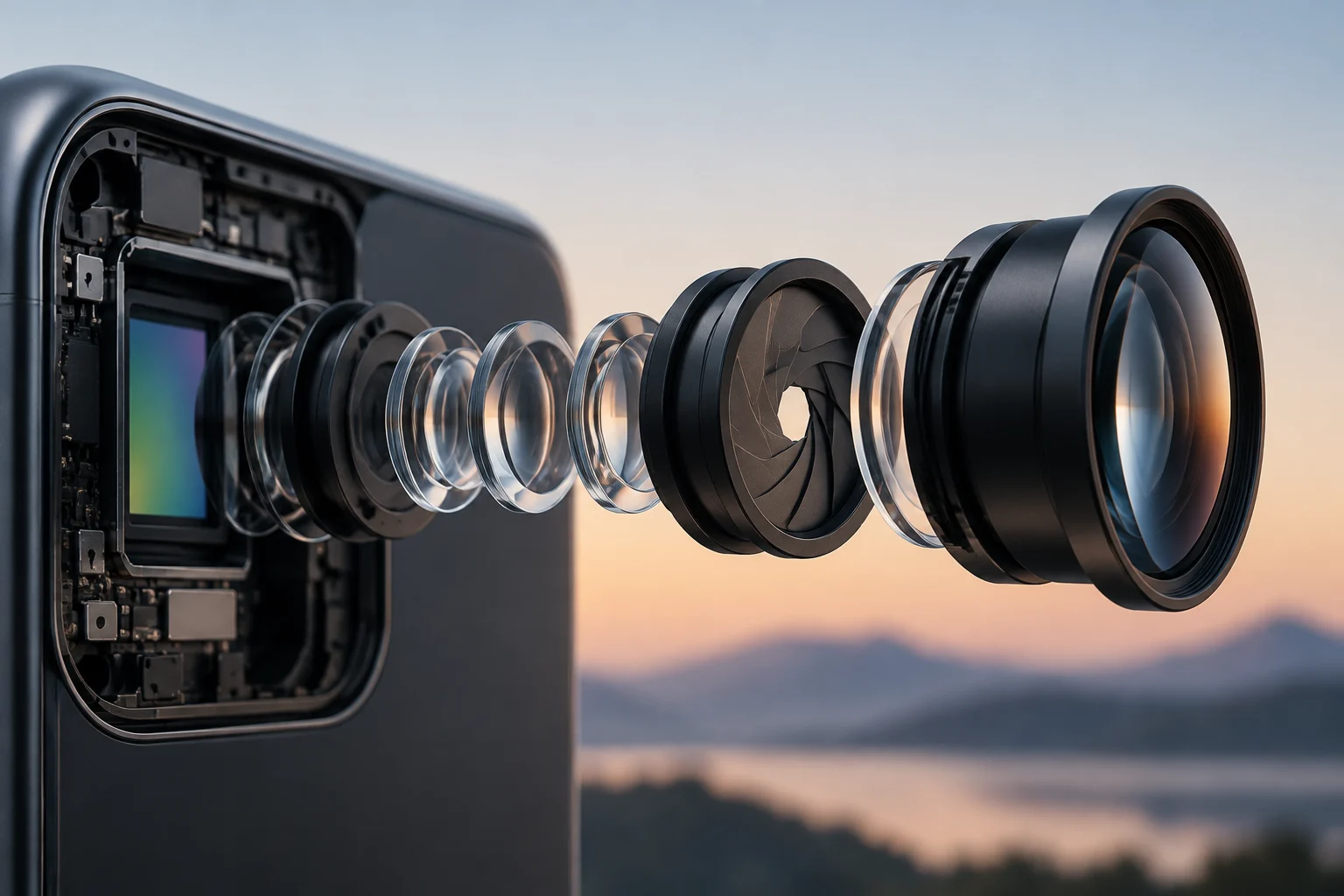
What to Check Before Choosing a Photographic Phone
For an informed purchase, it helps translate commercial labels into verifiable questions. A spec sheet should indicate whether aperture is fixed or adjustable and which camera it applies to; for zoom, what modules exist, their equivalent focal lengths and which part of the advertised reach is optical versus cropping or processing.
A short list helps compare models without assuming different technologies are equivalent:
- Aperture: does the source identify a fixed value or an adjustable range for a specific lens?
- Telephoto: is a separate camera detailed, its resolution and equivalent focal length?
- Periscope: is there explicit confirmation of that architecture, rather than inferring it from advertised reach?
- Results: does the test specify photo, video and zoom scenarios, and distinguish measured performance from declared specs?
DXOMARK’s test, for example, publishes equivalent focal lengths and apertures for S26 Ultra modules; this is more useful for comparison than a single zoom figure. However, a lab test and an official spec answer different questions: one estimates results under its evaluation conditions; the other documents what the manufacturer declares. The ideal is to contrast both, without turning a score into guaranteed performance in any scene.
The decision depends on use. Someone who frequently photographs distant subjects should prioritize a dedicated telephoto lens and review zoom samples at relevant distances; someone who often shoots portraits or scenes with changing light may value an adjustable aperture if confirmed for the camera they will use. None of these specifications replace checking stabilization, video quality, consistency across lenses and local availability.
Balance: Verifiable Specs Over Labels
With available research, the strongest result is not that variable aperture and periscope define all 2026 mobile cameras. It is that verification must be done model by model: concrete evidence identifies apertures and focal lengths on Galaxy S26 Ultra and attributes variable aperture and telephoto to Xiaomi 17 Ultra in secondary sources, but it does not allow official confirmation of all claims or a complete comparison between Samsung, Apple, Xiaomi and OPPO.
Before deciding, consult the manufacturer’s sheet to confirm each camera’s configuration and an independent test to assess how it behaves. If the manufacturer does not specify variable aperture or periscope architecture, do not infer them from terms like advanced zoom, high megapixels or enlarged image. An explicit spec and a relevant test allow better comparison than a generic professional photography label.