The Physical Limit of Compute Density
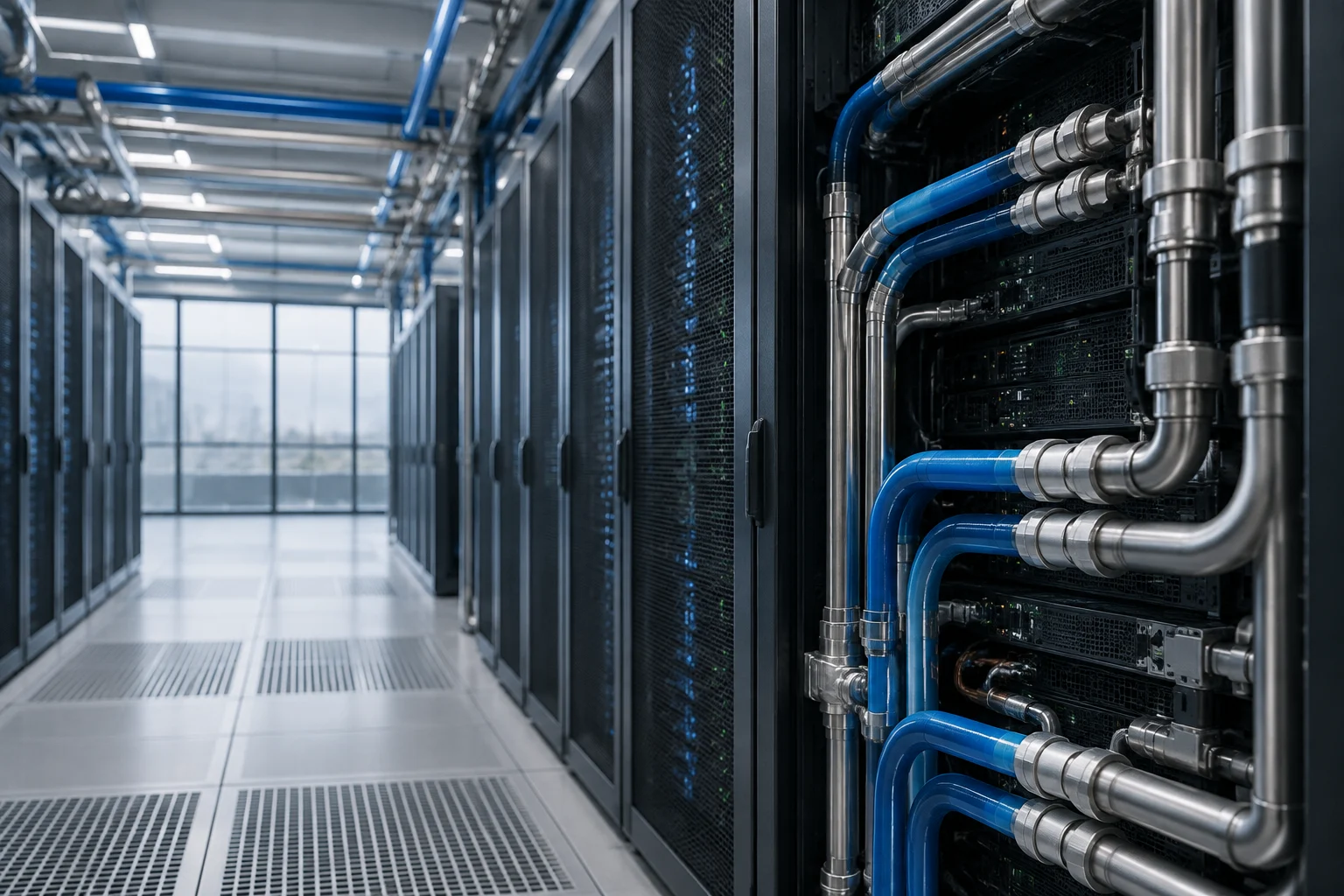
The proliferation of high-density AI accelerators has radically transformed data center thermal engineering. Modern systems, such as the NVIDIA GB200 NVL72, far exceed the thermal thresholds that conventional air cooling can manage efficiently. This reality forces a structural transition towards the use of fluids, marking a paradigm shift in the management of energy dissipated by each rack.
According to statements by David Brown, VP of Compute and Machine Learning at AWS, the adoption of the Blackwell platform represents the first large-scale deployment of liquid-cooled hardware in the company's infrastructure. This strategic decision was made after evaluating that existing third-party solutions required building data centers from scratch or did not scale adequately to the new density demands.
The impact of this technical limitation is significant in terms of operational viability. Previous options implied implementation timelines of years and inefficient use of floor space, a resource that is increasingly scarce and costly in preferred locations for AI infrastructure. Therefore, the integration of liquid cooling ceases to be a technical option to become a fundamental requirement for scalability.
Scope of NVIDIA Certification
NVIDIA has established a rigorous technical validation process for its infrastructure partners, designed to standardize performance in so-called AI Factories. Recently, LG Electronics obtained official certification for its 600 kW Coolant Distribution Unit (CDU), passing more than 100 technical evaluation criteria. This process is not a generic quality seal, but a deep verification that the equipment can operate within the thermal and reliability parameters required by next-generation GPU systems.
The certification specifically validates the thermal management, reliability, and fault tolerance of the equipment. For operators, this means the CDU is designed to support intensive AI workloads without degrading accelerator performance or causing thermal throttling. However, it is crucial to understand that this validation focuses on technical compatibility with the NVIDIA platform, not on the global economic optimization of the data center.
This technical approach seeks to reduce uncertainty in the integration of critical hardware. By ensuring the CDU works correctly with NVIDIA's architecture, incompatibility risks that could paralyze high-density cluster operations are minimized. Nevertheless, the certification does not cover logistical or financial aspects that are determinants for the long-term profitability of the infrastructure.
Validated Metrics vs. Limitations
It is fundamental to distinguish between what the certification guarantees and what falls outside its scope. The following details the technical scope of the validation, clearly separating verified metrics from variables the buyer must assume:
- Thermal Compatibility: Verification that the CDU can maintain component temperatures within safe GPU limits, preventing overheating that compromises hardware lifespan.
- Operational Reliability: Stress tests and fault tolerance to ensure service continuity under maximum and sustained load conditions.
- Performance Standards: Strict compliance with the flows and pressures required by NVIDIA's architecture to guarantee uniform dissipation.
- What is NOT validated: Installation cost, integration with existing cooling systems, long-term maintenance, or overall building energy efficiency (PUE).
Comparison of Cooling Technologies
Liquid cooling is not a single solution, but a spectrum of technologies with different levels of complexity and efficiency. Direct-to-chip cooling (as used in certified CDUs) offers the highest thermal efficiency but requires complex infrastructure and detailed fluid distribution planning. Air cooling remains viable for densities below 40 kW per rack, while immersion and microfluidics represent future stages of greater integration.
Microfluidics, for example, proposes bringing the coolant inside the silicon itself, a technology still in the research and development phase. Conversely, in-row heat exchange (IRHX) solutions, such as the one developed by AWS, seek to optimize space and water use in existing facilities. The choice depends on the target compute density and the capacity for investment in physical infrastructure.
Each technology presents a different balance between initial cost, installation complexity, and long-term energy efficiency. More advanced solutions allow higher densities but require greater investment in engineering and specialized maintenance. Infrastructure managers must evaluate not only thermal capacity but also technology maturity and its impact on daily data center operations.
Implications for Infrastructure Procurement
For infrastructure managers, NVIDIA certification is a starting point, not a final guarantee. When evaluating a solution, it is necessary to verify real compatibility with the data architecture, including integration with power supply systems and water distribution network capacity. A certified unit may not be the most economical option if it requires significant structural modifications to the building or existing facilities.
The practical decision must be based on a Total Cost of Ownership (TCO) analysis that includes not only the equipment price but also installation costs, water consumption, and the energy required to pump the coolant. Certification ensures the equipment will work with NVIDIA GPUs, but economic and operational viability depends on specific integration in each data center.
Additionally, it is important to consider maintenance costs and long-term spare parts availability. Technical certification does not guarantee local support availability or ease of repair in case of breakdowns. Therefore, a complete evaluation must include reviewing service contracts, technical staff training, and technological obsolescence planning to ensure investment sustainability.