Positioning of the Blackwell Professional Line
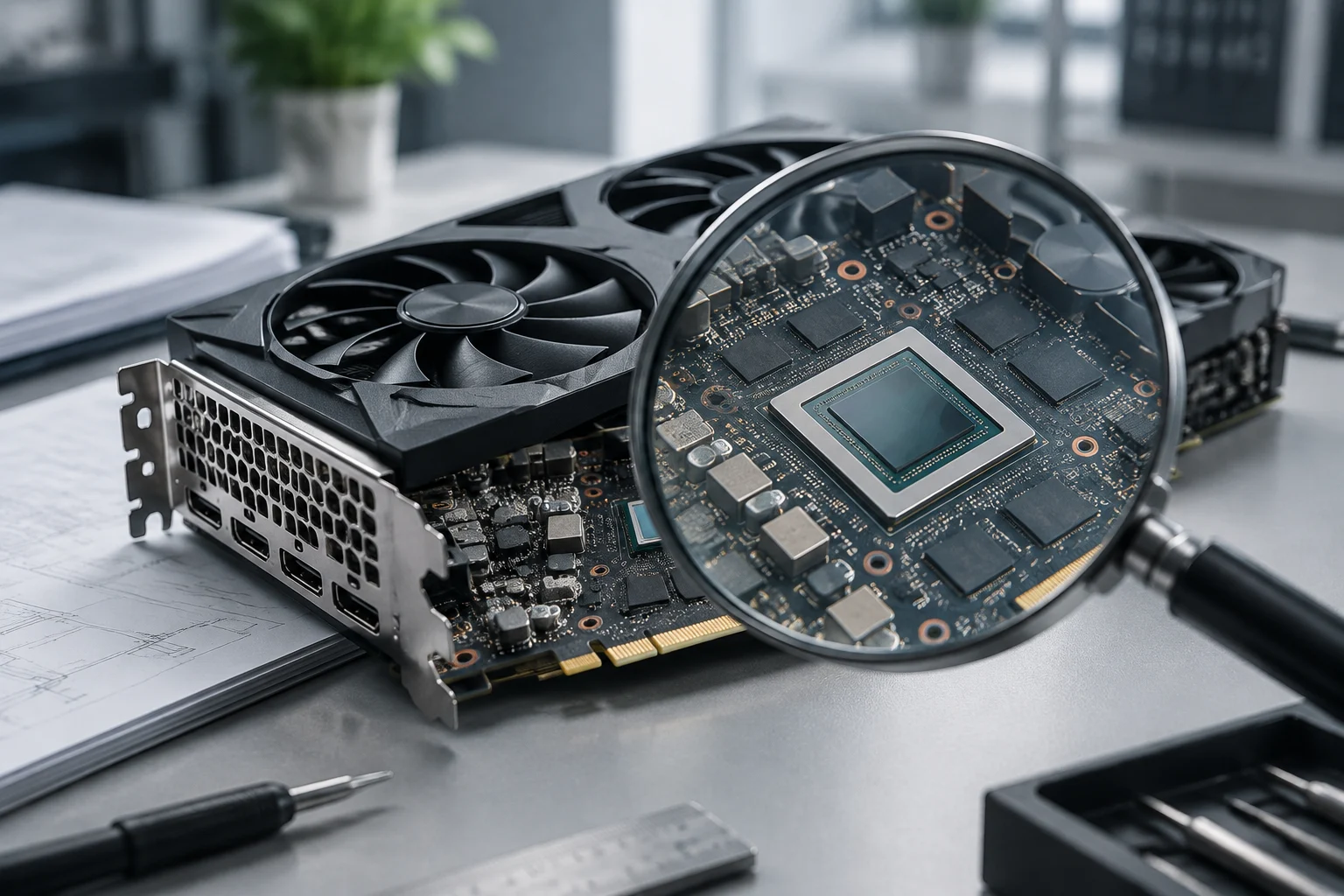
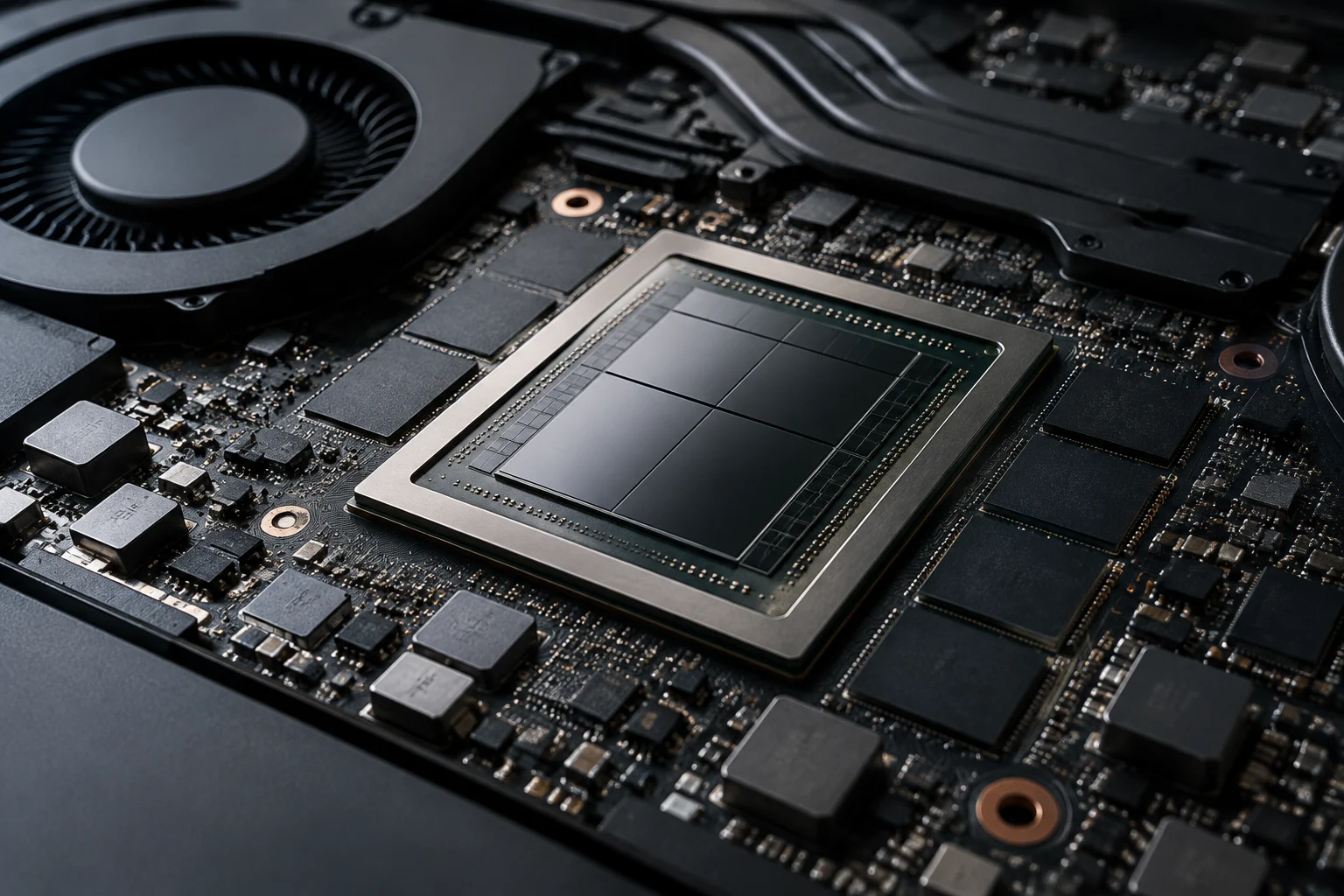
NVIDIA's transition to the Blackwell architecture in the professional laptop segment marks a structural shift in GPU offerings for intensive work. Unlike the GeForce series, which targets consumers and gaming, the RTX PRO line is positioned as an enterprise productivity tool. Its proposal emphasizes stability, certified driver support, and greater memory capacity, aspects that address needs distinct from those typically guiding the purchase of a gaming laptop.
The difference, therefore, is not limited to how each range is presented. The GeForce series targets consumer use where gaming performance is a central criterion; RTX PRO aims to fit professional applications and demanding workflows. The choice depends on the workload, because the priorities of each line are not equivalent and are not measured solely by a maximum performance figure.
This approach responds to the needs of engineers, designers, and data scientists who require sustained performance in complex processes. For these users, it matters to be able to run tasks continuously and have a stable platform, not just reach a brief speed peak. This distinction is especially relevant when a project requires working with large scenes, models, or files.
By incorporating these GPUs into laptops, manufacturers transfer workstation-like capabilities to a mobile device. However, mobility does not eliminate the reliability demands of professional applications: the interest of the line lies in bringing both portability and professional tools closer, without presenting the RTX PRO as a universal option for any buyer.
Breakdown of Official Technical Specifications
The specifications of the RTX PRO Blackwell series for laptops show a hierarchy between models, with different quantities of cores, memory, and bandwidth. At the top end described here is the RTX PRO 5000 Blackwell, with 10,496 CUDA cores, 24 GB of GDDR7 ECC memory, and a bandwidth of 896 GB/s. These data points allow sizing its capacity, although effective performance will also depend on the laptop configuration in which it is installed.
The amount of memory is an important element for loads that must keep complex 3D scenes or large local AI models on the GPU. If the dataset or project requires much memory, having more capacity can be relevant to running the work on the device itself. The RTX PRO 5000 combines that capacity with 24 GB of GDDR7 ECC, in addition to the indicated CUDA cores and bandwidth.
In the mid-range, the RTX PRO 4000 offers 16 GB of memory and the RTX PRO 3000, 12 GB. Memory interfaces of 256 bits and 192 bits are maintained, respectively. These figures help distinguish the models, but they do not replace the evaluation of each task: the amount of memory needed depends on the size and complexity of the resources being worked with.
Compared to the previous generation, Ada Lovelace, the jump to GDDR7 memory is one of the highlighted differences. The Blackwell line also incorporates fifth-generation Tensor cores, noted as an improvement for efficiency in AI inference tasks. In this context, the utility of the specifications lies in relating them to the intended work: it is not enough to identify a newer generation if the workload does not leverage those capabilities.
In total, memory, bandwidth, and cores form part of a technical sheet that should be read as a whole. The RTX PRO 5000 occupies the top level described, while the RTX PRO 4000 and RTX PRO 3000 offer lower memory capacities. The difference between models allows orienting the selection according to the scale of projects, without turning the highest specification into an automatic recommendation for everyone.
Impact of TGP on Sustained Performance
The Total Graphics Power (TGP) is a determining factor for understanding the real performance of a GPU installed in a laptop. It indicates the power consumption framework of the GPU, but that data must be interpreted together with the device design and its ability to dissipate heat. Therefore, the same GPU designation does not guarantee that all laptops maintain the same behavior during a prolonged load.
Desktop versions of the RTX PRO 6000 can consume up to 600 W, while laptop variants are limited by the chassis thermal dissipation. In the case of the RTX PRO 5000 Blackwell Laptop, the indicated TGP range is 95 to 175 W. The maximum of 175 W describes the upper limit of that range, not a guarantee that all laptops will always operate at that power.
This limit is part of the balance between power and battery life in a mobile device. The device must manage consumption and heat within a smaller space than a desktop workstation. Thus, the TGP provides a useful reference, but by itself it does not allow anticipating how the GPU will behave in a long rendering, simulation, or other professional load session.
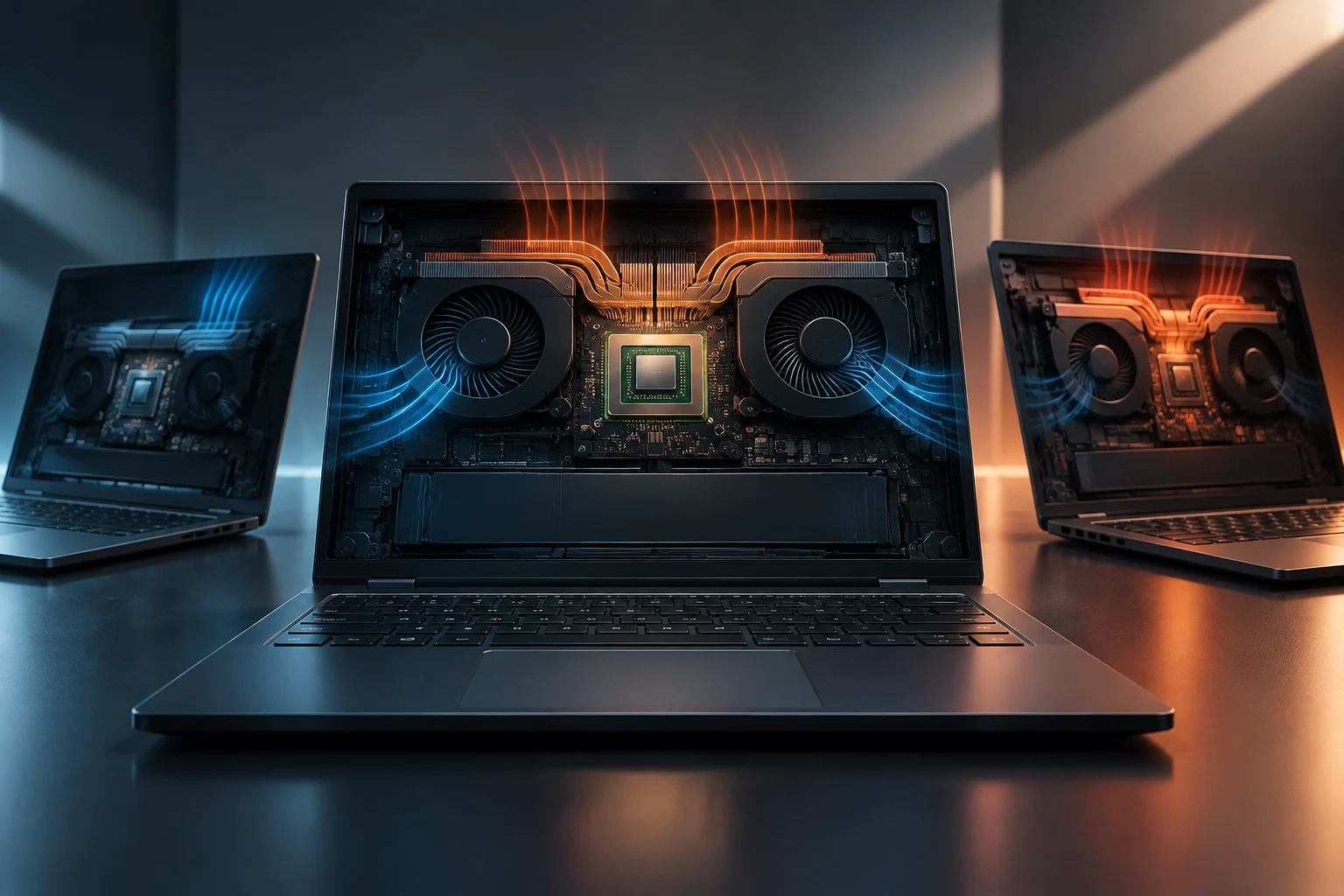
Sustained performance can vary significantly between manufacturers because cooling systems and chassis design are not identical. A laptop with more robust cooling can maintain higher clock frequencies for longer; a thinner one might reach its thermal limits sooner and suffer throttling. Cooling influences the continuity of performance when the GPU works intensely and for extended periods.
Therefore, when comparing devices, it is not advisable to focus solely on the maximum TGP. It also matters how the manufacturer manages thermal dissipation and what capacity the system has to sustain the load. The figure allows establishing the announced power range, but it is the combination of GPU, power supply, and cooling that conditions the practical result in each laptop.
Advantages of ISV Certification and Professional Software
An important difference between RTX PRO and GeForce is the ISV certification (Independent Software Vendor). The certification indicates that professional GPUs have been validated by software developers such as Autodesk, Adobe, and Dassault Systèmes, among others. The purpose is to offer compatibility and stability in applications used in critical industry processes.
This validation has particular value when the device is used for tasks whose result must be reliable within a professional application. In 3D rendering, physical simulation, or 4K video editing, a failure can interrupt work or affect a high-value project. The certification helps reduce that risk, although it does not mean errors are impossible or that all tasks gain the same benefit.
Professional drivers complement the certification with long-term support and updates directed at corporate environments. For an organization or a professional, the continuity of support can be as relevant as performance, because it is part of the stability of the work environment. The priority is operational reliability, not necessarily outperforming consumer GPUs in all tests.
In comparison, the GeForce series does not offer that same level of rigor in support and updates for professional applications. This does not make it an inadequate alternative in all cases: the contrast lies in priorities and intended use. If validated compatibility and prolonged support are work requirements, the PRO line can justify its additional cost; if not, that specific advantage may carry less weight.
Availability and Value for Money in 2026
The availability of laptops with RTX PRO Blackwell GPUs is growing in the Spanish and European markets, although the offer remains concentrated in high-end models from manufacturers like HP, Dell, Lenovo, and MSI. Therefore, it is not a category extended to any price segment: the devices incorporating it target users seeking workstation performance in a portable format.
These laptops usually exceed 3,000 euros. This is an investment level justified mainly when the GPU is part of daily work and its features are leveraged concretely. The price demands a professional need: paying for a specialized line makes less sense if routine tasks do not require expanded memory, professional support, or sustained capacity for demanding loads.
Compared to GeForce alternatives like the RTX 5090 Laptop, the PRO line offers less raw gaming performance. Its proposal, however, relies on memory, stability, and support. The comparison, then, does not consist of determining which range wins in all uses, but in deciding which set of attributes matters to the buyer. In games, the lower advantage of RTX PRO can be decisive; in professional applications, other criteria may weigh more.
For those who prioritize productivity over leisure, the value for money of RTX PRO can be superior, provided that workloads require the specific features of the range. Convenience depends on real use: memory and certification only justify the investment if they solve needs present in the work. Otherwise, paying a premium for advantages that will not be used does not represent a practical improvement.
It is advisable, therefore, to separate the initial cost from the value the device can provide in the usage context. A professional who regularly works with validated applications and complex projects may consider an investment over 3,000 euros reasonable. For a user primarily looking to game or perform general tasks, the comparison with GeForce should focus on lower cost and the features actually needed, without attributing general superiority to the PRO line.
Conclusion: Investment Viability
A laptop with an NVIDIA RTX PRO Blackwell GPU is a viable investment for professionals who need expanded memory, certified drivers, and sustained performance in complex workflows. The line is not designed as the ideal option for gamers or casual users; it fits better with engineers, architects, and content creators who rely on demanding professional software.
The decision is better understood by relating each advantage to a task. Expanded memory can be pertinent for large projects; drivers and certification matter in professional applications, and the ability to maintain performance is relevant in prolonged loads. The value of RTX PRO is specific: it arises from those needs and not from a uniform superiority over GeForce in any activity.
Before buying, it is advisable to evaluate the specific needs of each user. If the work includes large 3D models, scientific simulations, or 8K video editing, the PRO line offers tangible advantages that can justify its price. It is also important to compare the complete laptop, including its TGP and cooling, because those elements influence the sustained performance obtained in practice.
Conversely, if the workflow does not require those capabilities, a high-end GeForce GPU can be a more economical and sufficient alternative. The conclusion is not that one range is always preferable: the investment is justified when the loads demand it. To decide, one must weigh memory, certification, support, performance in the main task, and the cost of the device as a set.