From 15 to 25 W: The Technical Leap of Qi2
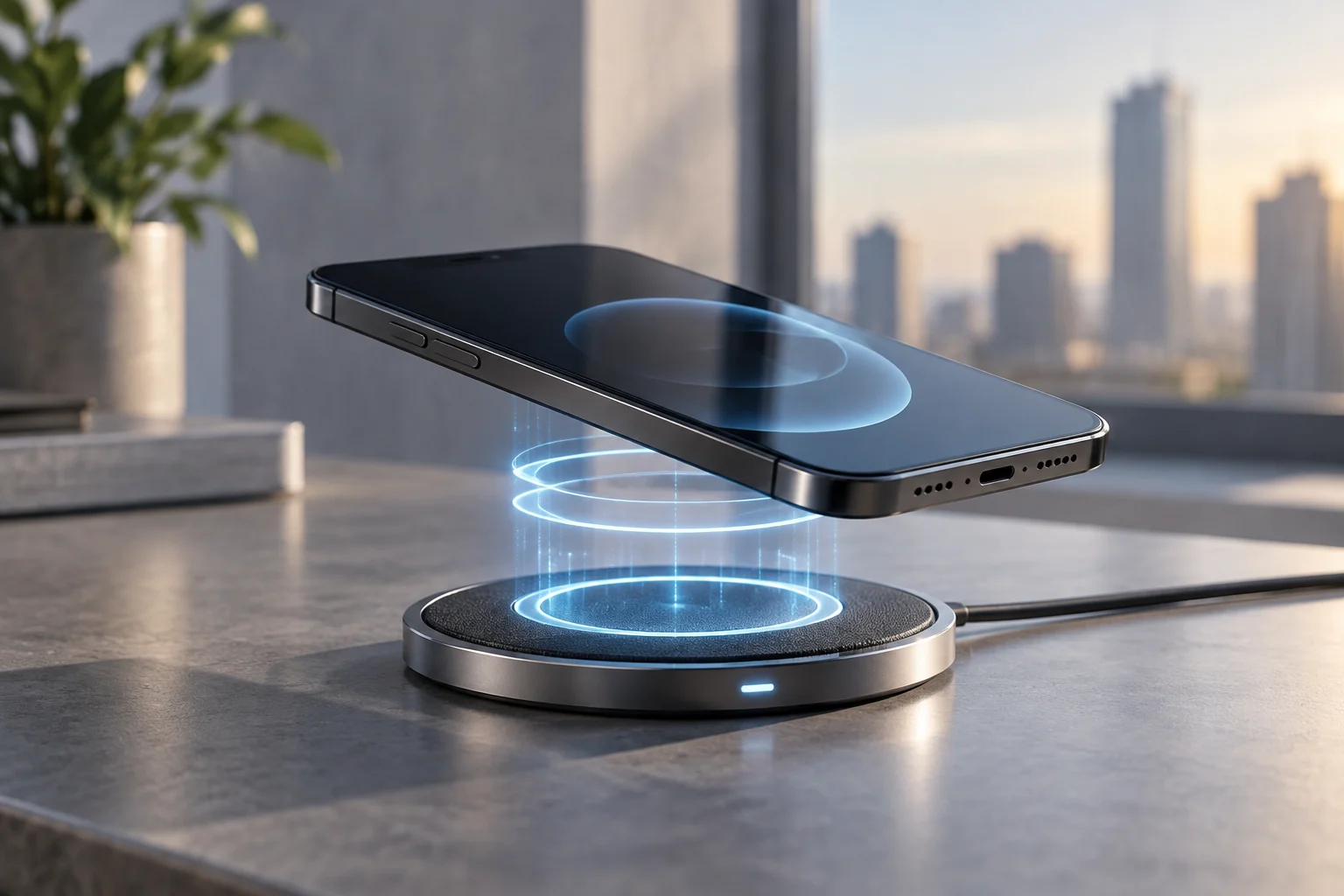
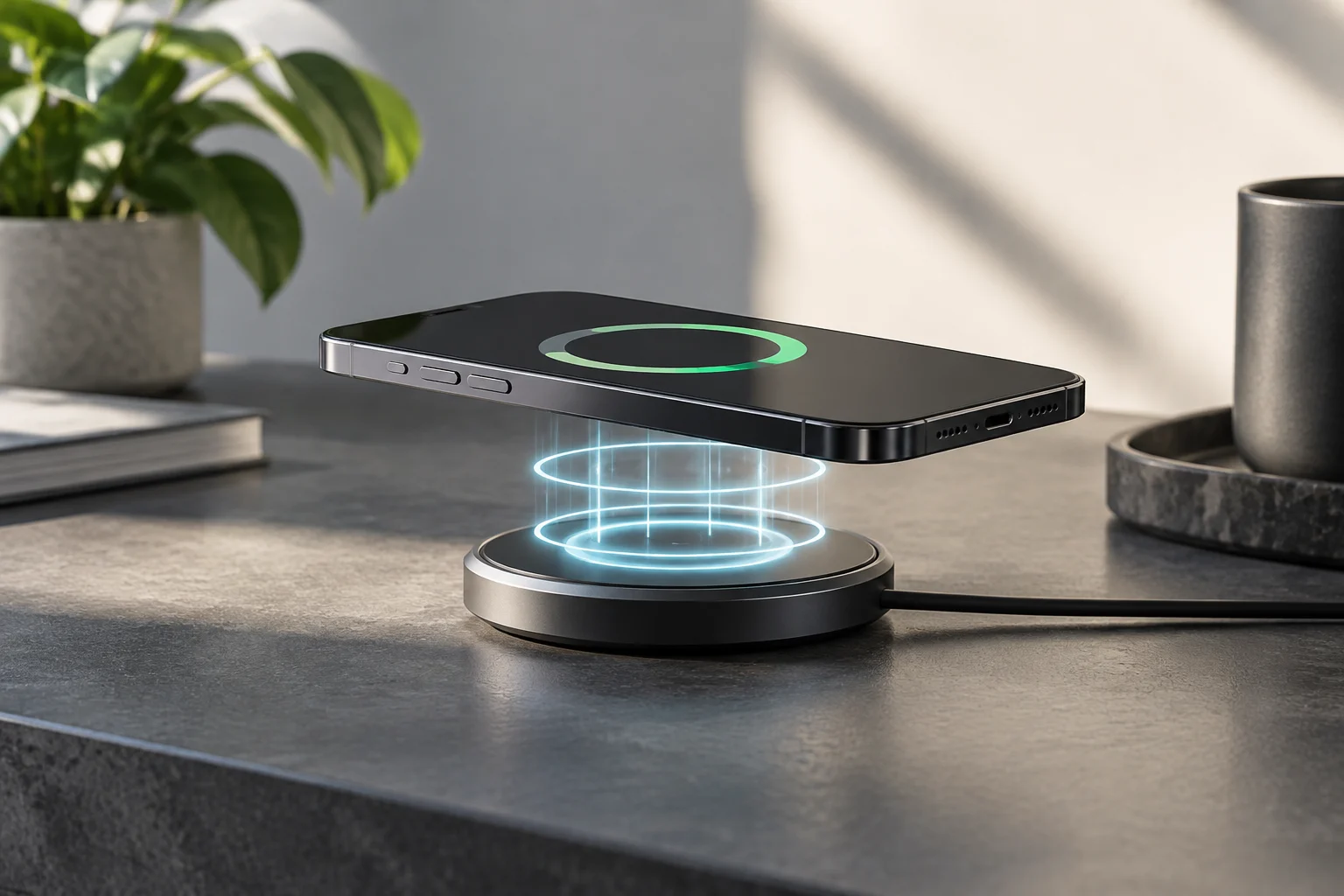
The Qi2 standard, developed by the Wireless Power Consortium (WPC), introduced mandatory magnetic alignment to improve inductive charging efficiency. The evolution to Qi2 25 W allows tripling the transfer power compared to the initial 15 W version, bringing wireless charging speeds closer to those of mid-range wired chargers.
This improvement is not merely numerical. As power increases, the system requires stricter thermal management. Qi2 25 W chargers incorporate dynamic charging profiles that adjust intensity based on device temperature, preventing the overheating that limited early high-power wireless chargers.
Magnetic Alignment and Real Efficiency
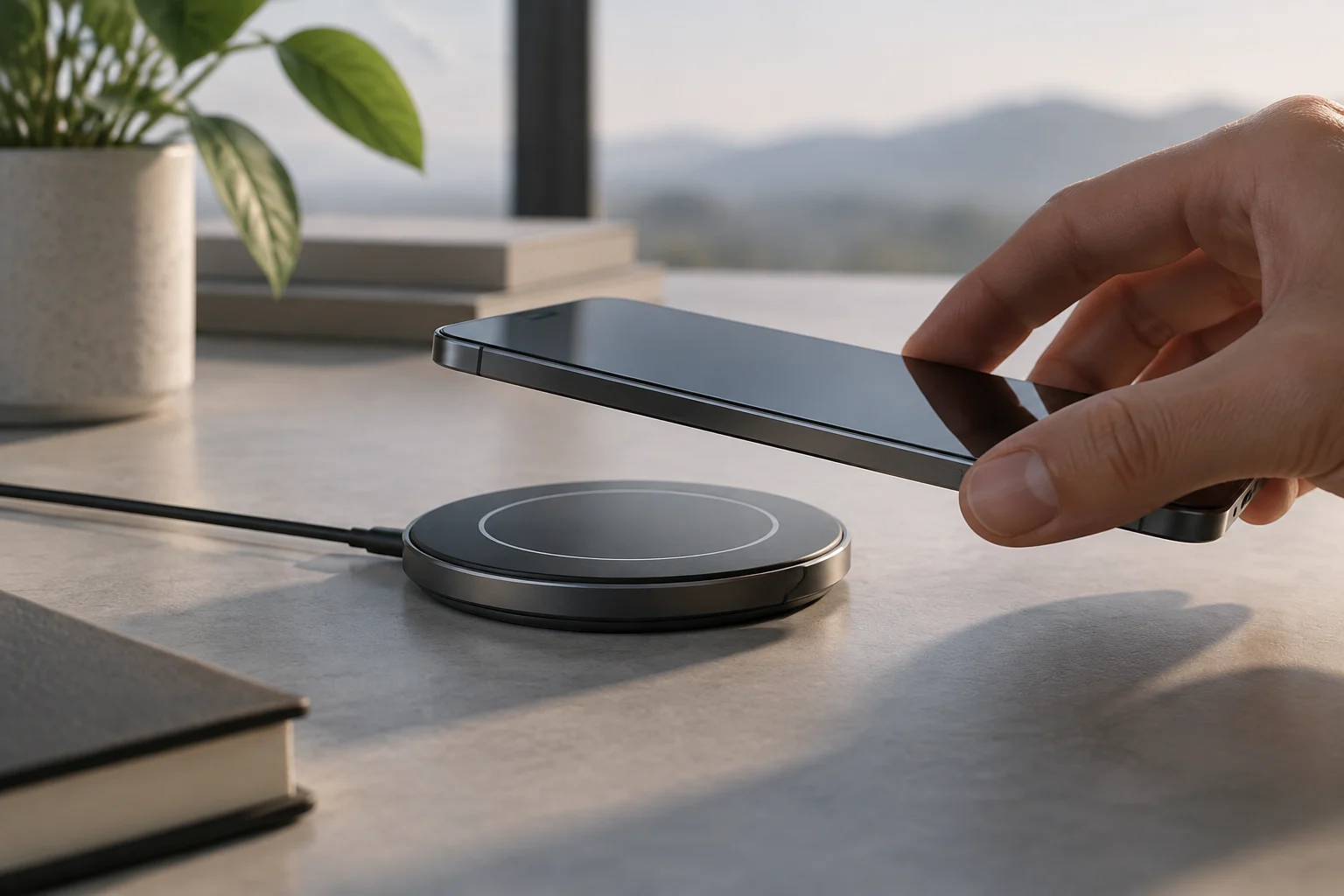
The main advantage of Qi2 over the classic Qi standard is magnetic fixation. In traditional inductive charging, a displacement of just 5 mm between coils can reduce efficiency by 20% to 30%, generating unnecessary heat. Qi2 magnets ensure the phone is positioned exactly over the center of the charging coil.
This precision is crucial to stably reach 25 W. Without magnetic alignment, most phones could not maintain maximum power throughout the charging cycle. The technology, inspired by Apple's MagSafe system, has become the de facto standard for fast wireless charging in 2026.
Impact on Battery Lifespan
One of the most frequent doubts is whether fast wireless charging damages the battery. Technical evidence indicates that the critical factor is not the charging method (wired or wireless), but thermal management. Modern Qi2 25 W chargers include cooling systems, either passive or active with fans, to keep the phone temperature in safe ranges.
According to analyses by manufacturers like UGREEN, wireless charging is not inherently harmful if the device manages heat well. In fact, Qi2's magnetic alignment reduces losses from misalignment, which can result in a more efficient charge with less residual heat generation than a poorly positioned classic Qi charger.
Compatibility: iPhone, Android, and Cases
Qi2 25 W compatibility is not universal. To take advantage of maximum power, the phone must support this charging profile. iPhone 12 and later are compatible with magnetic alignment, although maximum power varies by model and operating system. In the Android ecosystem, brands like Samsung, Oppo, and Xiaomi have integrated Qi2 support in their high-end ranges for 2025 and 2026.
For devices without integrated magnets, the solution is a compatible magnetic case. These cases allow the phone to attach to any Qi2 charger, although power may be limited to 15 W or less depending on the case quality and the distance between the phone's coil and the charger's coil.
The Accessory Market in 2026
The mobile accessory market is expanding, with a projected annual growth of 5.8% between 2026 and 2035. Within this sector, Qi2 25 W chargers have become the star product. Manufacturers like Belkin, Anker, and UGREEN offer 3-in-1 stations that simultaneously charge the phone, earbuds, and watch, with powers of up to 25 W for the smartphone.
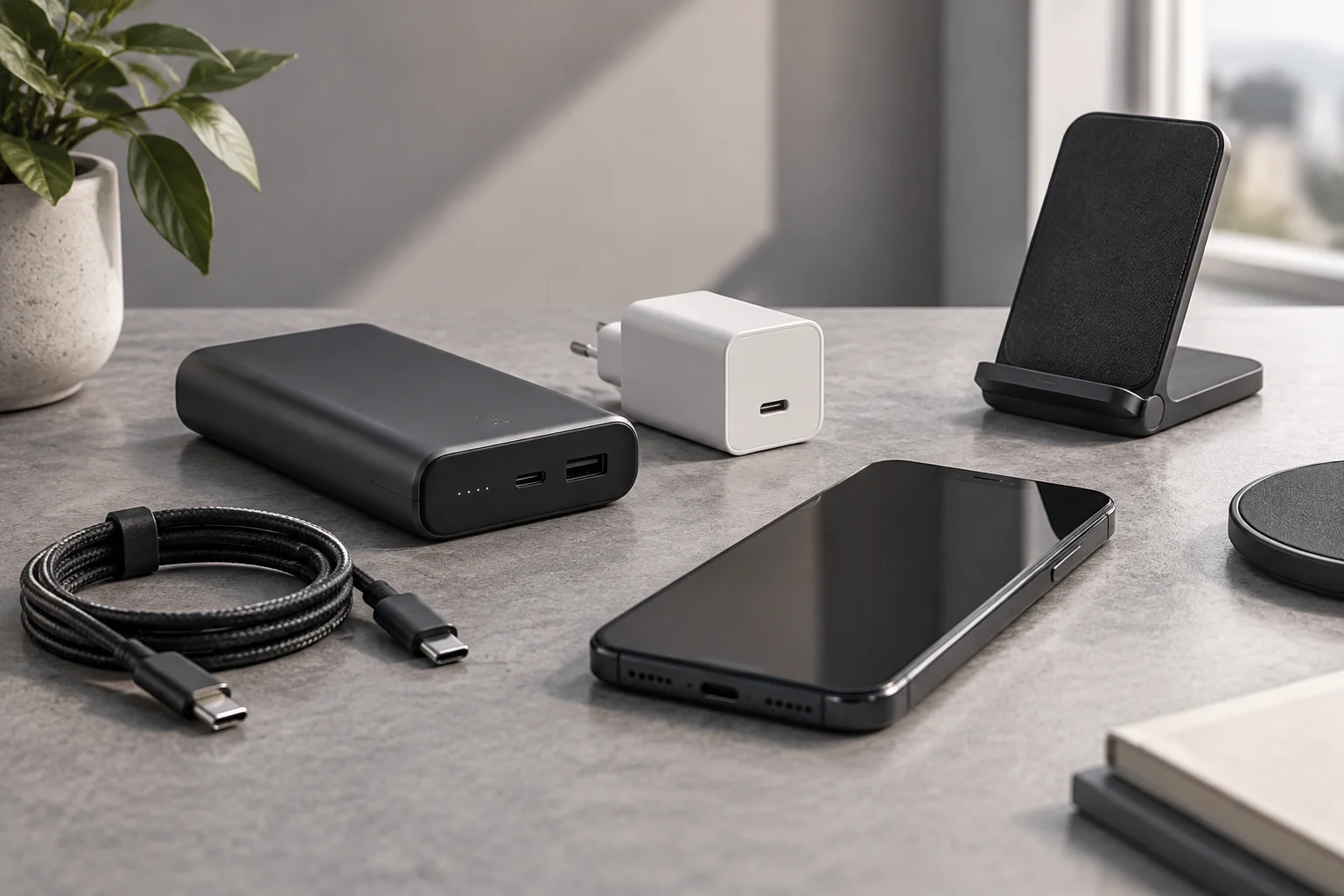
The offer is wide and prices have dropped. A basic Qi2 25 W charger can be found for less than 20 euros, while premium stations with active cooling exceed 100 euros. The key for the consumer is to verify WPC certification and the actual power of the power adapter, as a 25 W charger requires a USB-C adapter of at least 30 W to function at maximum speed.
What to Charge and How to Choose
Before buying a Qi2 25 W charger, it is fundamental to check phone compatibility. If the device only supports standard Qi (5-7.5 W), investing in a 25 W charger will not provide additional speed. The practical decision depends on usage: for overnight charging, Qi2's convenience is superior; for travel, a high-power wired charger remains lighter and faster.
We recommend prioritizing chargers with WPC certification and thermal management systems. Avoid unbranded products or those with ambiguous specifications, as 25 W charging generates more heat and requires quality components to protect the battery in the long term.