The efficiency leap: what VVC changes compared with HEVC
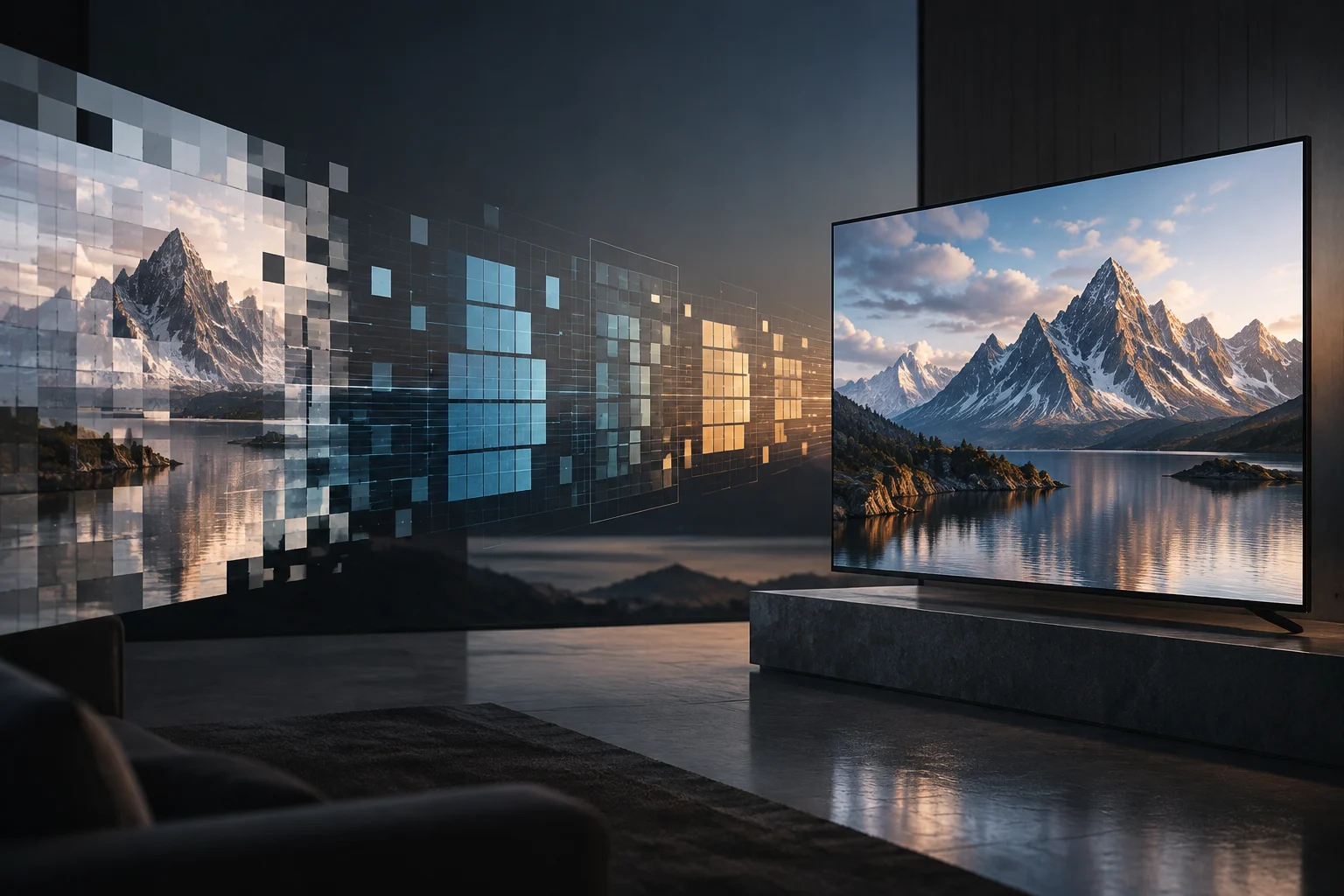
Versatile Video Coding (VVC), also known as H.266, is a video-compression standard that came after HEVC (H.265). VVC is commonly credited with delivering a lower bitrate at comparable visual quality; a streaming guide estimates a 40–50% reduction compared with HEVC. That is an indicative figure, not a guarantee for every file, encoder, or scene: the actual result depends on how the video is encoded and which settings are used.
If that saving occurs in a particular case, it could mean less data transmitted or less storage space for the same content. But the percentage alone does not show that a service already distributes video in VVC, or that a TV can decode it. Format efficiency and device compatibility are separate questions: the first concerns compression; the second, whether the entire playback chain supports the bitstream.
The standard was finalized in July 2020, so it is not a technology newly announced in 2026. What matters to a buyer is not the age of the name or a promise about a future generation, but whether the devices and services they use offer specific, verifiable support. The sources assembled for this analysis provide general information about VVC, but not enough official documentation to certify its presence in specific 2026 TVs.
What can be verified about TV hardware
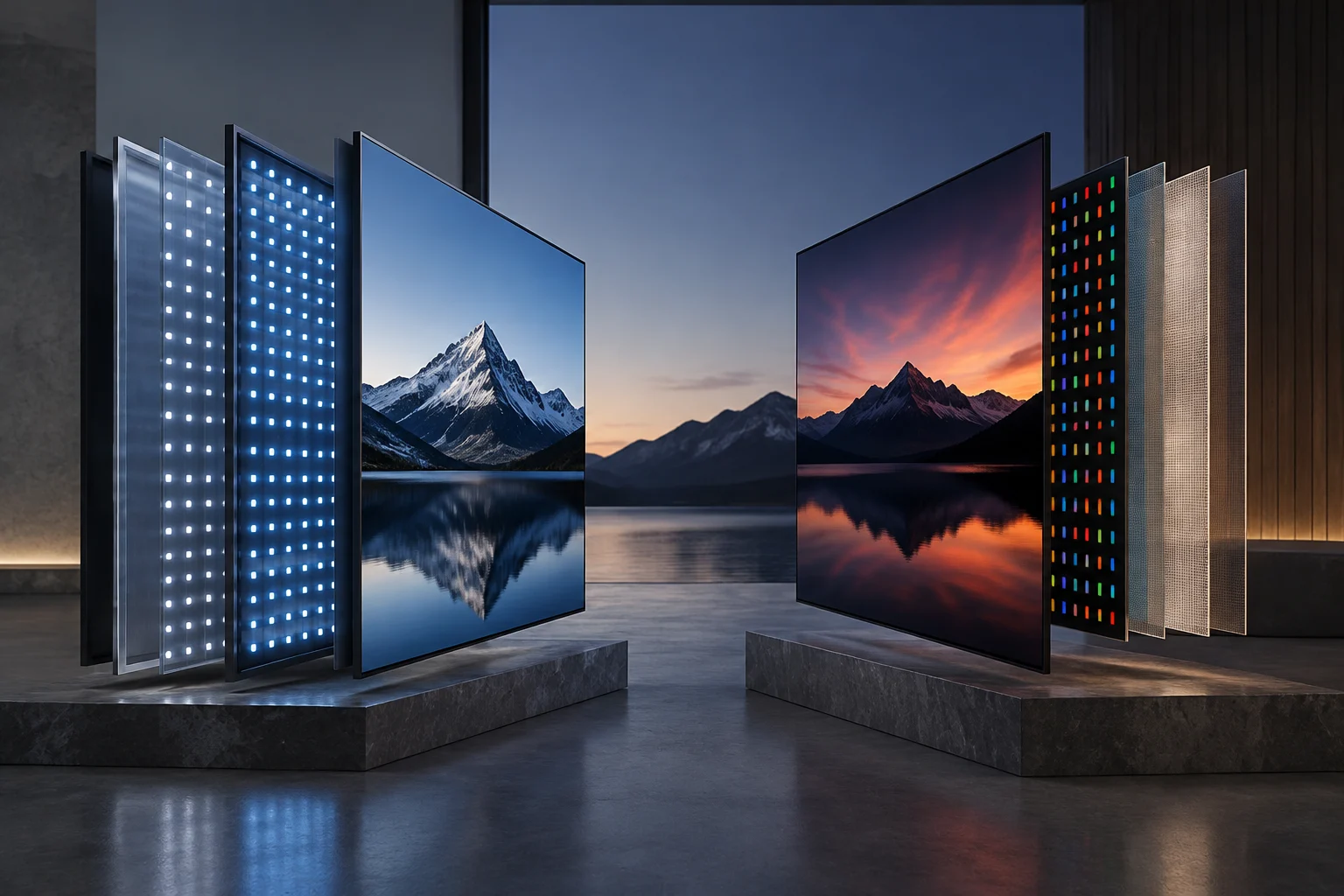
A TV’s adoption of a codec cannot be inferred from whether the model is OLED, Mini-LED, or high-end: those categories describe panel characteristics and do not, by themselves, identify the formats it decodes. To confirm VVC on a device, look for an explicit manufacturer specification for the exact model and regional variant, or reliable documentation for the installed chip that confirms the relevant decoding capability.
The source package does not include official LG, Samsung, or Sony specifications listing VVC for their 2026 TVs. The included Hisense pages describe specific products, but the information available here does not prove that those models decode VVC either. It is therefore not possible to present these manufacturers, product families, or categories as confirmed examples of compatibility. The absence of a mention in the evidence consulted does not prove that a model lacks support; it means support has not been verified.
A secondary source mentions VVC decoding in MediaTek Pentonic chips. This indicates that a hardware implementation path for TV exists, but does not, on its own, identify which commercial models use a compatible chip or which firmware configuration they run. A capable chip is not the same as a list of confirmed TVs: the component must be tied to an exact model, and the manufacturer’s statements for the relevant market must be checked.
Codec, HDR, and operating system: three different layers
VVC compresses video; HDR describes image characteristics such as dynamic range and color processing; and the operating system provides the environment in which apps and playback components run. These aspects are connected in an audiovisual chain, but the name of an HDR format does not confirm that a TV decodes VVC, and VVC compatibility does not certify support for Dolby Vision, HDR10+, or HDR10.
The available sources contain no specific documentation confirming combinations of VVC with those HDR formats in 2026 TVs. Nor do they establish how webOS, Tizen, or Google TV handle VVC on each model. It should therefore not be claimed that integration is automatic or seamless, or that a firmware update will add it: either claim requires confirmation from the manufacturer or the software provider involved.
Compatibility can also depend on the app delivering the content and the libraries it uses for playback. A secondary reference reports VVC support in Android 17 Beta 1, but that is not enough to conclude that every Android TV version, TV running that system, or third-party app can use the codec. API compatibility does not guarantee implementation in every product; the system, version, app, and hardware must be verified separately.
What this means for streaming and local files
For streaming, more efficient compression can help reduce the required data rate for a comparable level of quality. The benefit reaches users only if the provider encodes and distributes the content in VVC, the app supports it, and the TV or connected device can decode it. If any link in that chain fails, the codec’s theoretical savings will not change everyday playback.
In a local library, a VVC file does not become compatible simply because it is stored on a NAS or USB drive. The TV must support the video format, and the player must be able to read the file’s container, audio tracks, and subtitles. An external device could also handle decoding, but the documentation provided does not allow us to recommend a particular player as a universal solution. Before reorganizing a library or transcoding videos, test the complete playback path using the device and player you intend to use.
The practical decision is straightforward: do not buy a TV solely on the basis of a promise of data savings associated with VVC. If your use depends on local files, look for explicit H.266/VVC compatibility for the model and check your chosen player. If it depends on streaming, also confirm that the service offers titles encoded in that format for the relevant country and device.
What the 2026 sources do—and do not—say
An industry guide published in 2026 presents VVC as a codec with the potential to reduce bitrate compared with HEVC and discusses support and licensing issues. Its content helps put the format in context, but does not replace official TV specifications. Likewise, a news-tracking page cites support for H.266/VVC in Android 17 Beta 1. According to that secondary source, this supports a claim about that beta version—not about every TV that uses Android.
References to patent licensing help explain why commercial adoption may be more complicated than simply making a decoder available. Without specific documentation about agreements and individual platforms, it is not appropriate to attribute Netflix’s, YouTube’s, or other services’ strategies to a single cause, or to state that any platform has rejected VVC. The key distinction for buyers is that a technical improvement does not compel distributors to adopt it.
The dates also need to be kept distinct. VVC was finalized in 2020; references from 2026 describe later information, but do not make the standard new that year. The source package also does not support claims about broadcast mandates, compulsory adoption in specific countries, or compatibility across an entire TV range. Those points would require regulatory, standards, or manufacturer documentation before being presented as facts.
How to check before buying
When reviewing a specification sheet, look for VVC, H.266, or Versatile Video Coding in the documentation for the exact model. If the specification sheet does not mention it, consult the manual or the manufacturer’s support team; a general reference to “4K,” “8K,” HDR, or a powerful processor does not confirm VVC decoding.
Before deciding, check the following:
- The model number and regional variant match the TV sold in your market.
- The manufacturer explicitly mentions VVC/H.266 decoding, not just compatibility with other codecs.
- The player or service you will use supports VVC and the relevant file or stream type.
- If the feature depends on an update, there is official confirmation specifying the version and compatible models.
If you cannot find that evidence, treat VVC as unconfirmed compatibility and choose the TV based on features that are documented. These sources do not provide sufficient grounds to say which 2026 models include it: that is a limitation of the available evidence, not proof that every product lacks support.