Matter and Thread Solve Different Problems
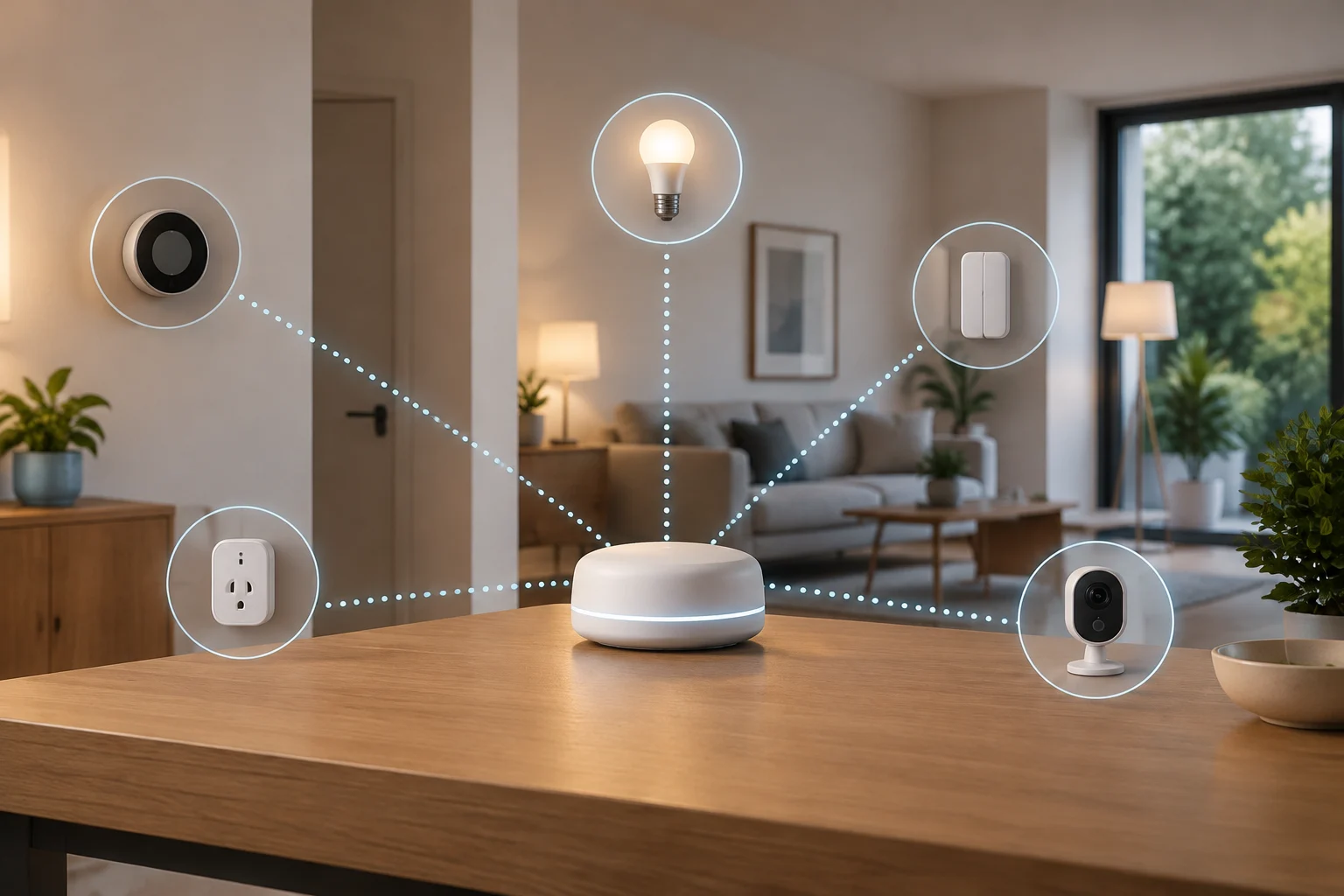
Matter is a connectivity standard for smart home devices. Version 1.0 was published in October 2022, and the standard is developed by the Connectivity Standards Alliance (CSA). The intent is that products from different manufacturers can communicate using a common control model; this does not mean all their specific services or functions become interchangeable.
Thread, by contrast, is a low-power wireless network technology that some Matter devices use to communicate. It is not synonymous with Matter: there are Matter products that connect via Wi-Fi and others that use Thread. This distinction matters when planning a purchase, because the network transport determines what local infrastructure is needed to incorporate them.
A device using Matter over Thread requires its Thread network to have a connection to the home IP network. This function belongs to a Thread Border Router (TBR). Therefore, the Matter label alone does not confirm that existing home equipment can connect a Thread accessory: it is advisable to separately check what protocol the product uses and whether the available controller or hub incorporates a TBR.
What a Certification Proves and What It Does Not
Certification indicates that a product has been evaluated to meet the requirements of a specific version of the standard. It is not enough to read that it is “Matter compatible”: one must identify the exact model and, when available, its certified version. Silicon Labs' development documentation describes a process that includes certification through a CSA-approved test installation; this explanation is useful for understanding the process, but it does not replace consulting the specific product registry.
A Matter version should also not be interpreted as an automatic guarantee that all new standard functions are active on all devices. CSA announced Matter 1.3 in May 2024 and indicated that manufacturers and platforms could begin integrating and certifying their new capabilities. This describes the release of a specification; it does not prove by itself that a specific device has received an update or that each platform implements the same functions.
The available source package does not include a verifiable query of the official CSA certified product directory nor an official, complete, and dated list of Matter and Thread devices. Therefore, it is not possible to sustain an inventory of certified brands or models in 2026 here. For a purchase, verification must be done with the exact product reference in the current registry, and not inferred from a general press note or compatibility announced by a brand.
Standard Version Does Not Equal Identical Functions
The release of Matter 1.3 illustrates why it is advisable to distinguish between what the specification allows and what a specific device already offers. CSA announced new capabilities to manage energy and water, electric vehicle chargers, and large appliances, in addition to improvements for other device types. The announcement explains what manufacturers and platforms could start integrating; it does not state that all those products were already available or certified when the version was published.
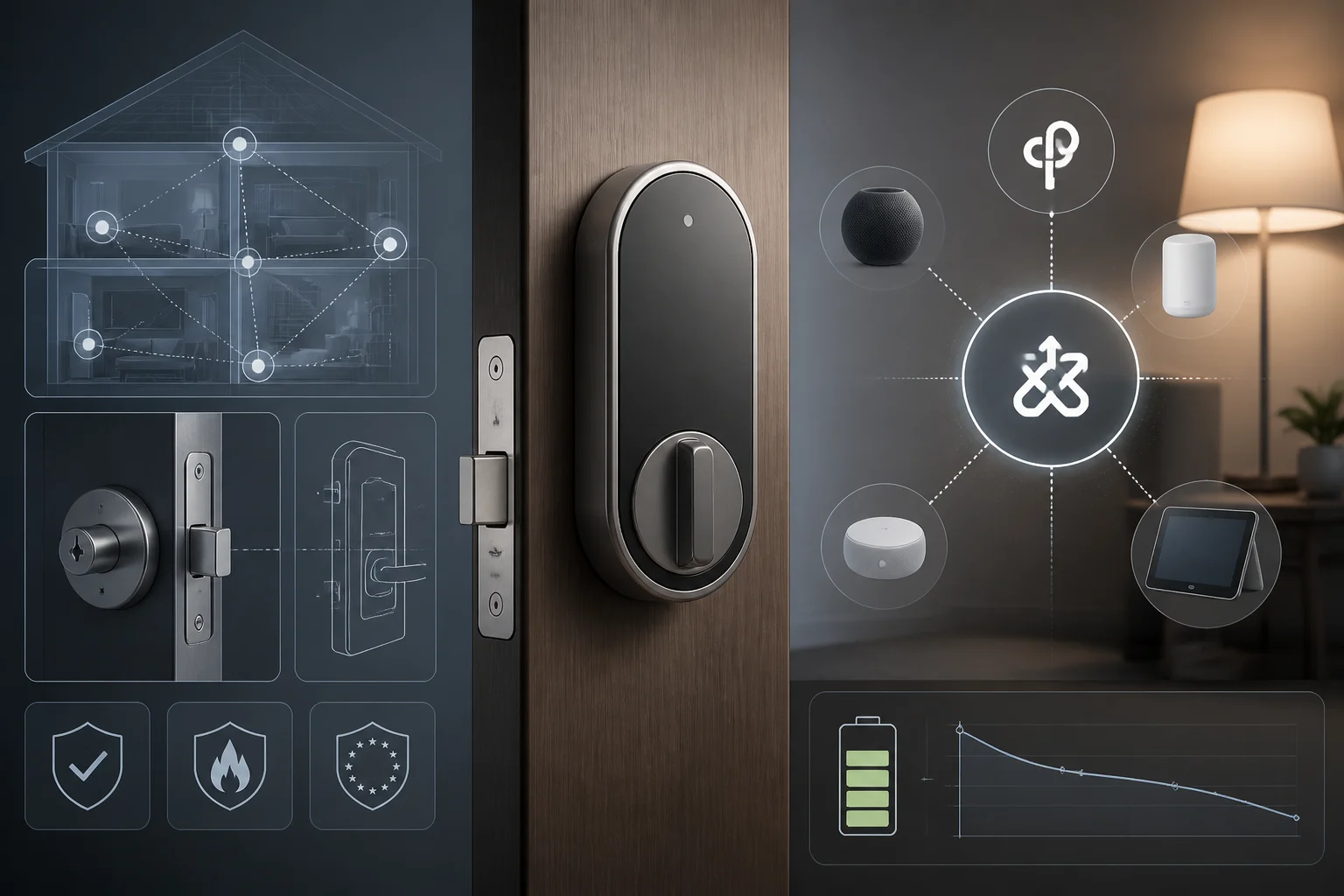
Coverage of a specific product also requires care with dates. Notebookcheck reported in January 2026 that the Dreame Navo Smart Lock A10 appeared in the CSA database as Matter 1.4.1 over Thread. This is an example reported by a secondary source, not an official list of locks or proof of commercial availability in Spain. The cited source does not by itself certify price, local sale date, or function parity in each ecosystem.
In practice, a certification and the manufacturer's datasheet answer different questions. The former refers to standard compliance; the latter may explain what controls the brand announces, what application is required, and what platforms are mentioned. It is not advisable to deduce from a certification that automations, configuration, or advanced controls are identical in Apple Home, Google Home, Alexa, or other systems. Those features must be confirmed for the model, platform, and function intended for use.
The Role of Hubs and the Thread Network
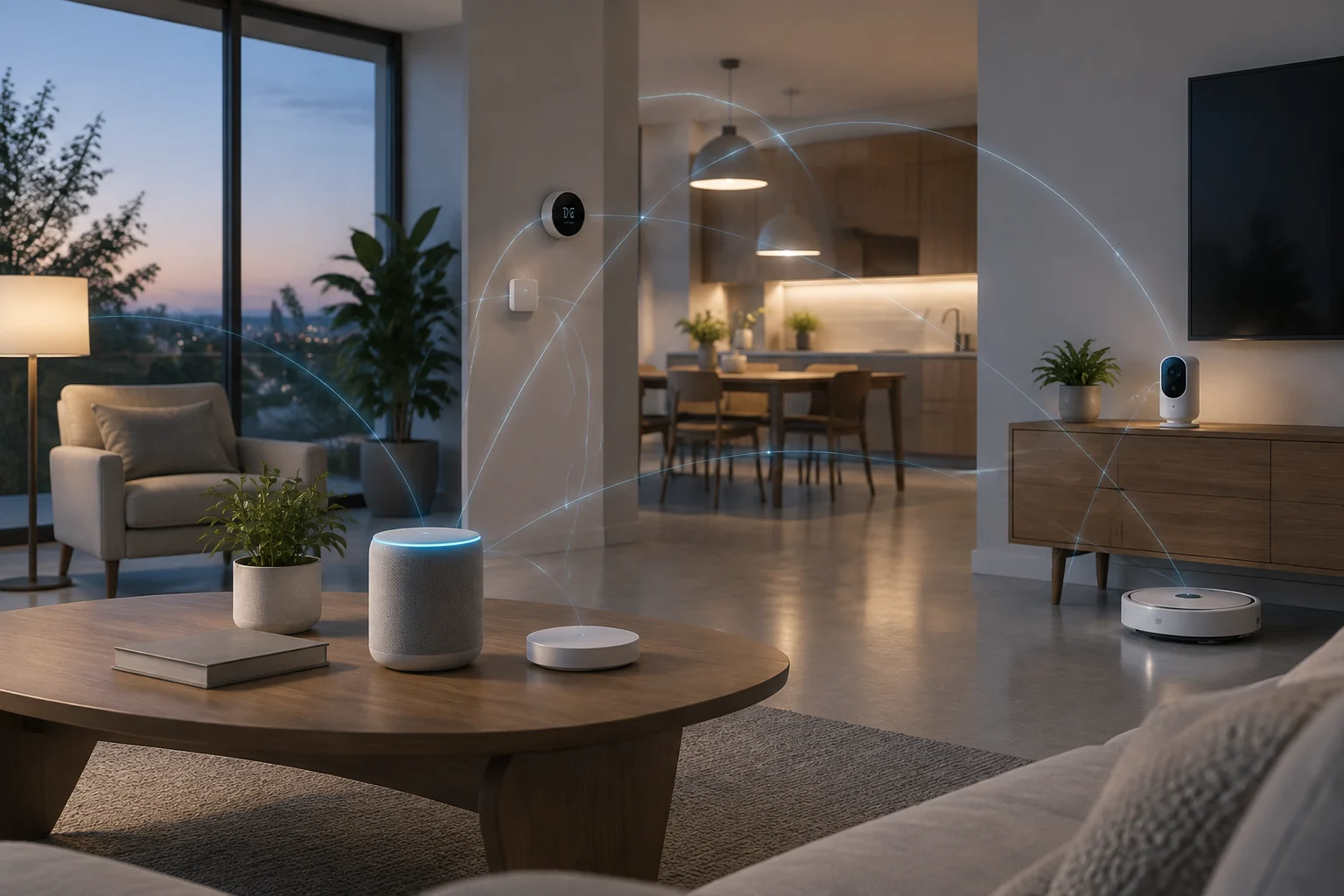
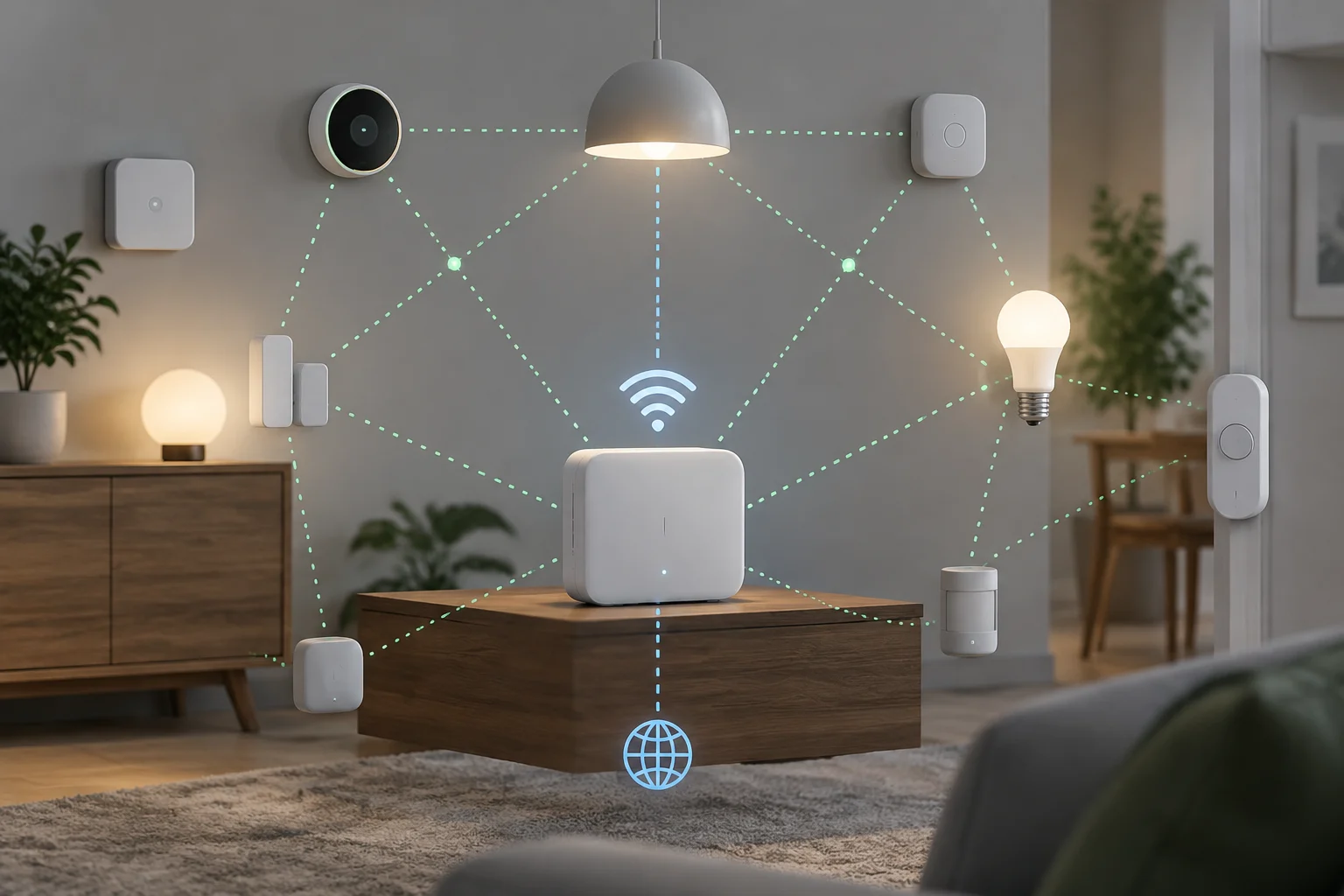
If an accessory uses Matter over Wi-Fi, it does not need a TBR simply because it is Matter. If it uses Thread, a point connecting that network to the local IP network is required. Before buying, check the specifications of the controller or hub you already have: not all devices advertised as home hubs incorporate Thread radio or offer the same Matter controller functions.
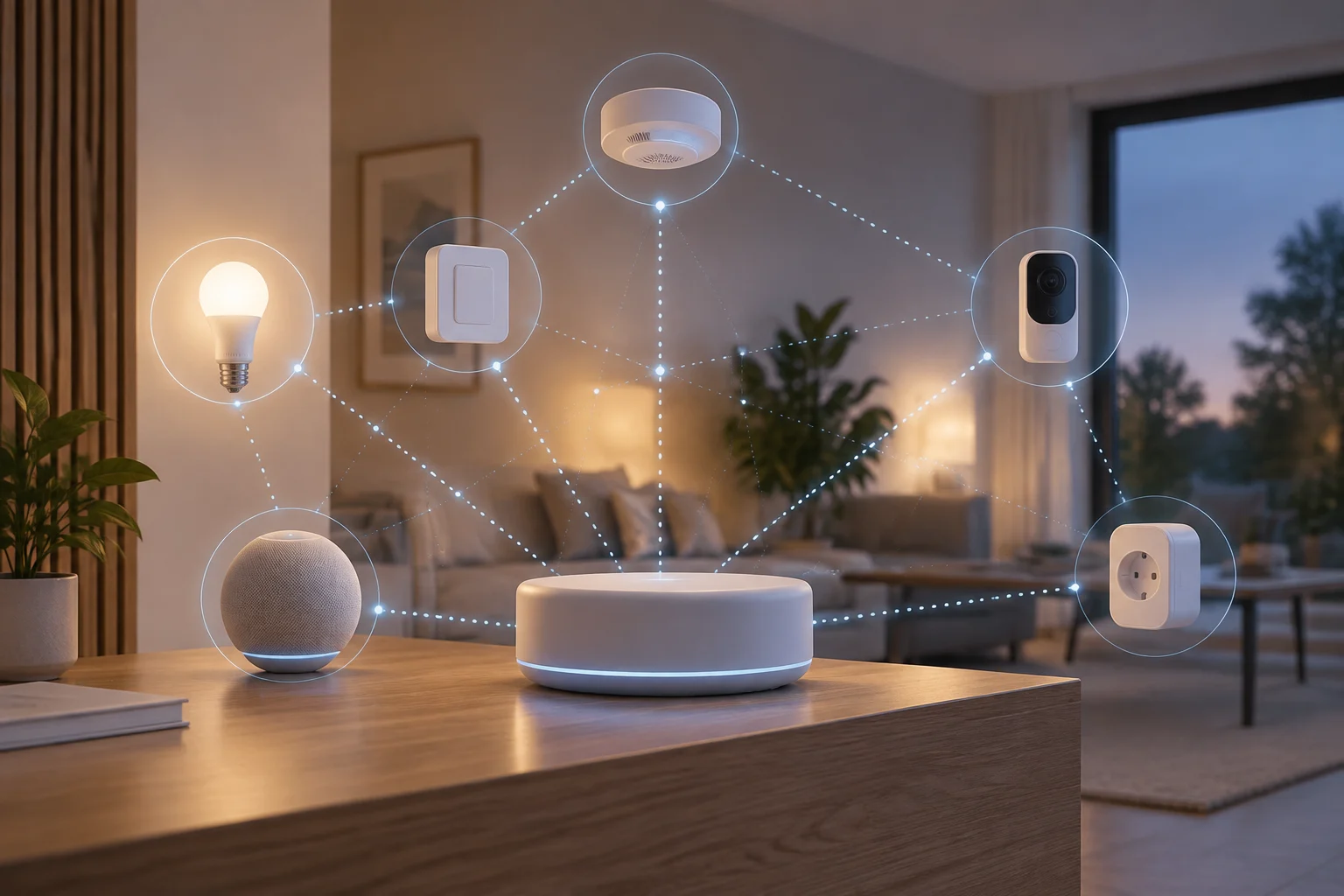
Three roles that are often mixed in commercial descriptions must also be separated: the Matter controller, which allows adding and managing devices; the TBR, which connects Thread to the IP network; and a bridge, which can expose devices of another technology to Matter. A single device can combine several of them, but the name “hub” does not by itself confirm what functions it includes. The manufacturer's official datasheet and model documentation are the practical reference.
Configuration issues reported in independent support guides often point to possible causes such as a hub without Thread, pending firmware, or networks that do not share configuration. These guides can serve as checklists, not as representative statistics or proof that a cause is frequent in all homes. If something does not pair, it is advisable to first review the device transport, the TBR, updates, and the pairing procedure indicated by its manufacturers.
How to Check Compatibility Before Buying
A useful check starts with the model and ends with the ecosystem you will use. The word Matter on a box does not by itself clarify if the product uses Thread or Wi-Fi, what functions it exposes, or what additional equipment it requires. Gather these data before comparing options and do not use the compatibility of another model from the same family as a substitute for verification.
You can follow this list before paying:
- Note the exact brand and model, including the variant or regional reference.
- Search for that model in the CSA certified product registry and confirm the standard and version listed in the datasheet.
- Check in the manufacturer's documentation if it uses Thread, Wi-Fi, or another transport and what controller or hub it needs.
- Verify that your home platform supports the device type and the specific functions you want to use.
- Review if main functions require an application, account, or cloud service from the manufacturer.
- Confirm availability, regional compatibility, and support conditions in current sources from the seller or manufacturer.
The last check avoids two common confusions: that the standard supports a category does not mean the product is already sold in your market, and that a compatible platform is listed does not mean each advanced function is available on it. If public information does not specify a specific feature, it is prudent to treat it as unconfirmed, not as included by default.
What Practical Conclusion to Draw
Matter reduces some interoperability barriers by defining a common base for communication and control, but it does not eliminate differences between networks, controllers, and applications. Thread can be a connectivity option for low-consumption accessories, although it adds the requirement of a TBR when used with Matter. The purchase decision, therefore, should not be based solely on one of the two names.
The useful conclusion is concrete: verify the model and function, not just the logo. Confirm the transport, necessary equipment, registered certification, and compatibility of the function you are interested in with your platform. If the manufacturer does not document a function or the available source only describes the specification, there is not enough basis to consider it guaranteed.
This analysis does not present an exhaustive list of certified products or a comparison of failures by brand. The available sources allow explaining the role of Matter 1.3, the TBR requirement in a Thread installation, and a certification example reported by the press; they are not enough to measure the real interoperability of the Spanish market or to assert which brands offer full parity today. For the buyer, this limitation reinforces the central recommendation: consult the official registry and model documentation before choosing.