CES 2026: A proposal to overcome level changes
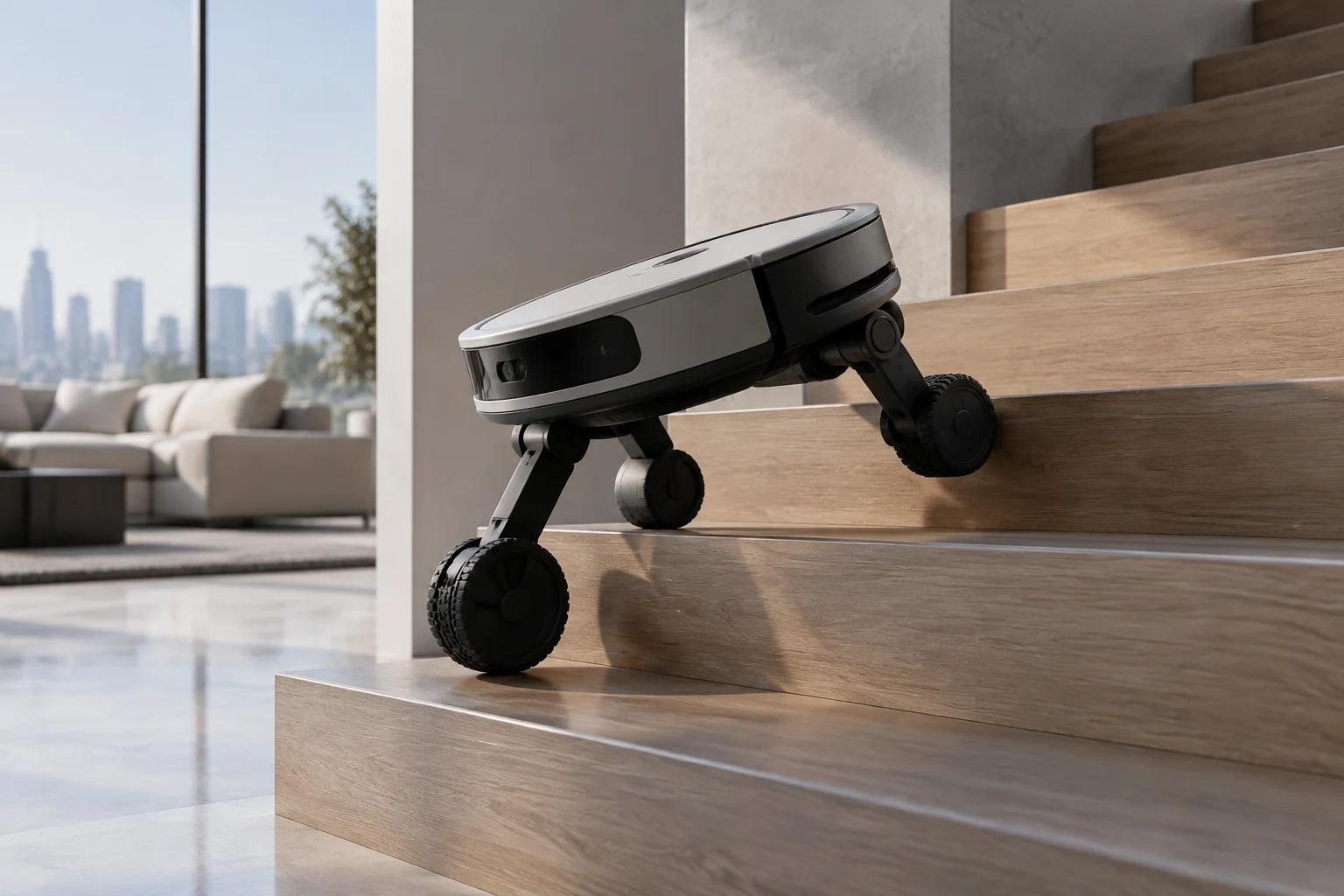
Roborock presented the Saros Rover during CES 2026, held in Las Vegas in January. The proposal departs from the standard design of a robotic vacuum: it combines wheels and legs to move across stairs and irregular surfaces. The announcement is from January, not a current novelty; the key is to separate the announced capability from what has not yet been validated for a purchase.
The problem it aims to solve is specific: a conventional robot usually cannot move from one floor to another on its own, requiring a person to carry it. If the Rover could reliably climb and clean steps, it would reduce that intervention. However, its utility would depend on the specific stairs in each home and on completing the cleaning task, not just the ascent. Available information communicates the product's purpose but does not demonstrate its performance in different households.
Wheels and legs: What the announcement describes
CES coverage describes a hybrid architecture where wheel and leg modules move independently. It also attributes small jumps, turns, and direction changes to the device while keeping the body level on uneven terrain. The announced novelty is articulated mobility; sources do not provide power figures, battery life, or other performance specifications.
Roborock presented the Rover as capable of climbing stairs while cleaning. Some reports describe step cleaning as part of its purpose, but this claim should be understood as an announced feature, not an independently proven result. There is no published test protocol or list of compatible stairs to determine how it would behave with different designs, materials, or height differences.
The distinction matters because "climbing stairs" covers very different situations: step height and width, staircase shape, and landings could affect the path. Without published usage limits, one cannot conclude the robot is compatible with any staircase or works unsupervised. For a buyer, the practical question is whether it adapts to their home and completes the task safely and effectively.
Sensors and navigation: Still limited information
One report attributes motion sensors, AI algorithms, and 3D spatial mapping to the Rover to interpret its environment and adjust its supports. The description points to a combination of perception and control to coordinate wheels and legs. It does not equate to a complete technical sheet: sources do not identify specific sensors, their limits, or the conditions under which mapping would function.
There is also insufficient information to evaluate its navigation in varied domestic situations. Aspects like response to lighting changes, unexpected obstacles, and surfaces affecting grip remain to be checked. These are pending evaluation criteria, not confirmed failures. Trade show chronicles allow us to know what was announced but do not replace prolonged tests or independent results.
To compare the Rover with other robots, data on battery life, noise, suction power, maintenance, and recovery if it stops on a staircase would be needed. These data do not appear in the consulted sources. Without complete specifications and reproducible tests, it is not possible to assert that articulated mobility improves total cleaning or compensates for added mechanical complexity.
The announcement and its commercial context
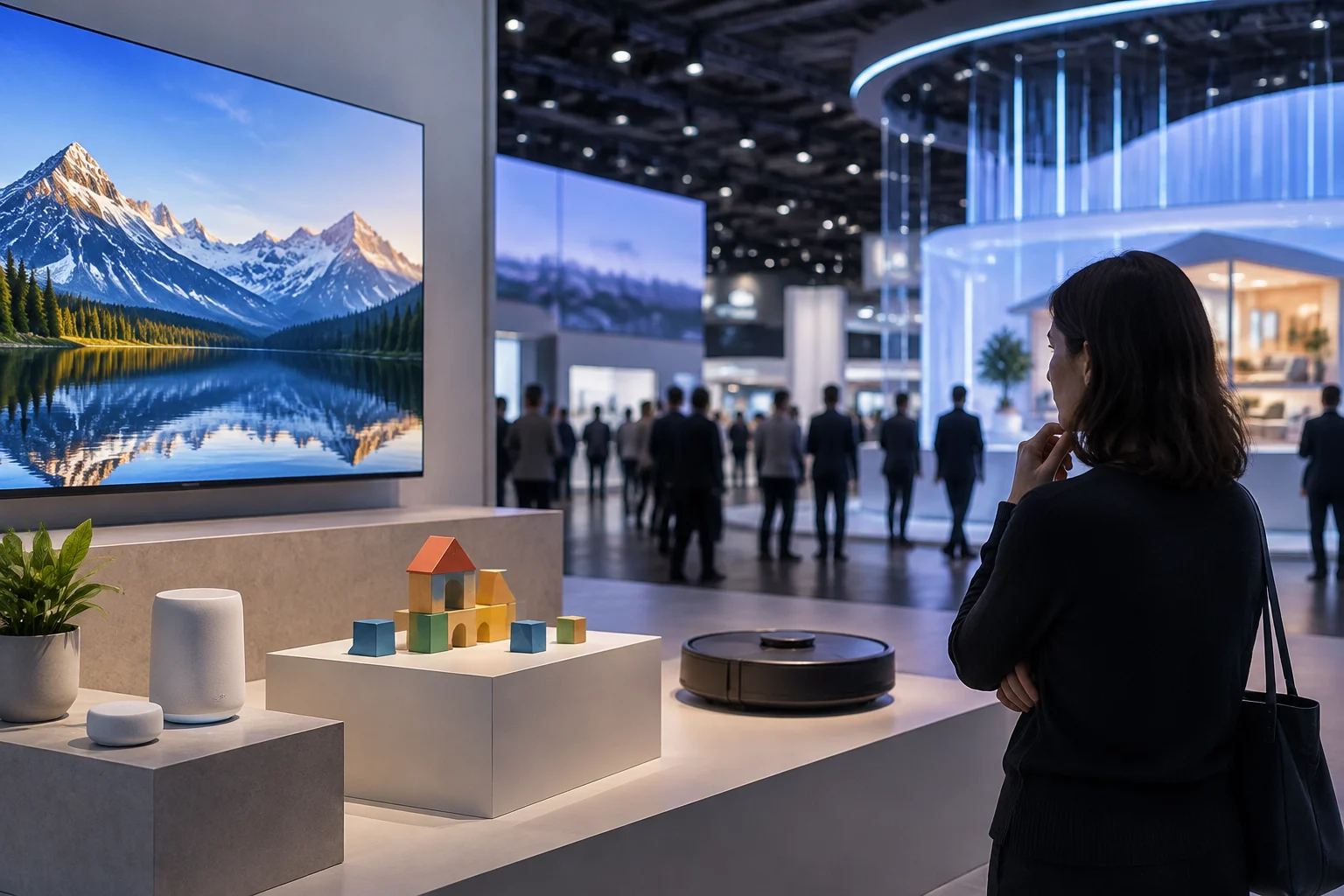
The Saros Rover was part of a broader Roborock presentation at CES 2026, alongside other cleaning products. The press release framed the presentation within the brand's collaboration with Real Madrid and used the slogan "The Greatest Meeting the Greatest". The alliance is promotional context, not proof of the robot's technical performance or its availability to consumers.
Information about the range placed its arrival in the first half of 2026, but this does not confirm that the Saros Rover would be sold in that timeframe in all markets. No verifiable price, specific launch date by country, or complete commercial sheet for the Rover appears in the consulted sources. It is not advisable to convert a general range calendar into confirmation of availability for this model.
For a buyer, the difference between announcement and sale is decisive. A presentation informs about the product direction; a commercial page must allow checking local price, warranty, and availability. There is not enough basis to recommend an immediate purchase or to compare its value with available models: specific commercial data and real-home utility tests are missing.
What a buyer should check before deciding
The most striking function also concentrates the most important questions. Before considering the Rover, it would be advisable to wait for independent tests indicating what types of stairs it can traverse, if it cleans each step effectively, and how it avoids falls or jams. A single demonstration does not measure reliability in repeated cycles or in a house with daily obstacles.
It would also be useful if tests measured battery life on uneven routes, cleaning time, and joint maintenance. These parameters would allow comparison with a simpler alternative: using a conventional robot on each floor. Novel mobility is not automatically more practical; as these measurements are not available in the consulted material, they remain open questions, not confirmed features.
For now, the Saros Rover is better understood as a home robotics proposal presented at a trade show than as an evaluable purchase option. The reasonable decision is to wait for specific commercial information and external tests on its performance on stairs and daily cleaning. This does not invalidate the concept: it delimits what can be asserted and what evidence is missing to judge it.