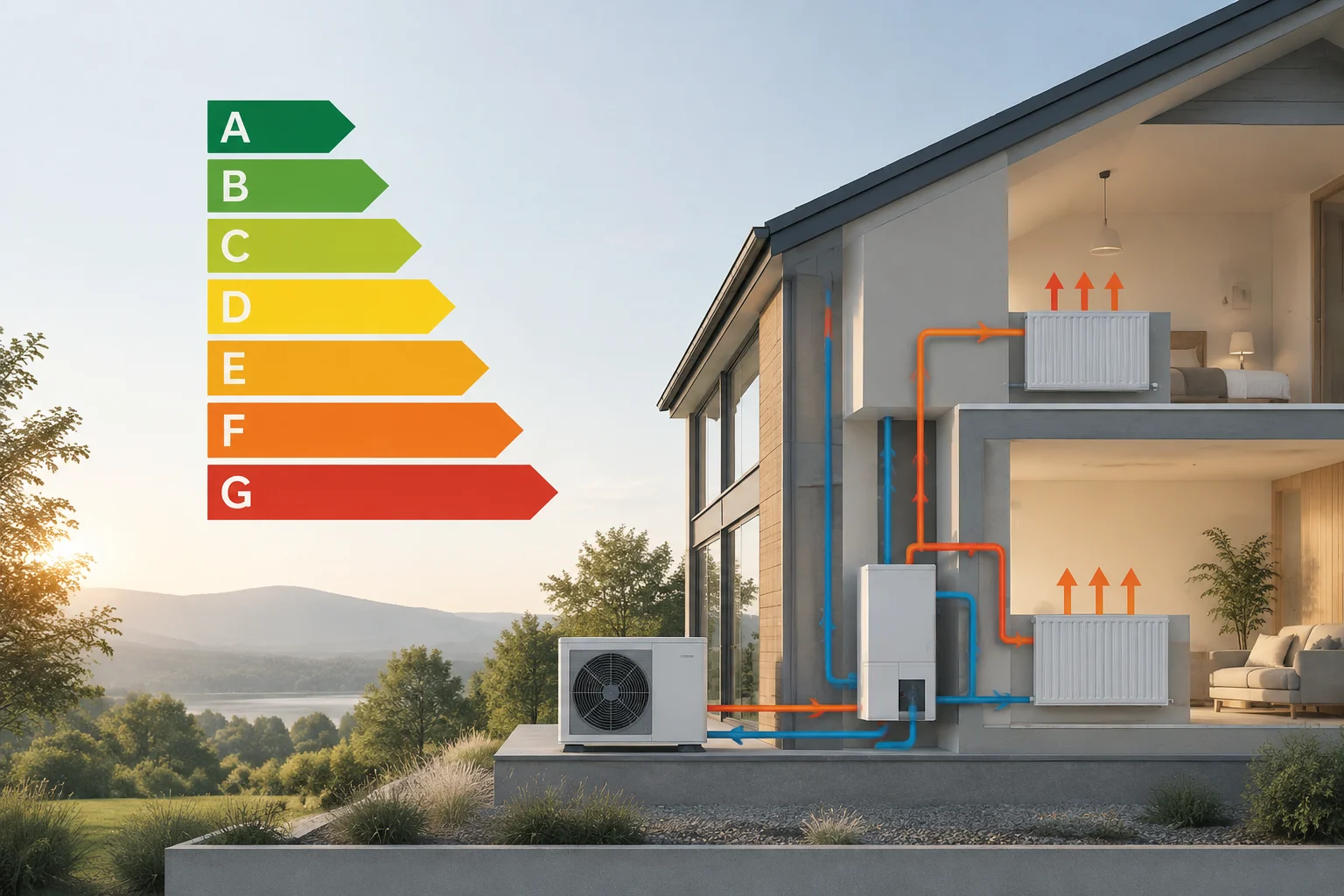
Definition and Fundamental Distinction
Energy efficiency describes the relationship between the energy used and the service obtained. A system is more efficient when it provides an equivalent result—such as lighting a room or maintaining a home at a specific temperature—using less energy. The comparison only makes sense if the service is clearly defined: reducing consumption by stopping heating a room does not, by itself, prove that the heating system has become more efficient.
Energy savings refers to reducing the energy consumed, which can occur due to habit changes, technical improvements, or a combination of both. Turning off the light when leaving reduces usage time; replacing a bulb with one that provides necessary lighting with lower consumption improves service efficiency. These are compatible decisions but answer different questions: how much is used and how much energy is needed to achieve a specific result.
The distinction is practical because it identifies what is being compared. If a family lowers the thermostat and consumes less, there is savings, even if the comfort level has changed. If insulation is improved and less heating is needed to maintain comparable conditions, the energy required for a similar service is reduced. In reality, both effects can appear together; therefore, it is advisable to specify the service, conditions, and period before attributing a reduction solely to efficiency.
How It Is Measured and What Is Compared
There is no single figure that describes the efficiency of any appliance, building, or activity. Evaluation depends on the functional unit—the service desired—and the energy consumed to provide it. In a simple comparison, electricity consumed by two lighting systems could be related to an equivalent amount of light. In other contexts, specific technical indicators and procedures are required; results from one type of equipment should not be transferred directly to another.
It is also important to distinguish between final energy and primary energy. The former is the energy received or consumed by the user, such as electricity or gas; the latter incorporates, according to the corresponding calculation method, aspects of the energy needed before reaching the point of use. They are not interchangeable magnitudes. A building certificate may use indicators defined by its regulatory procedure, while a bill records consumption and charges under the supply's contractual conditions.
All measurement depends on boundaries and assumptions: which uses are included, what period is considered, how climate is represented, and what service level is taken as reference. Comparison requires a common basis. Two annual consumption figures may not be directly comparable if they correspond to different sizes, usage conditions, or categories. If the method and context of a figure are unknown, it is prudent to treat it as a partial reference rather than a universal verdict on efficiency.
Label and Certificate: Different Documents
The energy label of a product and the energy efficiency certificate of a building are not the same instrument. The label accompanies product categories subject to labeling regulations and communicates relevant information for that category. The certificate, however, is part of the Spanish procedure for evaluating building energy efficiency. The scale of a label should not be assumed as a universal measure applicable to any appliance, home, or service.
| Instrument | What It Describes | How to Use It Critically |
|---|---|---|
| Energy efficiency | Relationship between energy and useful service | Define the service and compare equivalent conditions |
| Energy savings | Reduction of energy consumed | Determine if due to habits, technology, or lower service |
| Energy label | Standardized information for a product category | Compare products in the same category and review applicable data |
| Energy certificate | Evaluation of building energy efficiency per Spanish procedure | Consult the rating and scope; do not treat as an actual bill |
The table separates concepts and documents, not establishing equivalence between their scales. A household appliance label does not allow automatic inference of a building's rating, and a home certificate does not inform by itself how much each household will consume. To make a decision, it is advisable to read the document corresponding to the object being compared and check what variables it covers and with what method it was obtained.
In Spain, Royal Decree 390/2021 approves the basic procedure for certifying the energy efficiency of buildings. The consolidated text available in the BOE indicates it was published in June 2021 and includes subsequent updates; to interpret specific obligations, dates, or the current regime, the applicable official wording must be consulted, not a general description of the certificate.
Applications: Homes, Equipment, and Services
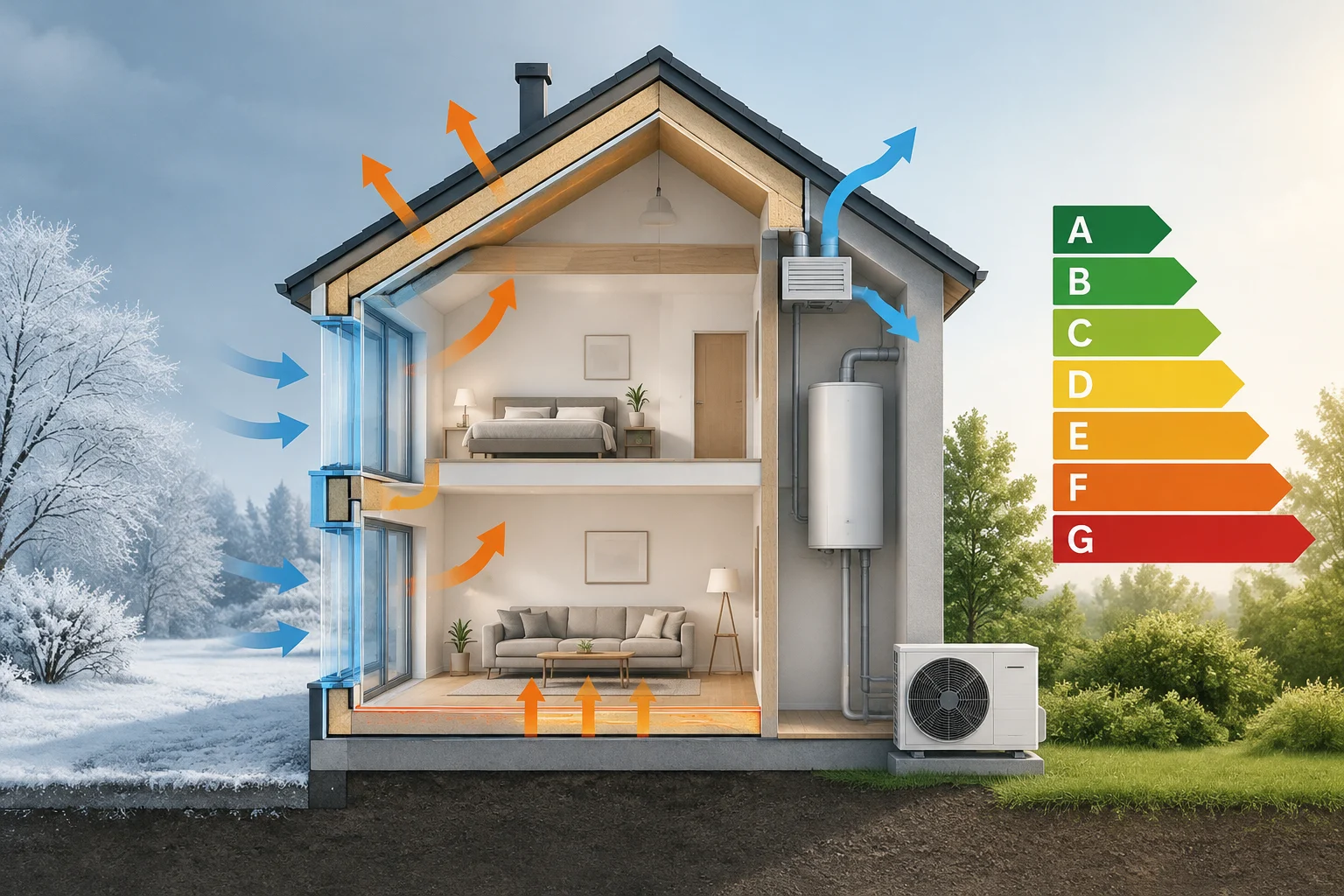
In a home, efficiency may depend on how insulation, windows, ventilation, and heating or cooling installations are combined. Improving the envelope can reduce thermal losses or gains and, under comparable conditions, decrease the energy needed to achieve a similar comfort level. However, the actual result will also depend on climate, building condition, equipment regulation, and how rooms are used.
For appliances, the useful comparison is one that maintains the relevant function: preserving food, washing a load, or providing light. A consumption figure can help compare products in the same category, but looking at an isolated letter is not enough if size, program, or associated conditions are unknown. Category and service matter: the indicator makes sense within the scope for which it was defined.
The same reasoning applies to processes and transport: energy must be related to the result, such as production quantity or distance traveled, and conditions included must be defined. Examples help frame the comparison but do not allow asserting performance figures without specific data and methods. In all sectors, the useful question is: what service is maintained, how much energy is consumed, and what conditions could explain the difference?
Spanish and European Regulatory Framework
Royal Decree 390/2021 is the Spanish reference for the basic procedure for building energy efficiency certification. The BOE is the primary source for consulting the norm; the Ministry for Ecological Transition and the Demographic Challenge page gathers information on certification and related resources. A popular summary can guide, but it does not replace the regulatory text when the query affects a specific obligation.
In July 2025, Royal Decree 659/2025 was published, amending Royal Decree 390/2021. Information from the Technical Building Code indicates that the amendment enters into force twelve months after its publication in the BOE. Therefore, as of this article, it is advisable to distinguish the published norm from the date it begins to apply and check the official text before basing an administrative or contractual decision on it.
In the European framework, Directive (EU) 2024/1275 refers to building energy efficiency. Its existence places Spanish certification within an evolving European framework, but a directive should not be presented as if all its provisions were automatically applicable national rules in each case. For a practical issue, transposition, dates, and current Spanish regulations must be verified.
Limits: What a Rating Does Not Guarantee
A label or certificate does not equate to a promise of household consumption. Observed consumption depends on use, number of occupants, climate, setpoints, maintenance, and other conditions. A standardized evaluation allows comparison within its method and scope; it does not accurately predict a specific person's bill. Rating and actual consumption answer different questions.
An energy rating also does not certify by itself all qualities of a home or product. It should not be interpreted as a guarantee of individual comfort, air quality, safety, accessibility, or good maintenance condition. These aspects require their own criteria and checks. Similarly, a rating does not automatically inform of the immediate cost of energy, which depends on consumption, tariff, and supply conditions.
An efficiency improvement can reduce the energy required for a service, but total consumption does not necessarily fall in the same proportion if habits change or usage expands. Therefore, it is advisable to avoid two simplifications: assuming an efficient equipment will always consume little in any situation, or thinking all savings demonstrate a technical improvement. To evaluate a result, system efficiency, usage intensity, and service level must be separated.
Practical Reading for Decision-Making
When comparing products, start by confirming they belong to the same category and that figures refer to comparable conditions. Then, consult the specific data provided by the label and verify what they represent. If the decision is economic, cost requires combining consumption with a relevant tariff and period; a classification letter alone is not a bill estimate or amortization guarantee.
When reviewing a building, identify the document, its date, scope, and applicable regulations. The rating provides a regulated way to describe energy efficiency, but it does not replace inspection of the home's condition or a personalized consumption estimate. If works are contemplated, decisions must be based on specific technical information of the property; a suitable renovation cannot be deduced solely from a label letter.
As a general rule, before accepting a claim about efficiency, check four elements: what service is compared, how much energy is measured, under what conditions, and with what method. That context turns a figure into useful information. If any element is missing, the figure may still guide, but it does not justify a broad conclusion about actual performance, comfort, or cost.