Matter: More Compatibility, But Not a Universal Guarantee
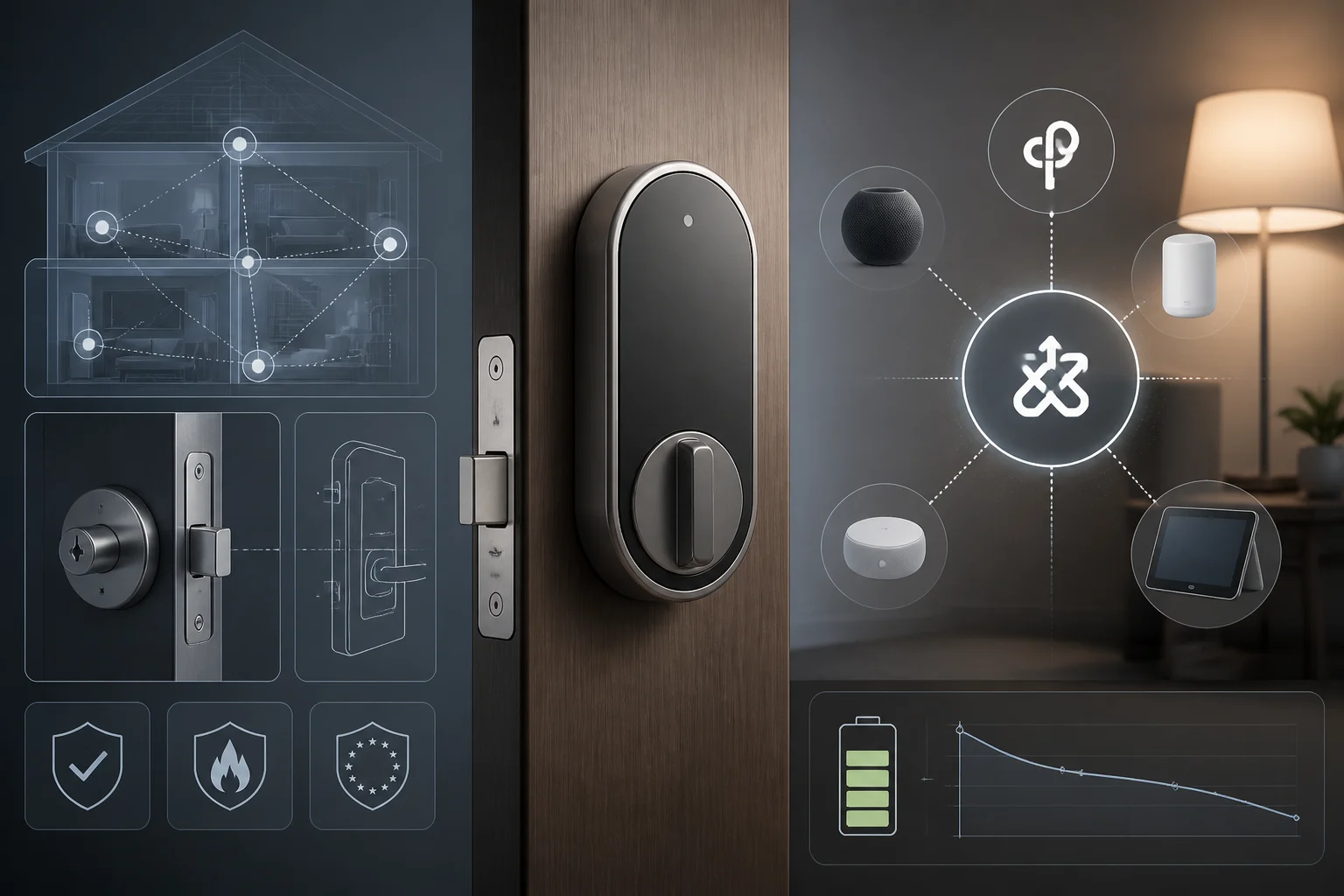
Matter aims to facilitate interoperability between smart home devices from different brands. For a lock buyer, this can reduce dependence on a specific platform, but compatibility must be confirmed for the exact model and the specific functions intended for use. A product announcing Matter does not by itself prove that all its features are available in every application or ecosystem.
It is advisable to separate three questions that are often mixed: whether the lock can pair with the home system, whether it allows remote control, and whether it executes the specific functions of interest, such as sharing access or checking activity. Integration may depend on the product version, the home controller, and the connection method. Before paying, consult the manufacturer's datasheet and compatibility documentation; do not assume that an interoperability label equals full compatibility.
The practical advantage of Matter is the possibility of reducing friction between platforms, not the promise that a lock will remain compatible indefinitely or be free from manufacturer services or applications. Evaluate compatibility as a verifiable function, not as a substitute for checking support, updates, and terms of use. If changing ecosystems is a key reason for purchase, also check which functions remain available when doing so.
Matter and Thread: Understand What Each Technology Brings
Matter is a connectivity standard for the smart home; Thread is a low-power network technology that some devices can use. They are not synonyms, and one should not assume that every Matter lock connects via Thread: the transport and specific requirements depend on the product. Check the documentation to see if the model uses Thread, Wi-Fi, Bluetooth, or another combination, and what additional equipment it requires.
A lock using Thread may require a compatible device acting as a Thread Border Router to communicate with the home network. If it needs an additional hub or controller, this requirement affects cost and installation. Confirm what equipment you already have and what is missing before choosing an option; a Matter-compatible product does not necessarily imply it works without additional accessories or offers remote access without extra configuration.
Connectivity also influences daily experience and energy consumption, but it is not enough to evaluate a lock's reliability. Manual opening, backup key, mounting, and mechanism quality remain relevant even if wireless integration works correctly. In practical terms, compare the whole set—lock, network, controller, and application—rather than choosing solely by protocol name.
Check the Door and Installation Type First
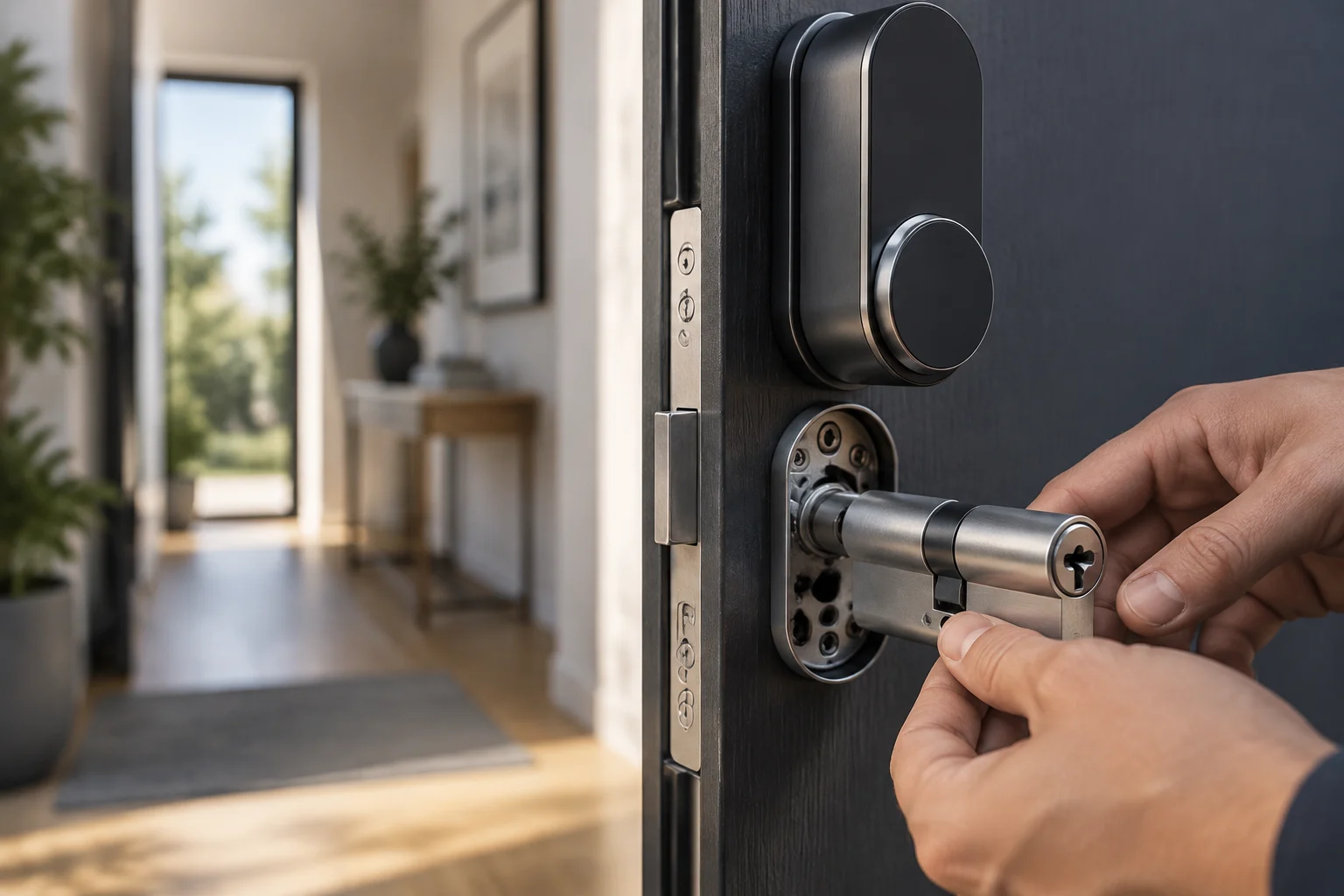
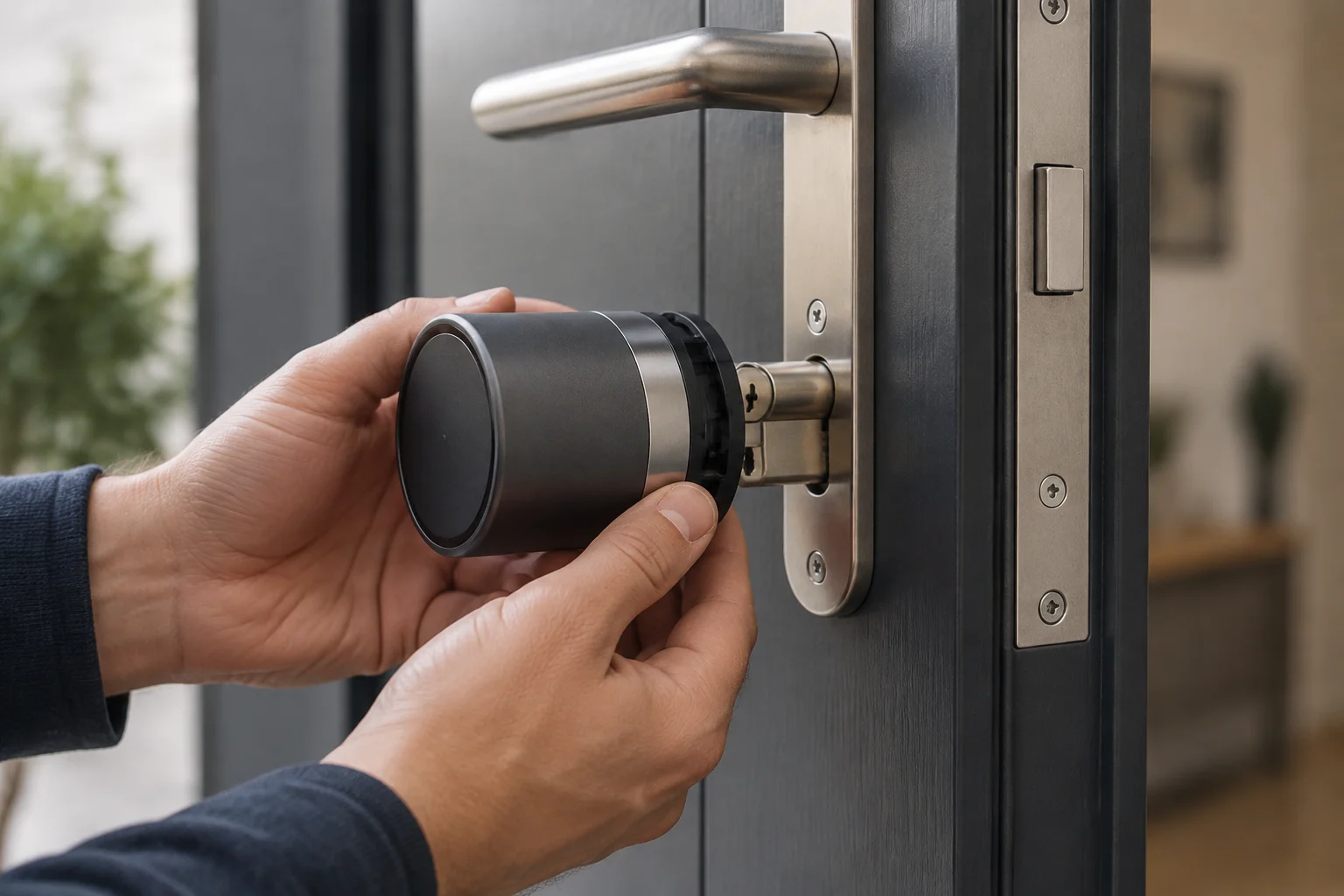
Before comparing apps or voice assistants, verify that the lock is physically compatible with your door. Check the type and dimensions of the cylinder, the direction and travel of the mechanism, available internal space, and whether the model is designed to install over an existing lock or replace components. Physical compatibility is a prerequisite: a digital integration does not compensate for a mechanism that does not fit or cannot correctly actuate the closure.
Retrofit locks mount over the existing mechanism, while other solutions replace the cylinder or require modifying part of the installation. The first option may be less invasive but depends on the cylinder and door being suitable. Replacement may offer a more integrated set but requires checking measurements, compatibility, and mounting procedure. It is not safe to generalize by brand: consult the specific model's instructions and, if in doubt about the cylinder or door, request a professional assessment.
Make these checks before buying:
- Identify the cylinder type and measure its dimensions according to the manufacturer's instructions.
- Check if the mechanism allows actuating the lock from the inside without hindering the use of the exterior key.
- Confirm if the mounting preserves a mechanical opening path and what happens if the battery runs out.
- Verify if the device includes installation accessories or requires additional parts.
- If it is a communal, rented, or specific-requirement door, consult any applicable restrictions beforehand.
Battery Life: Do Not Turn an Estimate into a Promise
Battery life varies according to design, usage frequency, installation conditions, and connectivity functions. A figure published by a manufacturer or guide does not allow precise prediction of how long it will last in a specific home. Treat the announced autonomy as an estimate, and consult what conditions were used to calculate it, what type of battery the device accepts, and how it warns when it needs recharging or replacement.
Constant connectivity, environmental conditions, and the effort required to move a mechanism can affect consumption. If a door is misaligned or the closure offers resistance, the motor may have to work harder; therefore, a correct installation matters as much as the wireless protocol. There is insufficient basis to claim that Thread guarantees specific autonomy or that all Wi-Fi locks need battery changes within a fixed timeframe.
To reduce the risk of losing access, check if the product provides low battery alerts, if it is rechargeable or uses replaceable batteries, and what its emergency opening method is. Maintain a physical alternative when the design allows it and do not wait for an urgent warning to familiarize yourself with the procedure. The useful decision is not to choose the highest figure on a datasheet, but to value what backup the model offers when the battery fails.
Security: The Smart Lock Does Not Replace the Cylinder
Door security combines physical and electronic components. The application, authentication, and wireless communication are only part of it: the cylinder, shield, frame, installation, and mechanism resistance also matter. A connected lock does not automatically turn a vulnerable door into a secure one. Evaluate the whole set and do not attribute to connectivity protection against physical attacks that has not been documented.
If the manufacturer mentions a standard or certification for the cylinder, check which component it refers to and what it exactly certifies. A certification of one part does not by itself prove that the whole door or installed lock meets the same protection level. Request documentation for the specific model and be skeptical of promotional expressions that do not identify tests, scope, or certifying body. The evidence available for this guide does not allow claiming that a specific model guarantees resistance against particular intrusion methods.
It is also advisable to distinguish between local operation and remote access. The former may depend on the home network and controller; the latter may involve services, accounts, or additional connections. Review how users are managed, what permissions each person can share, and how access is revoked. Prioritize clear backup mechanisms and understandable access control, in addition to compatibility with the phone or assistant you use.
Final Buying List: Decide by Requirements, Not Labels
A solid choice starts with the door's requirements and ends with the connected functions you actually need. For a simple installation, confirm the mounting method and cylinder compatibility. To integrate it with a home system, check the exact model, platform, and necessary network accessories. If the priority is reducing maintenance, compare battery type, alerts, and emergency method, without treating autonomy estimates as guaranteed results.
Before closing the purchase, contrast the manufacturer's datasheet with your installation conditions and answer these questions:
- Is the lock compatible with my door's cylinder, measurements, and mechanism?
- What Matter functions does it exactly support and with which platforms is it confirmed?
- Does it use Thread or Wi-Fi, and does it require a controller, hub, or additional accessory?
- How does it open if the network, application, or battery fails?
- What specific documentation supports the security claims of the cylinder and the set?
- Are installation instructions, updates, and support available for this model and market?
In summary, Matter can be a useful criterion if you seek flexibility between ecosystems, but it should not decide the purchase on its own. First, the door, mechanism, and access backup must fit; then, connectivity can help choose between compatible alternatives. The information provided does not allow establishing a reliable ranking of models or confirming prices, availability, or comparative autonomy for the Spanish market as of today.