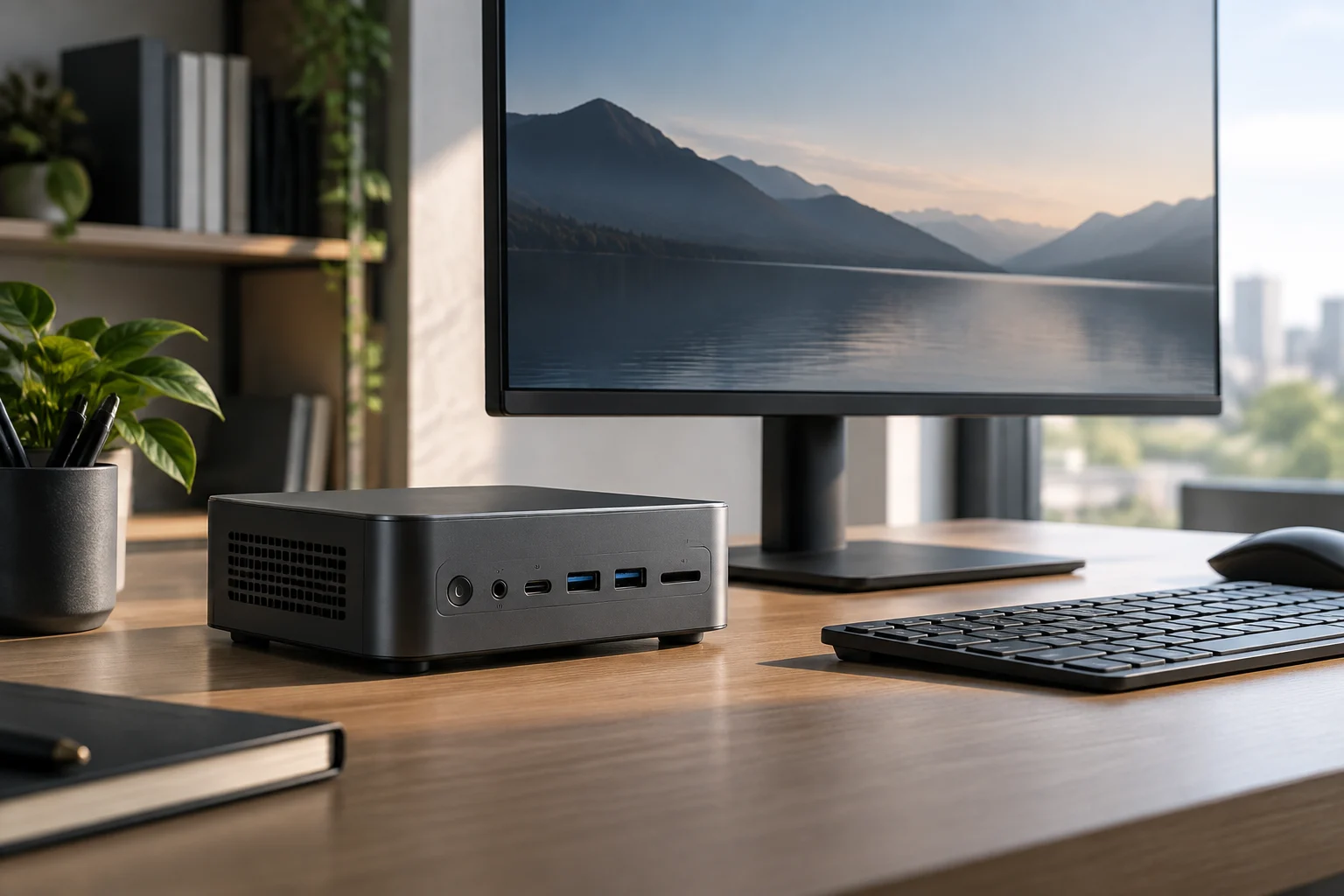
The New Standard of the Compact Workstation
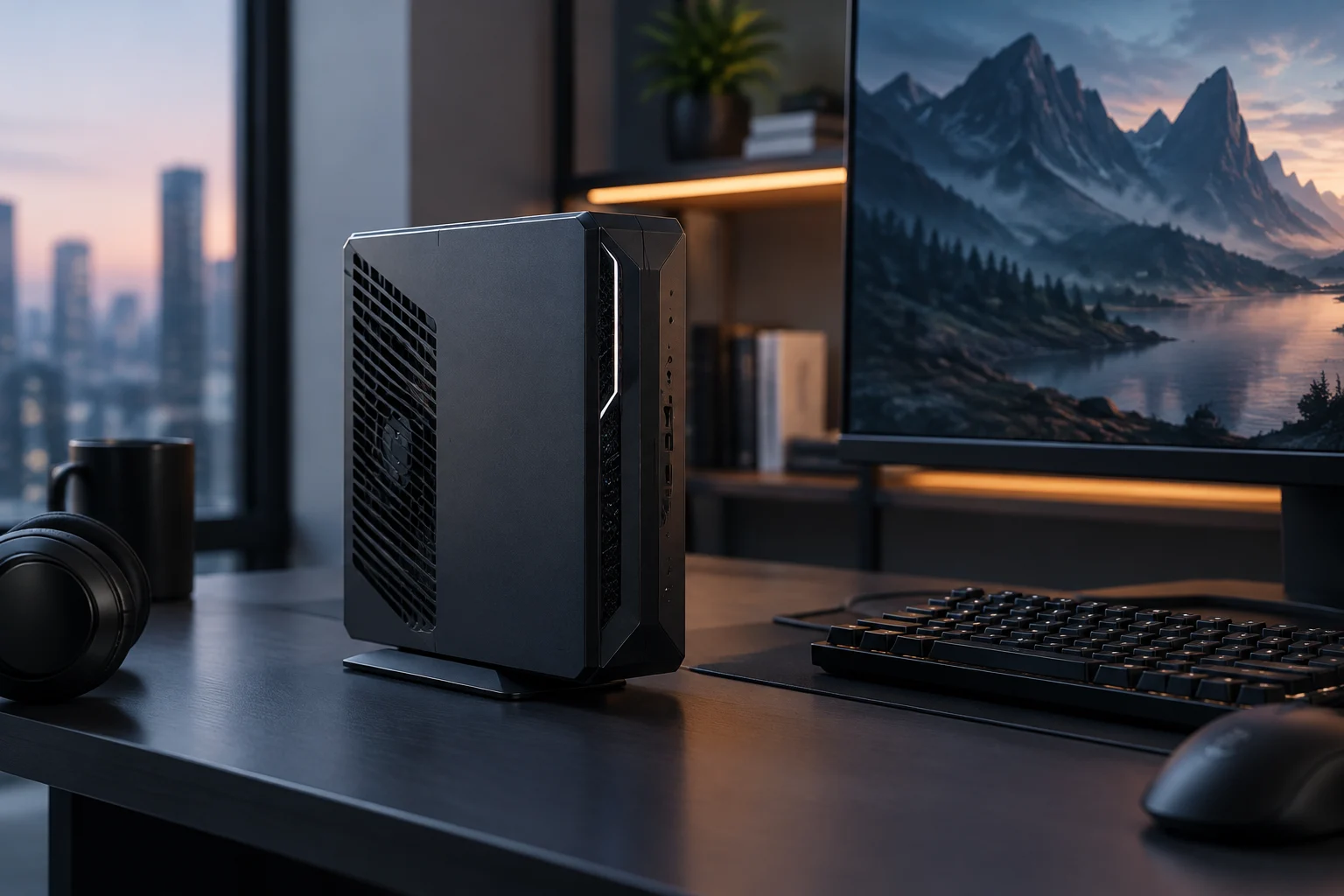
In 2026, the compact workstation category has ceased to be an enthusiast niche, becoming a viable alternative to traditional towers. Devices that fit on an office desk now integrate high-performance processors and neural processing units (NPU) capable of running AI models with over 70 parameters locally. This evolution responds to the need to keep data on-device, reduce cloud costs, and eliminate remote inference latency, factors that have driven adoption in professional and development environments.
The distinction between a standard mini PC and one designed for AI is fundamental. While basic models handle office tasks and multimedia playback, high-performance units prioritize thermal management and memory capacity. For developers building local AI pipelines or private inference servers, choosing compact hardware radically changes what is possible on the desktop without sacrificing raw power or sensitive data privacy.
The Thermal Limit in Chassis Under 4 Liters
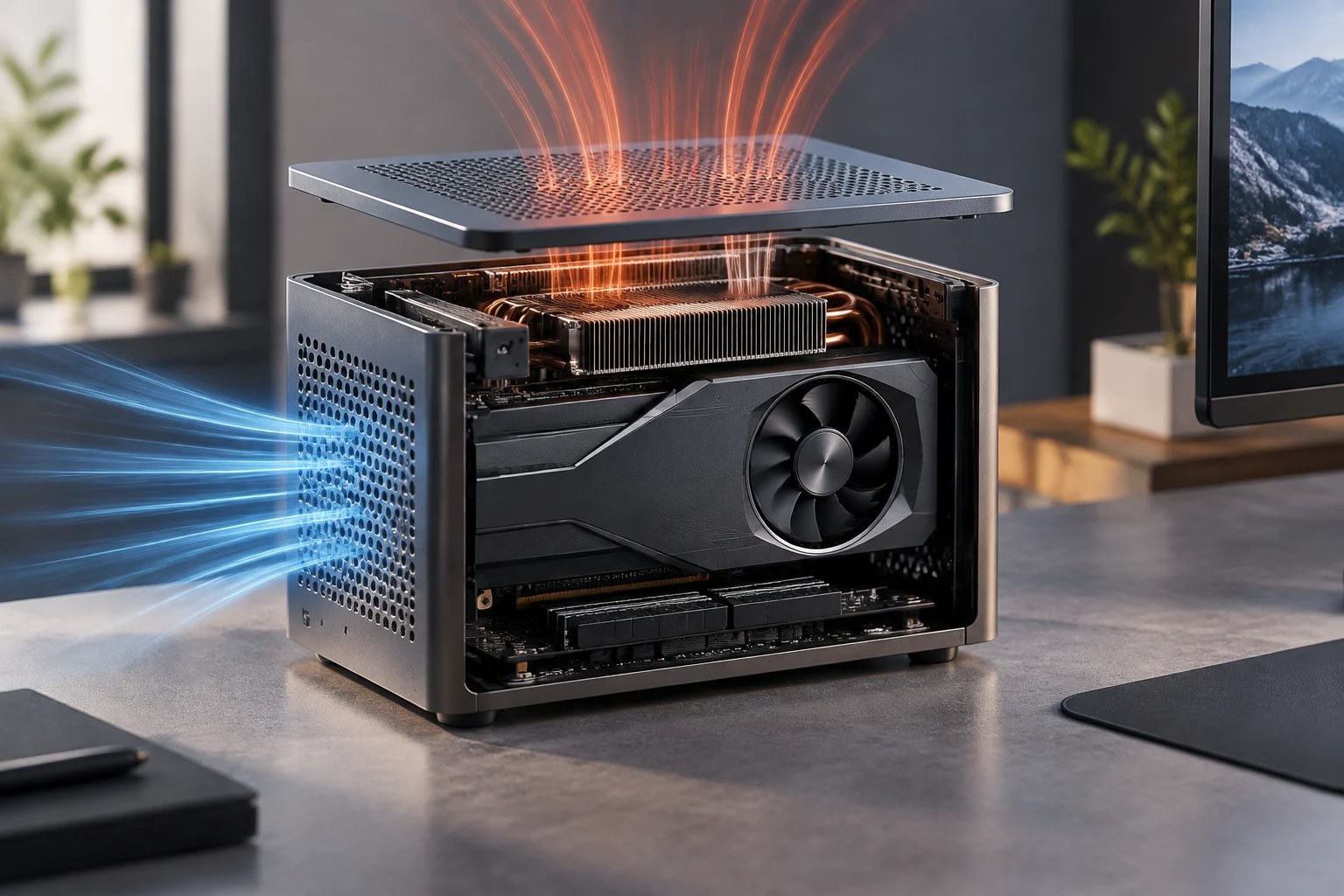
The main challenge in integrating RTX 40 or 50 series GPUs into compact chassis is component density. Unlike an ATX tower, a mini PC has limited volume restricting natural airflow. This directly impacts the system's ability to maintain the GPU's maximum TGP during sustained loads. If cooling is insufficient, the system resorts to thermal throttling, reducing clock frequency to prevent overheating, which can degrade performance in prolonged tasks.
To verify this capacity, it is essential to examine the manufacturer's cooling design. High-end models, like the ASUS ROG NUC 2025, employ unified vapor chamber systems and multiple fans to manage heat from Intel Core Ultra 9 processors and NVIDIA GPUs. However, not all mini PCs offer this complexity; many rely on passive heatsinks or simple fans that may limit sustained performance in rendering or model training, making thermal spec verification crucial before purchase.
Unified Memory vs. Dedicated VRAM
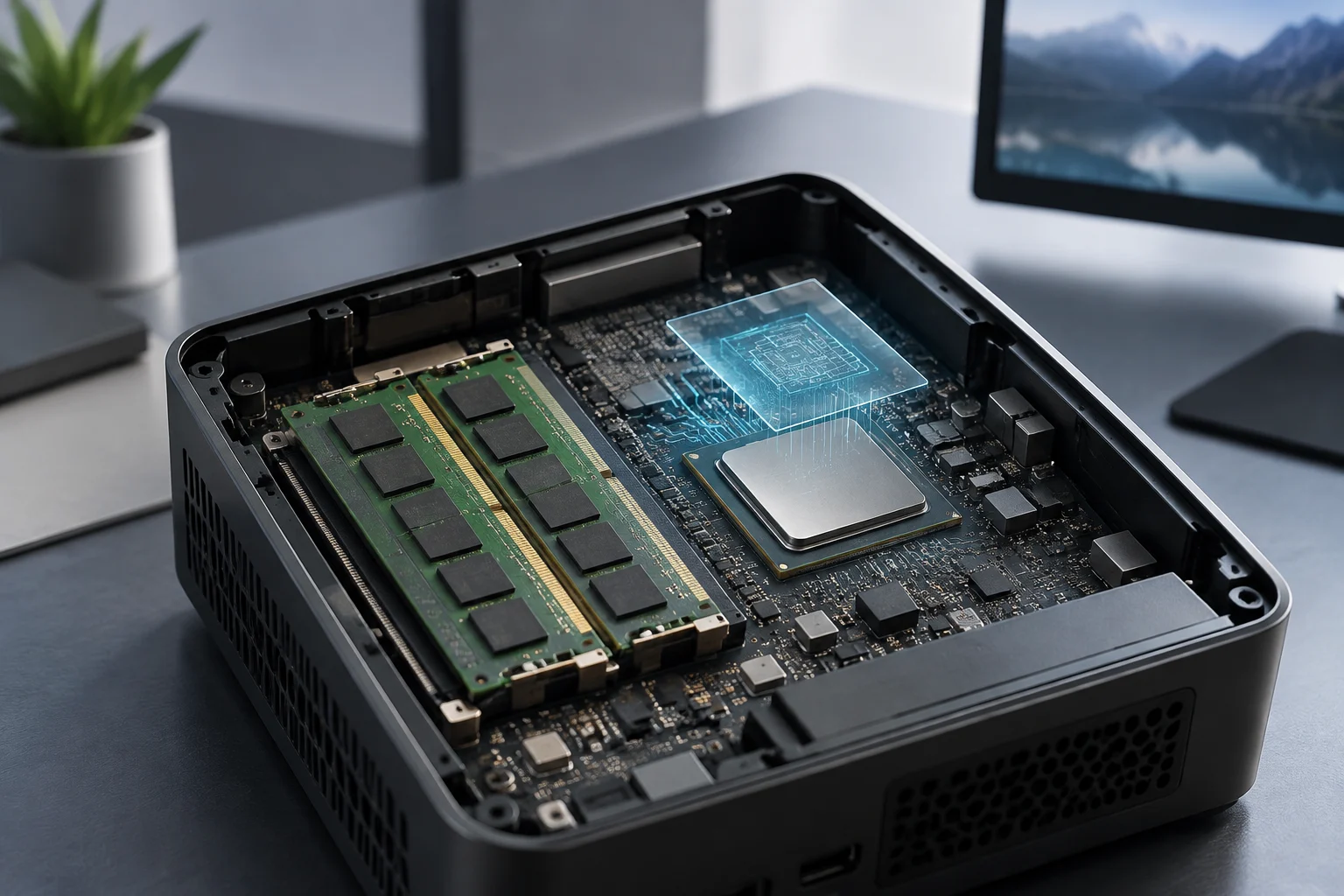
One of the biggest confusions in 2026 is the difference between dedicated VRAM on a discrete GPU and unified memory in architectures like AMD Strix Halo. In a traditional tower, an RTX 5090 offers 32 GB of GDDR6X memory with 1,792 GB/s bandwidth. In contrast, a mini PC with AMD Ryzen AI Max+ 395 can offer 128 GB of soldered memory, but with approximately 256 GB/s bandwidth, a difference that defines the optimal workload for each platform.
This difference is critical for AI inference. Although unified memory allows loading much larger models (like 200B parameters), memory bandwidth is the real bottleneck. For workloads requiring high token processing speed, dedicated VRAM remains superior. However, for tasks where model size is the main limit, unified memory offers a decisive advantage that discrete GPUs cannot match without exceeding prohibitive budgets, especially in the consumer segment.
Practical Verification Before Purchase
Before buying a mini PC with a dedicated GPU, it is necessary to audit three key specifications. First, the power adapter wattage: a high-performance GPU requires stable power supply not limited by an undersized adapter. Second, the heatsink type: look for terms like vapor chamber or heat pipe in technical specs, indicating superior thermal capacity compared to standard aluminum heatsinks, translating to greater stability under load.
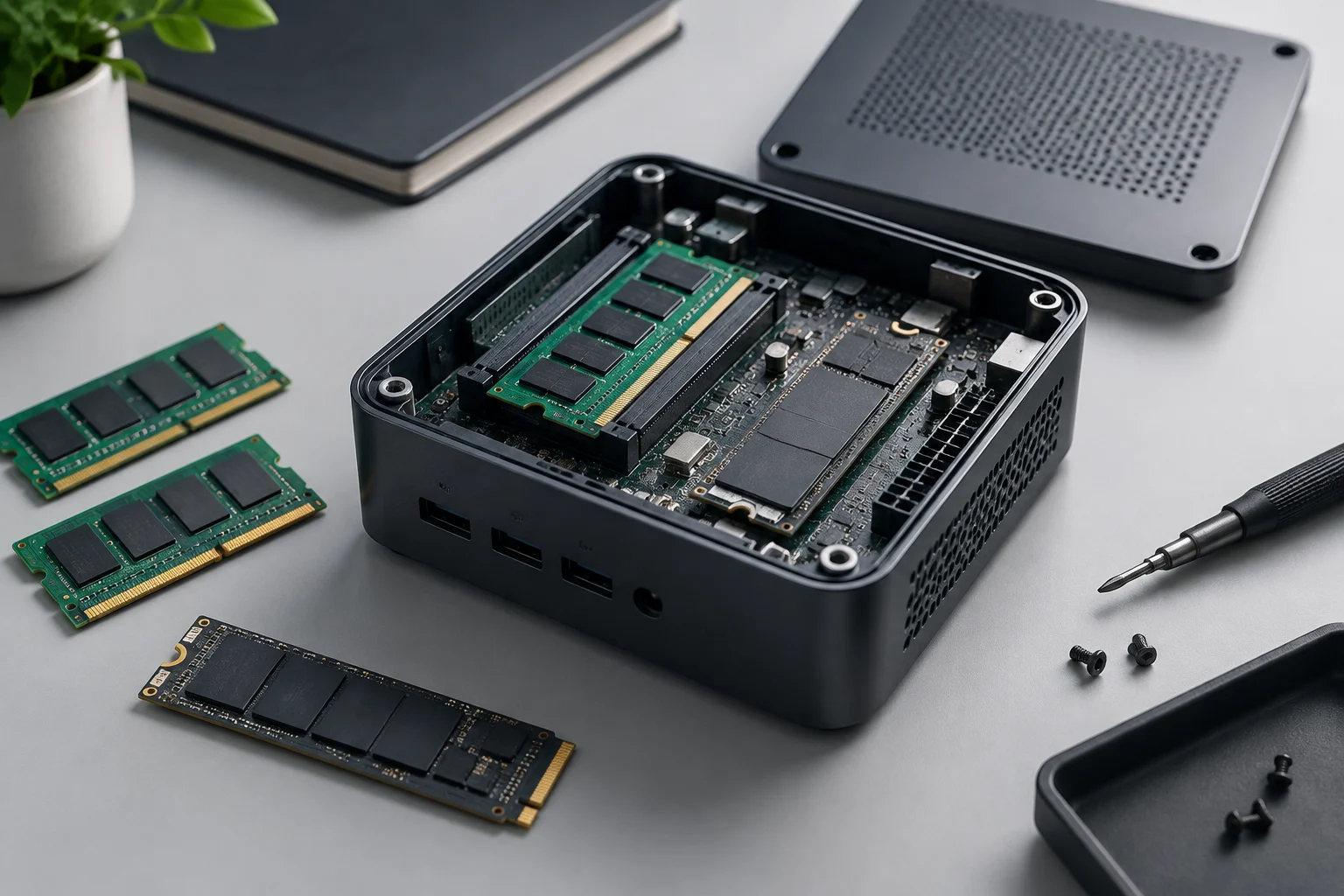
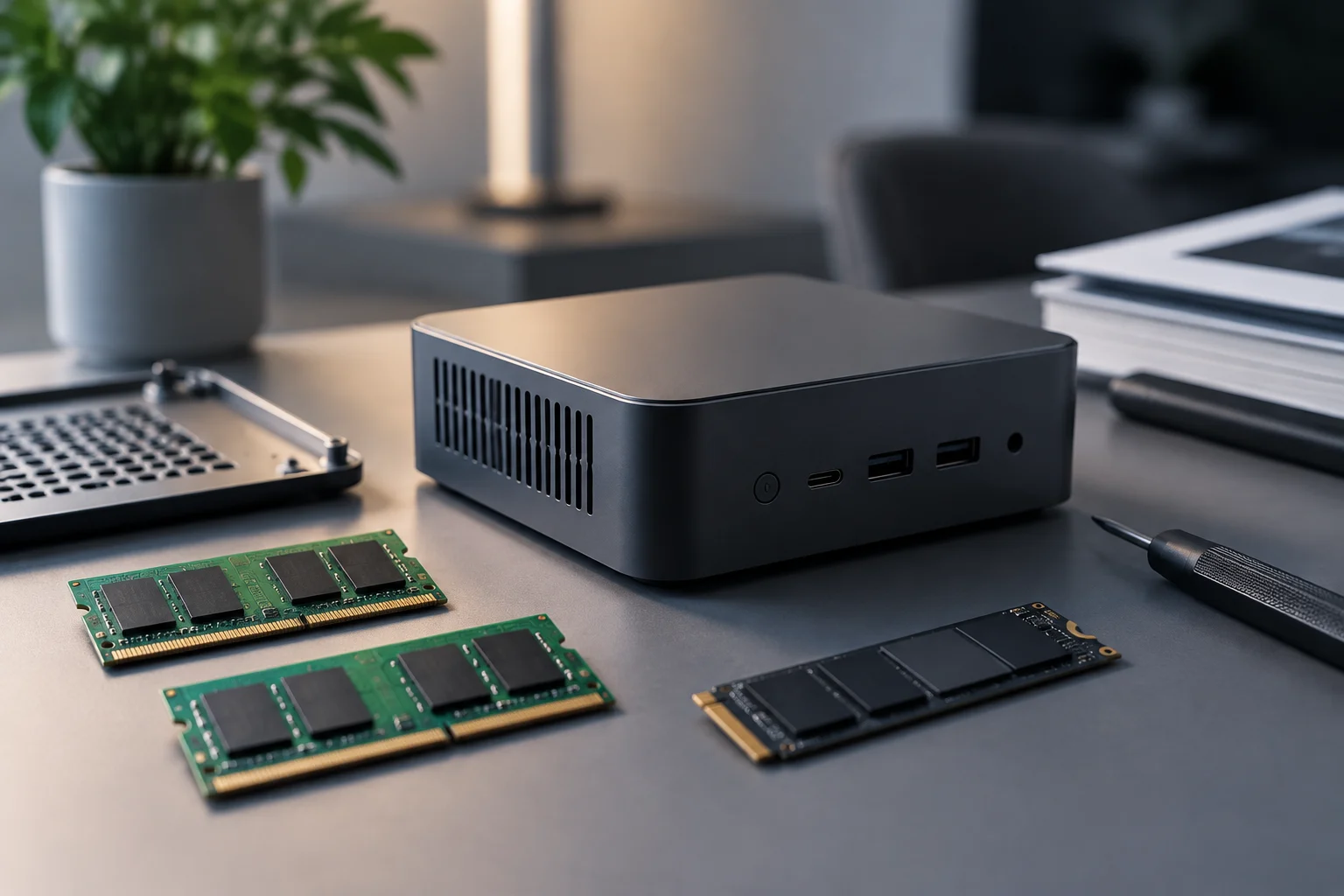
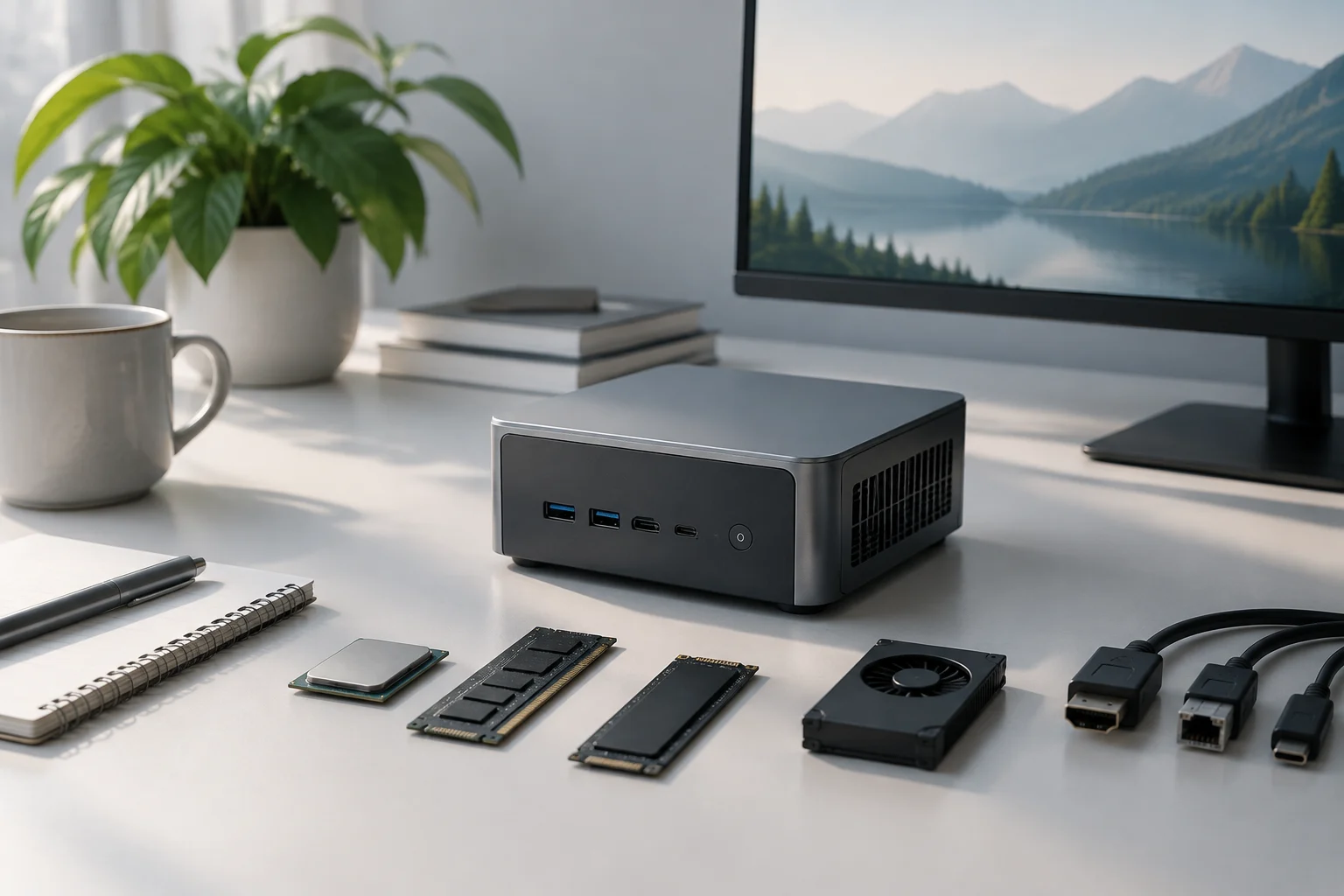
Third, the memory configuration. Verify if memory is soldered or in SO-DIMM modules. Soldered memory, common in unified architectures, is not upgradable, so you must buy the maximum amount from the start. For users needing flexibility, models with SO-DIMM slots allow future RAM expansion, though this may limit maximum achievable bandwidth compared to soldered LPDDR5X, a trade-off to evaluate based on specific workloads.
Sustained Performance Comparison
Marketing data usually shows peak performance, but mini PC reality is measured in FPS degradation or inference speed after 30 minutes of load. In AAA games or 4K video editing, a mini PC with the same GPU as a tower may show significant performance drops due to thermal constraints. This difference is less notable in intermittent workloads, like batch AI inference, where usage peaks are brief and the system has time to dissipate accumulated heat.
For users prioritizing stability, it is recommended to seek third-party reviews including prolonged stress tests. Manufacturers like XMG or ASUS often publish performance data, but end-user experience in real environments, with dust and variable ambient temperatures, is the best metric for the design's thermal efficiency. A mini PC maintaining stable temperatures under load is a safer investment than one promising theoretical maximums but suffering constant throttling, affecting long-term productivity.
Conclusion: Viability by Workload
A mini PC with a dedicated GPU is viable for workloads prioritizing data privacy and portability, such as local language model inference or video editing in mobile environments. For these cases, 128 GB of unified memory offers model loading capacity exceeding any traditional consumer GPU, allowing complex model execution without cloud dependency and maintaining data sovereignty on the local device.
However, for model training, intensive 3D rendering, or 4K gaming with ray tracing, thermal limits and memory bandwidth make a compact tower superior. The practical decision depends on whether the user needs sustained raw power or massive memory capacity. In 2026, both scenarios have viable solutions, but verifying thermal and memory specifications is indispensable to avoid disappointment and ensure the investment aligns with real performance needs.