Origin and structure of the joint venture
On March 24, 2026, Fagor Arrasate and Funditec Intelligence announced the establishment of Primus Robotics, a joint venture equally owned by both entities. The initiative combines Funditec's expertise in artificial intelligence applied to physical autonomous systems with the engineering, industrial automation, and advanced manufacturing capabilities of the Gipuzkoa cooperative, which is part of the Mondragon Corporation.
The company's name pays homage to Juan Sebastián Elcano and his motto Primus circumdedisti me ("You were the first to circumnavigate me"), reflecting the intention to position the Basque Country as a European reference point in advanced robotics. The legal structure of the operation was designed by Broseta Abogados, and the project is exploring state and European public funding avenues to accelerate its scaling.
Primus P1: the first Spanish industrial humanoid
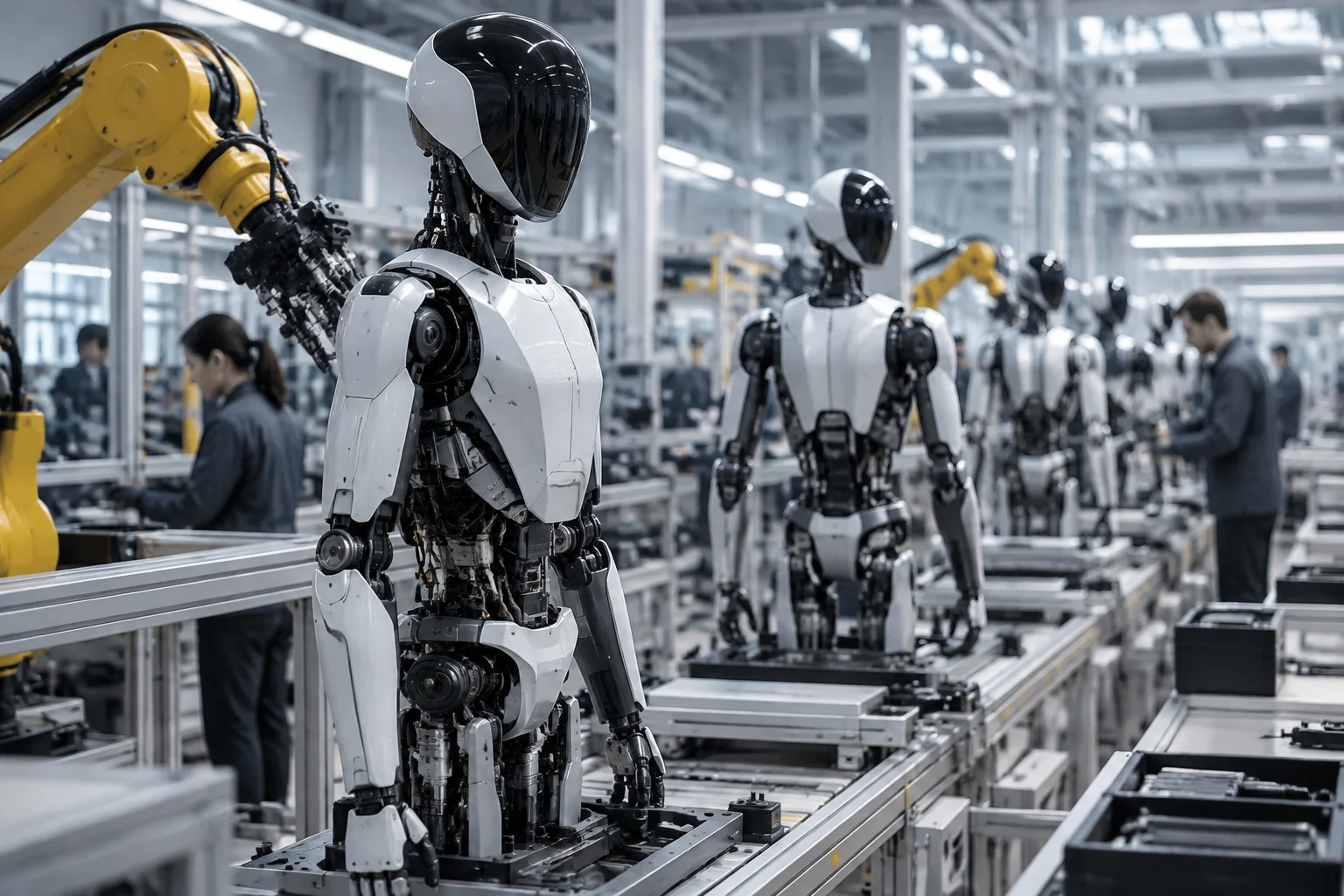
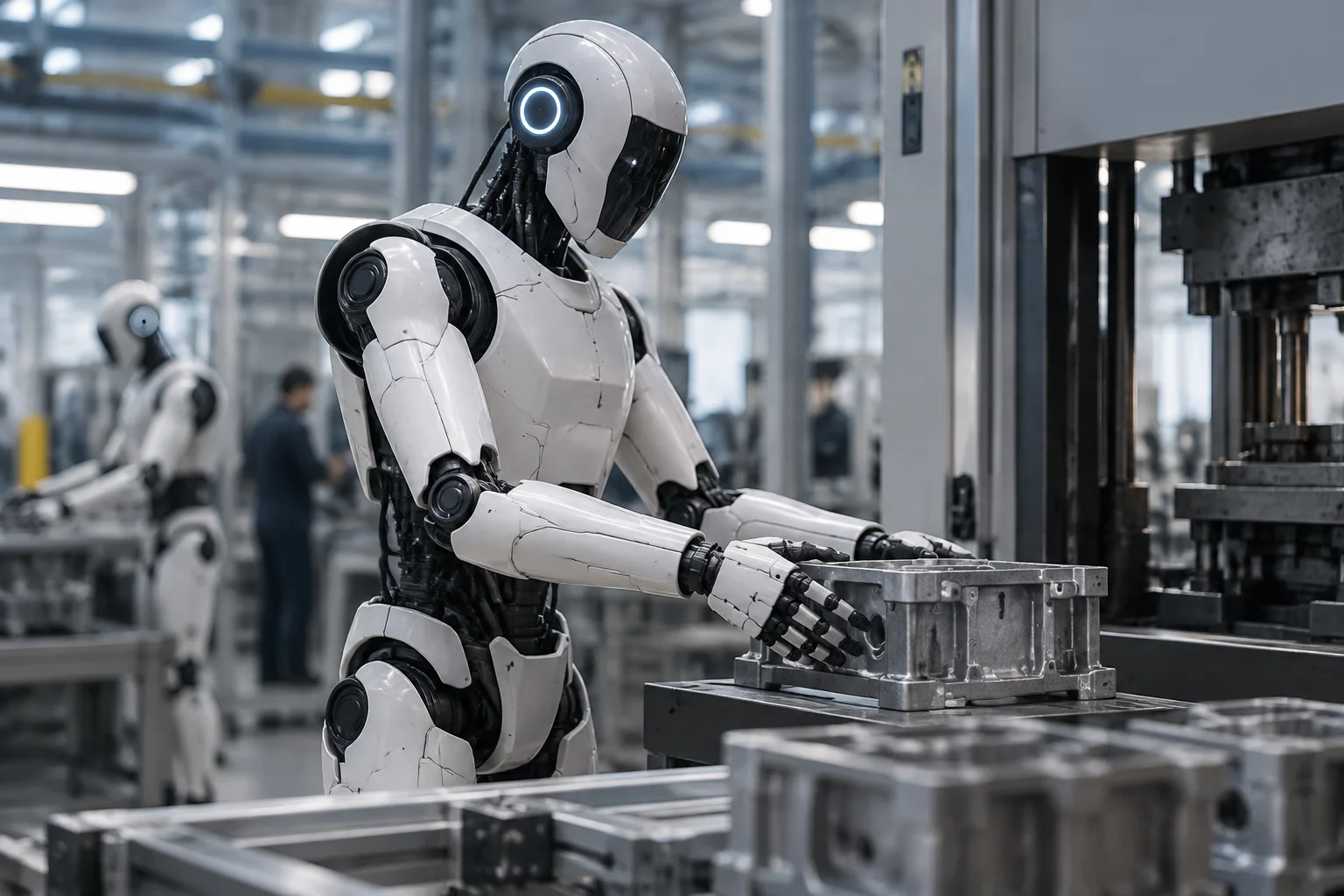
The company's first product will be Primus P1, a humanoid robot designed to perform manipulation tasks, operational support, maintenance, and assistance in production processes. Unlike fixed robotic arms or cobots programmed for specific tasks, Primus P1 is defined as a mobile and autonomous system, capable of moving through the factory and adapting to environmental changes without needing to reprogram the installation from scratch.
The first functional prototype is scheduled for late 2027. Although all technical specifications have not yet been published, the promoters present it as the first humanoid robot produced in Spain. Its design prioritizes integration into existing industrial environments, allowing safe collaboration between operators, machinery, and automated systems. Following the P1, the company plans to launch new versions with expanded capabilities for other sectors.
Primus OS: sovereign artificial intelligence at the edge
The central piece of the project is Primus OS, a proprietary operating system based on artificial intelligence that runs at the edge (edge AI). The company says this approach gives it control over the data generated during robot operations. Its executives describe the robot's intelligence as “sovereign and Spanish”: they say data does not leave the factory and that code and models are consolidated at processing centers managed by the partners.
Each robot learns specific tasks from real process data and observation, improving its performance with practice. Subsequently, it shares relevant parameters with the rest of the fleet through federated learning mechanisms, allowing the experience acquired by one humanoid to be transferred to others without sacrificing the confidentiality of raw data. Algorithm research is conducted at Funditec's center in Carabanchel (Madrid), while validation and integration into Primus OS take place in Arrasate.
Industrial plan and production scaling
Production will take place in a 2,500 m² pavilion set up at Fagor's plant in Arrasate (Mondragón), Gipuzkoa. The industrial plan is structured in phases, with increasing investments associated with technological and market validation milestones. The initial investment committed by the partners is in the millions of euros, with a forecast total aggregate investment of approximately 30 million euros over a ten-year horizon.
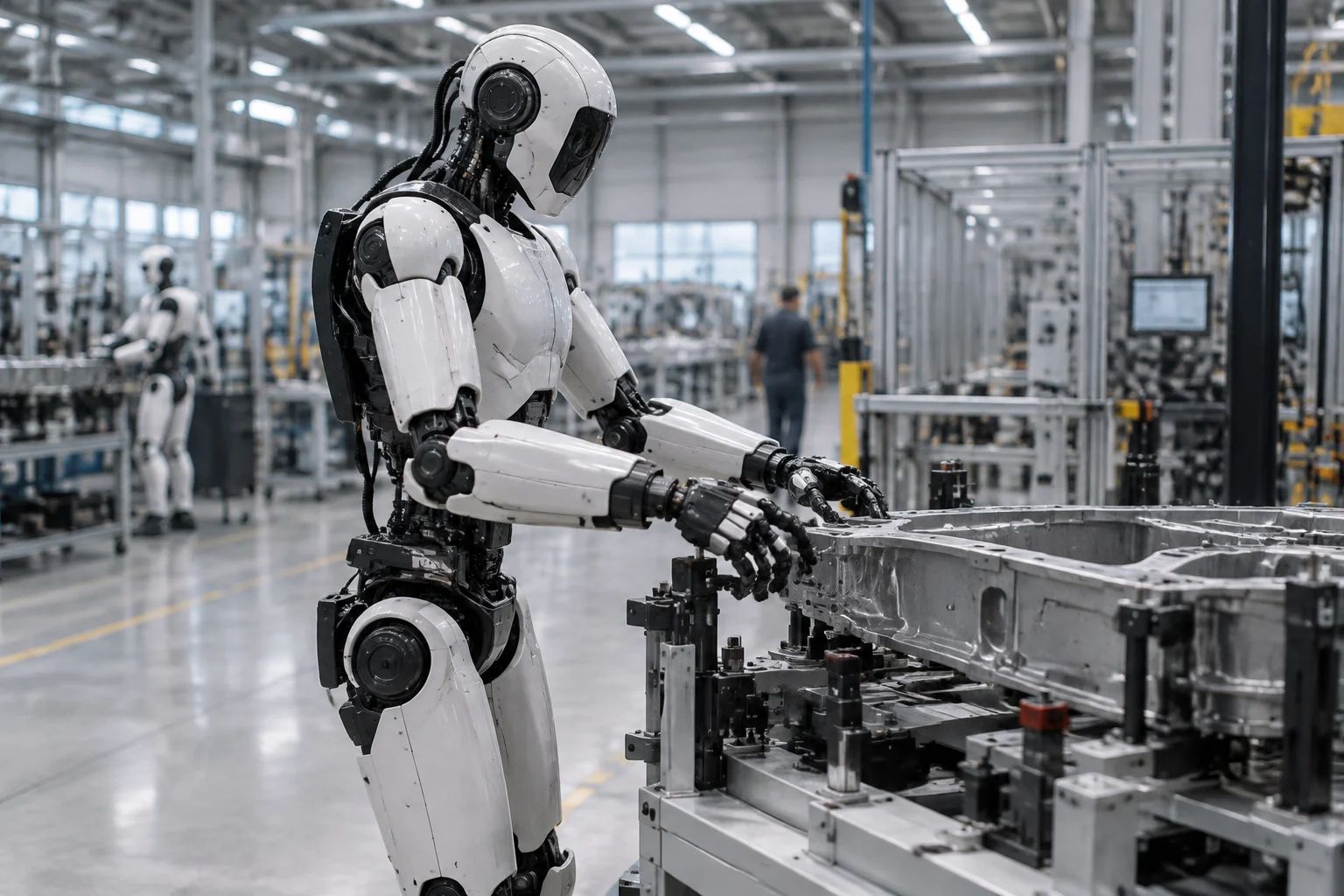
Production scaling follows a progressive trajectory, designed to validate the product under real conditions before expanding capacity. The plant will function primarily as an assembly line, where a significant portion of components (actuators, hands, batteries, housings) will come from a network of specialized external suppliers, while assembly, calibration, and validation will be carried out at the Arrasate facilities.
European context and global competition
The creation of Primus Robotics comes as European industry explores the integration of humanoid robots into production processes. Automotive companies have begun pilot projects at European plants. The global context also includes strong competition from China: Crónica Vasca reports, citing Bloomberg, that China shipped around 13,000 humanoid robots in 2025, compared with approximately 800 shipped by Tesla.
Regarding reference prices, a Tesla Optimus costs slightly more than 20,000 dollars, while a Unitree G1 (Chinese brand) is worth about 13,500 dollars. The business model relies on unit sales accompanied by a service contract covering maintenance, software updates, and technical support. The project is born with a European vocation, leveraging Fagor Arrasate's global network, which operates in more than 60 countries, to internationalize the technology developed in the Basque Country.
Impact on employment and the industrial ecosystem
The project plans to create around one hundred qualified direct jobs in the first years of activity, to which a similar number of indirect jobs associated with suppliers and specialized services would be added. The profiles sought include software engineering, artificial intelligence, mechanical and electronic design, as well as production and assembly technicians. The partners' intention is for the talent to be predominantly from the Basque Country, linked to the Basque industrial and technological ecosystem.
The initiative also responds to a demographic and labor need: the median age of the native Basque population exceeds 52 years, making it difficult to cover physically demanding positions. Primus Robotics is positioned as a complement to human work, aimed at taking on the hardest, most repetitive, or dangerous tasks, allowing people to reorient themselves towards higher-skilled and higher value-added functions within the same organization.