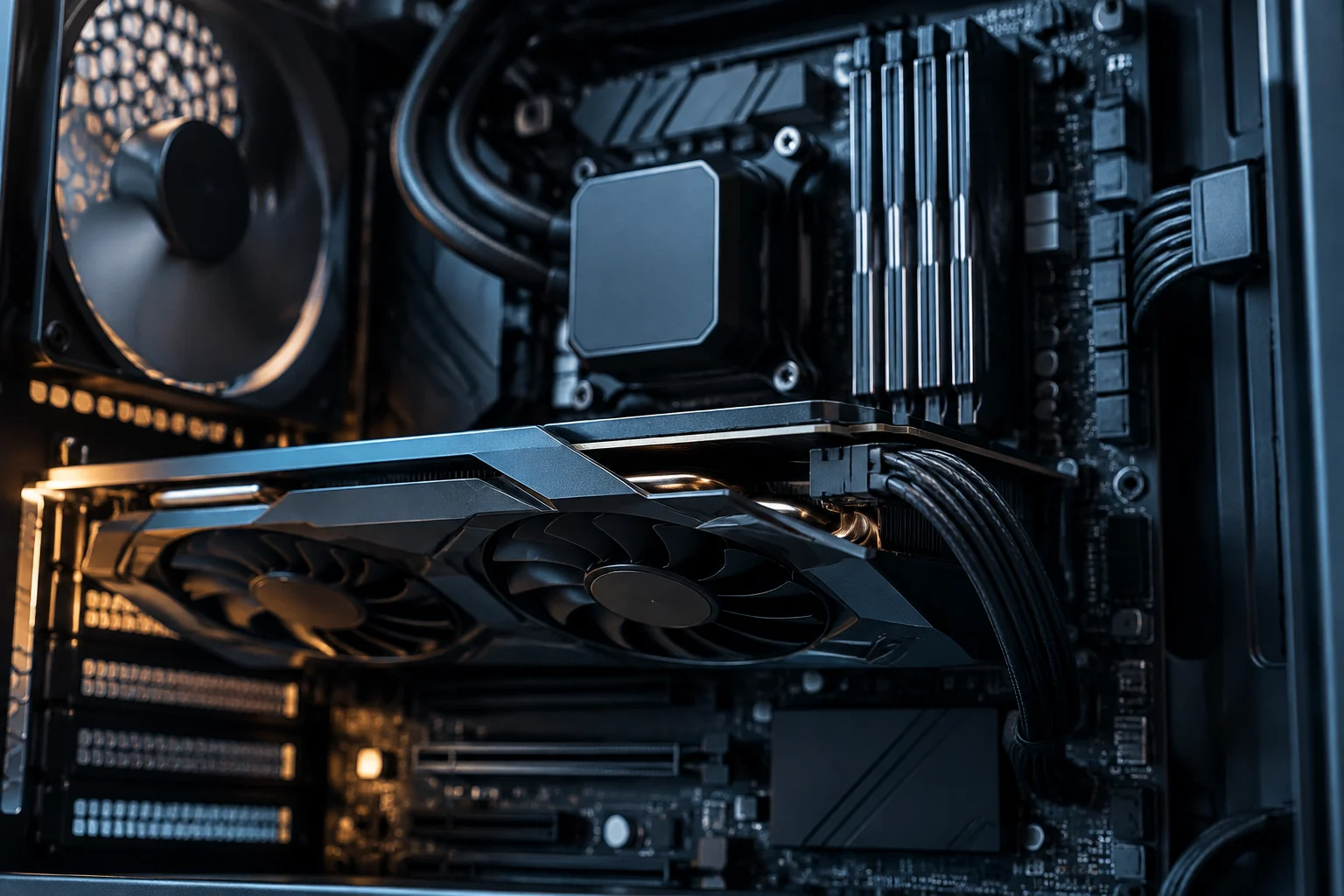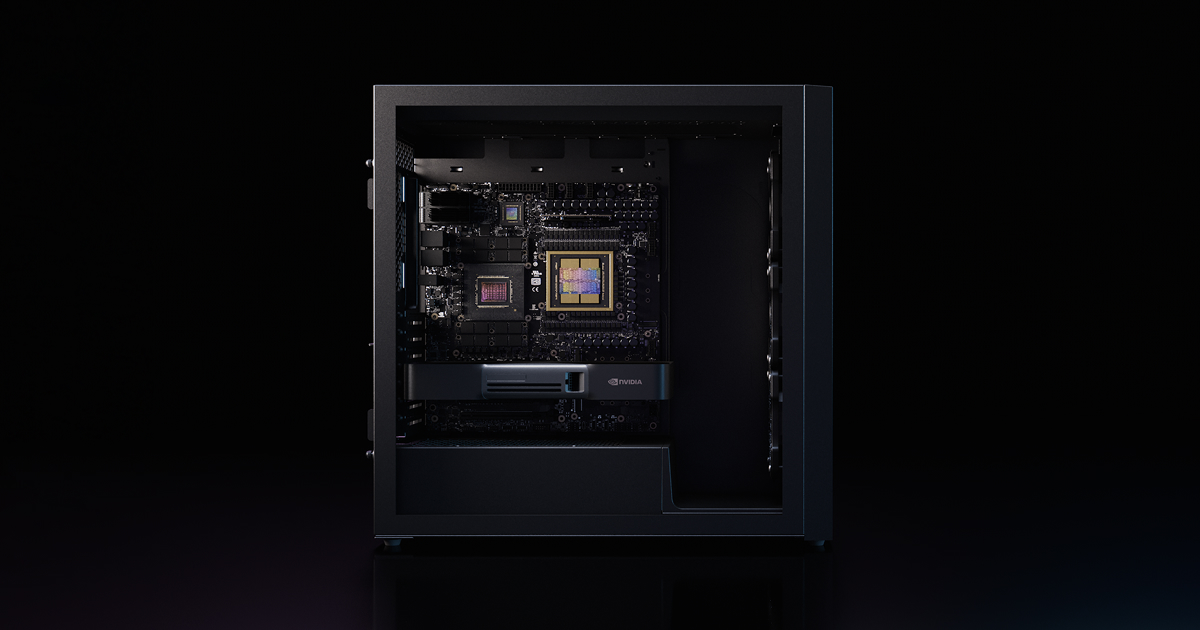
A Desktop AI Station, Not a Conventional PC
NVIDIA DGX Station is a desktop workstation built around the GB300 Grace Blackwell Ultra superchip. NVIDIA introduced the platform in 2025, combining CPU and GPU, high-capacity coherent memory, and NVIDIA AI tools.
DGX Station is designed to develop and run AI workloads locally. NVIDIA targets developers, researchers, and data scientists working with AI models and agents; its specifications also describe use for inference, fine-tuning, and data science.
The initial DGX Station announcement and the Windows version are distinct milestones. NVIDIA's spec sheet presents the general station with Ubuntu and AI development tools; the Windows variant is announced with Microsoft's operating system and availability expected in the fourth quarter. Therefore, Windows does not describe all DGX Station configurations nor does it guarantee compatibility for any application or model.
GB300 and Coherent Memory: The Specification That Changes Scale
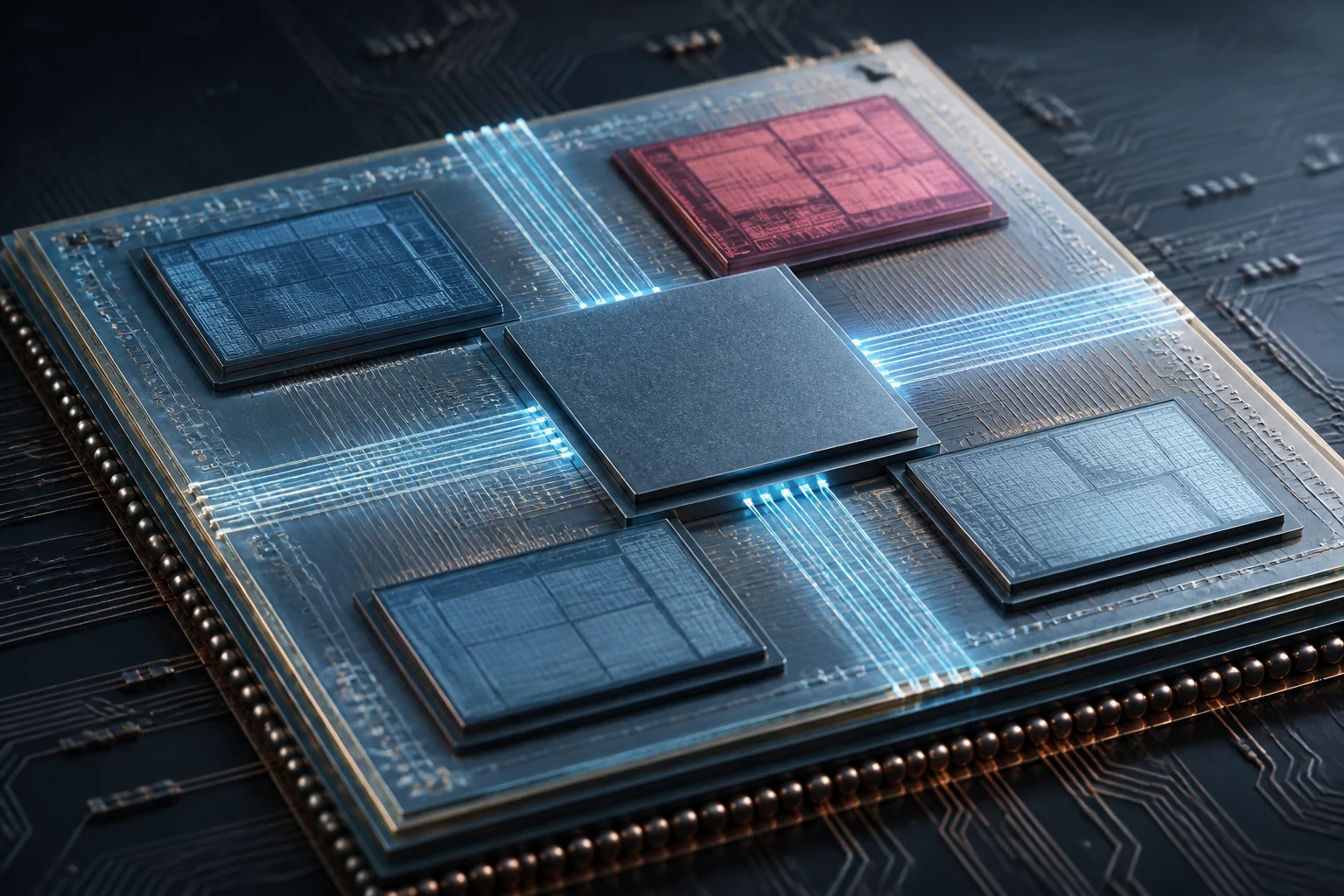
The GB300 combines an NVIDIA Blackwell Ultra GPU with a 72-core NVIDIA Grace CPU based on Neoverse V2. NVIDIA's technical sheet specifies up to 748 GB of coherent memory: 252 GB of HBM3e associated with the GPU and 496 GB of LPDDR5X for the CPU. This is not a single homogeneous memory with identical bandwidth: the sheet indicates 7.1 TB/s for HBM3e and 396 GB/s for LPDDR5X.
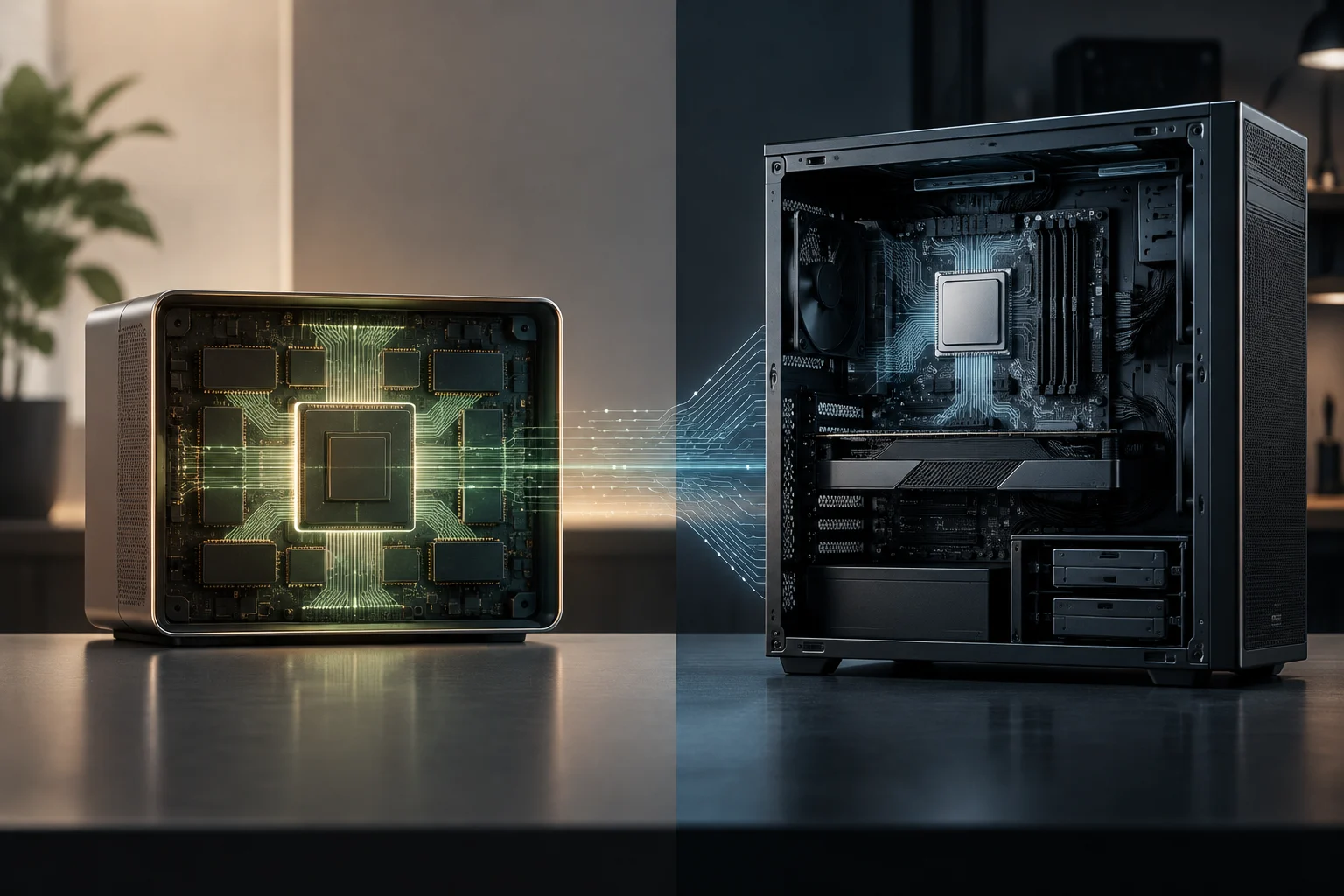
The connection between CPU and GPU uses NVLink-C2C, which allows a shared coherent memory space. This architecture enables working with large models within a single memory space. Total capacity helps host larger models, but it does not mean all data accesses at HBM3e speed or that every application utilizes memory in the same way.
NVIDIA declares up to 20 PFLOPS of Tensor FP4 compute with sparsity, and up to 15 PFLOPS without that condition. It also publishes different figures for other precisions, such as 10 PFLOPS FP8/FP6 and 5 PFLOPS FP16/BF16. These metrics describe maximum operation rates under specific precisions and conditions; they do not equate to a universal speed measure for inference, fine-tuning, or training. Real performance depends on the model, precision, software, and batch size.
| Resource | Published Specification | What to Consider |
|---|---|---|
| GPU HBM3e Memory | 252 GB; 7.1 TB/s | High-bandwidth memory for the accelerator |
| CPU LPDDR5X Memory | 496 GB; 396 GB/s | Expands coherent space, with different bandwidth |
| Total Coherent Memory | Up to 748 GB | Shared capacity; not all HBM3e |
| Tensor FP4 Performance | Up to 20 PFLOPS with sparsity | Maximum metric conditioned by precision and sparsity |
| Total System Power | 1,600 W | Requires considering electrical circuit, heat, and cooling |
Windows Expands Integration, But Does Not Eliminate Software Differences
The DGX Station for Windows edition is designed to connect local compute with applications and corporate workflows that already run on Windows. NVIDIA indicates support for the company's AI software stack and access to Linux tools via Windows Subsystem for Linux (WSL).
This option does not turn AI programs into operating-system-independent software. Compatibility depends on the chosen tools and environment: NVIDIA states that DGX Station for Windows supports its AI software stack and Linux tools via Windows Subsystem for Linux (WSL).
NVIDIA presents DGX Station with Ubuntu and AI development tools. The Windows variant is announced with access to Linux tools via Windows Subsystem for Linux (WSL), but its availability is expected in the fourth quarter. The choice of operating system depends on the applications and tools the team will use and its deployment environment.
The Windows edition also adds an enterprise management focus, with out-of-band telemetry via BMC and administration functions. NVIDIA also describes using WSL for Linux workloads. These capabilities can facilitate deployment in a corporate fleet, although effective security will depend on configured policies, updates, and administration of each organization; it is not deduced solely from the presence of Windows.
Which Workloads Can Benefit from a Local Machine of This Scale
The combination of large memory and Tensor compute can be useful for large model inference, agent experimentation, data analysis, and fine-tuning, provided the chosen software and precision fit the hardware. NVIDIA proposes running models of up to one trillion parameters locally; this is a capacity declared by the manufacturer, not a guarantee that any model of that size will function with specific speed, context, or quality.
For teams working with confidential data, local processing allows keeping data within their own infrastructure if the application and configuration do not send it to external services. This can help reduce dependence on a remote API and control data access, but hardware alone does not guarantee privacy: telemetry, connections, third-party tools, storage, and agent policies must be reviewed.
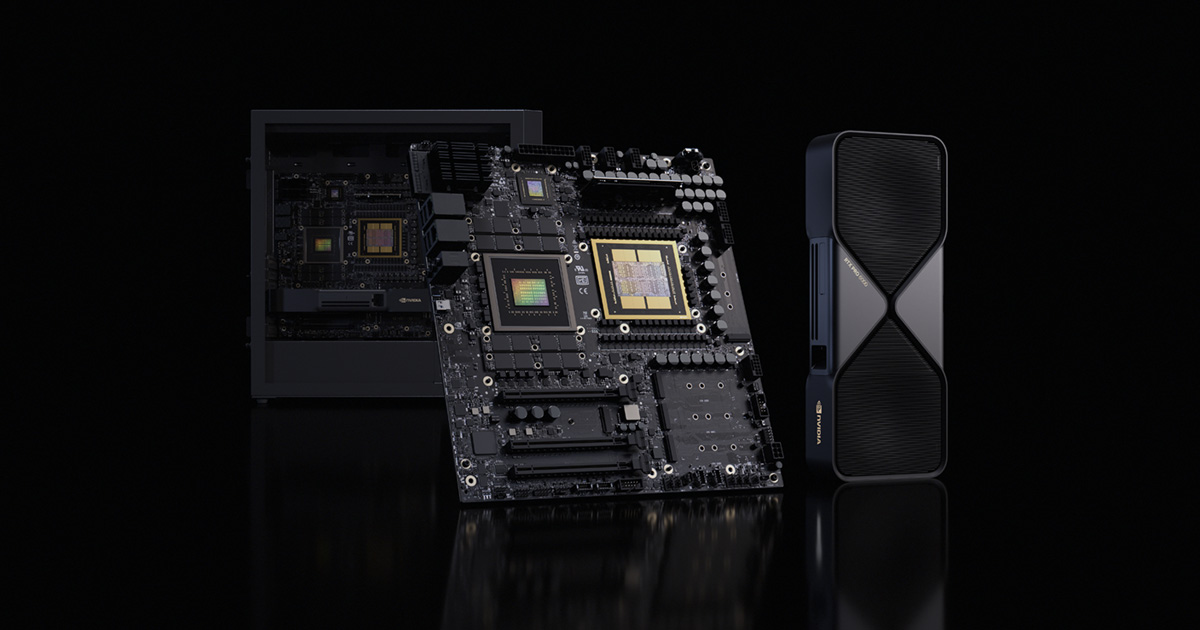
The station can also be combined with an additional NVIDIA RTX PRO Blackwell GPU for ray-traced visualization and simulation, according to supported configurations. This possibility is relevant for work combining AI and professional graphics, such as technical visualization or physical AI applications. It should not be confused with the integrated GPU's capacity: the additional card is a distinct configuration, and its availability depends on the system manufacturer.
For general desktop tasks, gaming, or workloads using little accelerator, compare the system’s capabilities with the requirements of the intended use. For light inference, small models, or occasional use, a PC with a dedicated GPU, a less expensive workstation, or a cloud service could be alternatives to consider. The practical question is not whether DGX Station can run AI, but whether local memory, performance, and control solve a recurring need that other options do not cover.
Power, Deployment, and Cost: Limits That Must Enter the Calculation
NVIDIA publishes a total system power of 1,600 W and notes that it requires a 20 A circuit. This changes the evaluation of a desktop machine: beyond physical space, one must consider electrical installation, thermal dissipation, and noise in the workplace.
Nominal power does not allow calculating real electrical cost on its own: consumption depends on load, usage time, configuration, and local energy price. It also does not allow comparing performance per watt with a desktop GPU without equivalent tests of the same task, precision, and software. A maximum PFLOPS figure and another maximum power figure do not substitute comparable measurements.
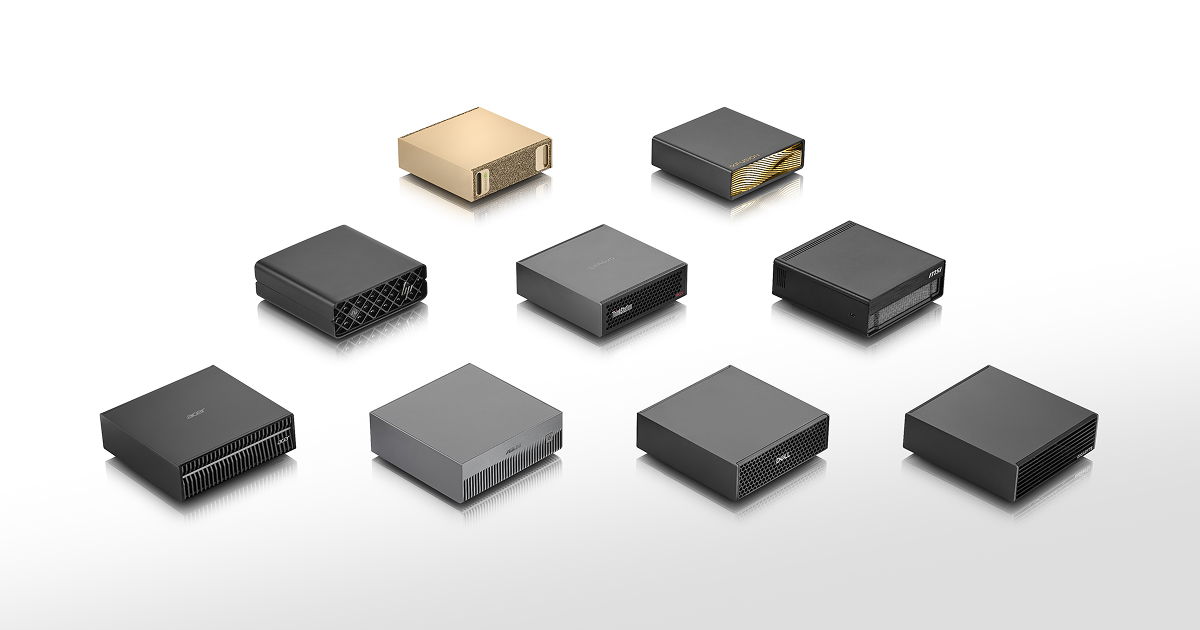
NVIDIA presents DGX Station as a product from associated manufacturers and invites contacting them to order the system. Before buying, it is advisable to request a complete quote detailing taxes, lead time, warranty, service, and included components.
When comparing a workstation, it is advisable to consider more than the price of a GPU: memory capacity, system configuration, expansion options, and budget also matter. DGX Station integrates large coherent memory capacity in a desktop platform. The decision depends on the specific needs of the project.
For Whom It Makes Sense and What to Check Before Deciding
NVIDIA describes DGX Station for developing and running AI locally and proposes its use with large models, inference, fine-tuning, and AI agents. The platform also allows local development and scaling or deploying workloads to data centers or NVIDIA's cloud.
For an individual developer, it is advisable to evaluate the purchase based on expected workloads and necessary configuration. Model size alone is not enough to decide: context length, quantization, concurrency, acceptable latency, and the performance required by the project also matter.
Before deciding, it is advisable to check these points:
- That the necessary models and frameworks support the chosen configuration and operating system.
- How much memory the real workload requires, separating memory capacity from bandwidth.
- Whether inference and prototyping are sufficient or if the project requires large-scale training.
- That the electrical installation and cooling of the space can accommodate a 1,600 W system.
- What price, components, warranty, and lead time the associated manufacturer offers in the corresponding market.
NVIDIA's spec sheet specifies up to 748 GB of coherent memory and a 1,600 W system. When comparing options, consider these requirements alongside the necessary workloads and configuration.